








In an era defined by rapid technological acceleration, institutional instability, and ecological strain, a growing movement of thinkers, scientists, and neurodiversity advocates are calling for a radical reimagining of human society. At the intersection of Eastern spiritual traditions, panpsychic relational philosophy, and indigenous worldviews lies a compelling proposition: humanity can only navigate its current planetary crises by returning to human-scale, relationship-driven ecologies of care.
Drawing on insights from biology, anthropology, and neurodivergent lived experiences, contemporary scholars argue that modern industrial civilization’s obsession with hyper-individualism, economic utility, and anthropocentric dominance is fundamentally misaligned with the living earth—referred to globally as Gaia.

Life as a Relational Process
Observing the dynamic processes of the natural world, observers often note that life inherently creates conditions conducive to life. This fundamental observation points to a reality composed entirely of feedback loops. From the microscopic molecular exchanges within cellular biology to the vast bioregional interactions spanning terrestrial and marine ecosystems, life is entirely relational, cyclical, fleeting, and regenerative.

Modern scientific frameworks, particularly within industrialized societies, frequently struggle to capture this complexity, often defaulting to anthropocentric models that restrict consciousness exclusively to animals with brains. However, scholars argue that high-dimensional spaces describing the totality of life must be conceptualized relationally from the ground up, beginning at the foundational layers of physics.

While science may never empirically prove or disprove how consciousness emerges across these vast spatial and temporal scales, this limitation underscores the boundaries of human comprehensibility rather than invalidating the philosophy. Just as mathematical frameworks contain unprovable truths, human perception is bounded, requiring humility when attempting to interpret the totality of existence.
Spirits, Panpsychism, and Eastern Traditions
When the universe is understood through the lens of dynamic feedback and learning loops, it naturally aligns with panpsychic philosophies—the view that consciousness is omnipresent across all levels of scale. This perspective resonates deeply with ancient Eastern spiritual traditions, including Buddhism and Daoism.

Buddhism, rooted in the teachings of the historical Buddha, places central emphasis on minimizing dukkha, often translated as suffering, unease, or cognitive dissonance. Scholars note that this core mission corresponds directly to the experiences of hypersensitive neurodivergent individuals, who frequently possess a heightened awareness of cognitive dissonance in environments that normalize systemic contradictions.
Similarly, Daoist traditions emphasize harmony with the Dao—an enigmatic process of transformation underlying reality—through virtues such as effortless action, naturalness, simplicity, and compassion. These timeless principles offer a profound critique of anthropocentric empire-building and rigid institutional control, echoing the egalitarian practices found across many human-scale indigenous cultures throughout history.

The Pathology of Modern Institutions
By contrast, modern industrial societies rely heavily on abstract, super-human scale institutions that are largely devoid of genuine shared understanding and mutual trust. As cultures increasingly compel individuals to invest in transactional, institutional relationships, people lose the capacity for authentic connections with living beings.
From this perspective, the institutional decay and systemic crises observed today can be understood not merely as sudden collapses, but as the inevitable expiration of social licenses that were inherently invalid. When human systems divorce themselves from local ecologies of care and rely instead on coercion and competitive individualism, they generate widespread psychological and physical distress.

This dynamic sheds light on the experiences of neurodivergent populations, who face disproportionate levels of overwhelm, disrespect, and unsafety in hypernormative environments. Official diagnostic frameworks often pathologize natural variations in human sensitivity, confusing innate neurological baselines with complex trauma responses generated by a hostile social world. Critics argue that medical models focused strictly on pathologizing decontextualized individuals fail to account for the rich diversity of human sensitivity profiles and the fundamental human need to be understood.
Towards Cultural Co-Evolution and Partnership
Reversing these trajectories requires shifting away from energy-wasting, head-to-head competition and embracing models of collaborative niche construction. Evolutionary biology and cultural anthropology alike demonstrate that major milestones in the history of Gaia are characterized by co-evolutionary relationships rather than dominance and subjugation.

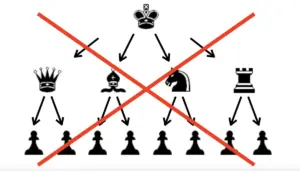
Scholars emphasize the distinction between systems of domination—which rely on rigid hierarchies, fear, and compliance—and systems of partnership, which foster mutual respect, emotional growth, and shared understanding. Reviving human-scale ecologies of care involves dismantling internalized ableism, rejecting the myth of homo economicus, and redesigning digital and social tools to amplify the noblest impulses of humanity rather than its most destructive tendencies.
As cooperatives and human-scale grassroots initiatives continue to gain momentum globally, they offer viable pathways away from carbon-pulse consumption and toward a regenerative future. By aligning human practices with the enduring wisdom of the living planet, communities worldwide are slowly laying the groundwork for a more equitable, compassionate, and relational world.