








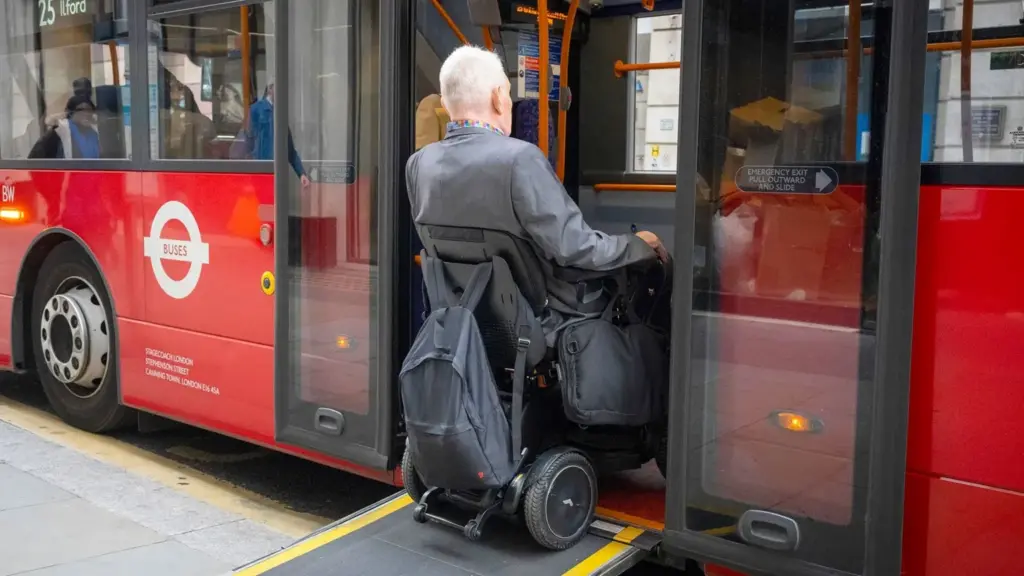
Starting April 1, disabled people across England will be able to travel by bus for free at any time of day, marking a major milestone in public transportation accessibility. Previously, free bus passes were strictly restricted to off-peak hours on weekdays, specifically between the hours of 09:30 and 23:00. This historical time limitation created significant barriers for pass holders attempting to commute to standard morning jobs, attend early academic lectures, or participate in late-night social and cultural events.
The removal of these rigid time limits will benefit an estimated one million people nationwide, fundamentally transforming the national bus network into a true full-time lifeline. By removing the clock as a barrier to mobility, the policy change opens up new pathways for employment, education, and social inclusion for disabled citizens who rely on public transportation to navigate their daily lives.
The nationwide policy follows a highly successful trial period within Greater Manchester’s integrated "Bee Network," where the removal of peak-time restrictions demonstrated both the high demand for all-hours accessible travel and the feasibility of implementing such a change without destabilizing local transit operations. The reform also comes in direct response to years of sustained campaigning by prominent disability rights organizations, including Scope and Transport for All.
Advocates have widely celebrated the government’s move, praising it for eliminating what many described as an unfair "postcode lottery," where the validity of a concessionary bus pass often depended entirely on arbitrary local council rules and geographical boundaries. However, while disability organizations have welcomed the universal all-hours access, they emphasize that this reform represents only one crucial step forward. Campaigners note that eligibility requirements and administrative processes across different local authority regions still require broader standardization to ensure true equity for disabled travelers regardless of where they live.
To make the program permanent and sustainable, the £60 million scheme is being funded jointly through the Department for Transport and the Department for Work and Pensions. Government officials are framing the major transit reform as an essential workforce and cost-of-living initiative. This investment aligns with existing national transit measures, such as the ongoing nationwide £2 single-fare cap, and successfully brings England into alignment with similar 24/7 concessionary transit programs that have been operating successfully in Scotland and Wales for years.
Global Takeaways: How Other Countries Can Make Accessible Commuting Possible
Making daily commuting accessible, equitable, and affordable for disabled citizens requires a comprehensive combination of thoughtful policy design, reliable digital infrastructure, and targeted public investment.
Why Was the UK Able to Do It?
The successful implementation of this nationwide policy in England stems from a combination of centralized government backing, targeted funding streams, and sustained pressure from advocacy groups. By pooling financial resources through the Department for Transport and the Department for Work and Pensions, the central government absorbed the financial pressures that might otherwise have fallen heavily on local authorities. This centralized funding model, paired with empirical evidence gathered from localized trials like Greater Manchester’s Bee Network, provided policymakers with the necessary justification and financial framework to roll out the initiative on a national scale, mirroring the successful models already established in other parts of the United Kingdom.
Does It Depend on Existing Infrastructure?
The success of free transit initiatives depends heavily on the underlying state of physical and technological infrastructure. Free transit passes only truly work if the public transport network itself is physically and technologically accessible to begin with. This means that expanding fare concessions must go hand-in-hand with investments in accessible bus fleets equipped with wheelchair ramps, audio-visual next-stop announcements, reliable digital tracking systems, and well-maintained boarding infrastructure at stops and stations. Without these foundational elements, removing financial barriers alone is insufficient to guarantee actual mobility for all disabled passengers.
What Is Needed to Make Commuting Affordable for People with Disabilities?
Achieving true affordability and accessibility in public transportation requires a multi-layered approach involving coordinated policy frameworks, sustained public funding, and accountability measures. Governments must establish universal concessionary programs that eliminate geographical disparities and inconsistent local rules, ensuring that transit access is a guaranteed right rather than a regional privilege. Furthermore, transit authorities must engage continuously with disability organizations and advocacy groups to identify practical barriers, streamline administrative eligibility processes, and ensure that funding directly addresses the real-world commuting needs of disabled citizens.