








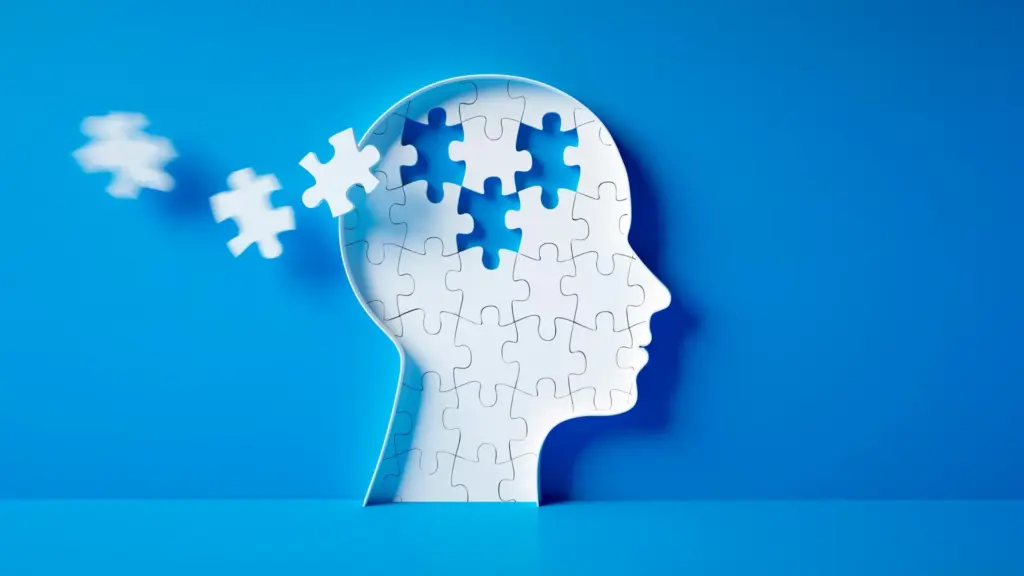
For generations, the narrative surrounding the aging brain has been one of inevitable erosion. As the calendar pages turn, society has conditioned us to expect a steady decline in cognitive function, characterized by lapses in memory, a slower processing speed, and an overall reduction in mental sharpness. We often view these changes as a downward trajectory—a slow dimming of the light. However, a groundbreaking new perspective from researchers at the University of Arizona suggests that this narrative is fundamentally flawed. Rather than simply deteriorating, the brain may be undergoing a sophisticated, evolutionarily driven transition that prioritizes wisdom, context, and the synthesis of experience over the mere acquisition of raw data.
In a recent study published in the journal Perspectives on Psychological Science, researchers argue that we have been misinterpreting the cognitive shift that occurs in later life. By synthesizing data from molecular biology, neuroscience, and brain imaging, the team has proposed what they call the "adaptive aging hypothesis." This theory suggests that the cognitive changes observed in older adults are not merely signs of decay, but rather a functional realignment of the brain’s priorities. As an individual accumulates a lifetime of knowledge, the brain shifts its focus from "recording" new information to "interpreting" it, transforming the aging process into a distinct and valuable stage of human development.
A Shift in Neural Priorities
To understand this transformation, one must look at the interplay between two critical regions of the brain: the hippocampus and the frontal cortex. In the landscape of human cognition, the hippocampus serves as the brain’s primary archivist. It is the region responsible for preserving specific, high-resolution details of our daily lives—the "who, what, where, and when" of our experiences. It is essentially the recording device of the human mind, capturing the granular data of every event we encounter.
Conversely, the frontal cortex operates as the brain’s executive and interpretive center. Its role is to discern patterns, extract broader meaning, and synthesize the "gist" of a situation. It is the part of the brain that allows us to understand the significance of an event rather than just the minute details of its occurrence.
The adaptive aging hypothesis posits that in healthy aging, there is a strategic shift in the balance of power between these two regions. While younger brains are heavily reliant on the hippocampus to absorb and archive as much information as possible, the aging brain gradually pivots toward the frontal cortex. This transition is not a failure of the system; it is a recalibration. By deemphasizing the constant, high-fidelity recording of every new detail, the brain frees up resources to focus on applying a massive, pre-existing knowledge base to new scenarios.
Fabian-José Fernandez, a coauthor of the study and an associate professor of cognition and neural systems at the University of Arizona, emphasizes that this shift is observable across different populations and even in animal models, suggesting a deep-rooted evolutionary origin. "If we look at normative aging as a story of just decline, we are really missing the boat," Fernandez explains. "The older brain is optimized for different things than the younger brain, predominantly the sharing of stored expertise and social relationships."
The Evolutionary Imperative of Wisdom
The biological drive for this shift becomes clear when one considers the role of the older adult within a species. During early life, the brain is akin to a sponge, thirsty for input because it lacks a foundational framework of the world. A child must capture precise details to learn the rules of their environment. However, by the time an individual reaches their sixth or seventh decade, they possess a vast, rich library of autobiographical and semantic memories.
From an evolutionary standpoint, it is highly efficient for the brain to stop "collecting" data with the same intensity it did in youth and instead pivot toward "protecting and sharing" the treasure trove of knowledge already stored. The ability to mentor, guide, teach, and share stories is a vital survival mechanism for the collective human group. By favoring the frontal cortex, the aging brain becomes more adept at making complex judgments and providing the kind of long-term perspective that younger generations rely on to navigate their own development.
"Evolution may be saying that if you make it long enough, there’s a need to transmit this information," Fernandez notes. "So, we put into motion biological changes that enforce and protect your semantic and autobiographical memories." This transition transforms the older adult from a gatherer of information into a transmitter of wisdom, a role that remains essential for the cohesion and success of social groups.
Distinguishing Aging from Pathology
One of the most significant contributions of the adaptive aging hypothesis is the clarity it brings to the often-confusing distinction between normal cognitive aging and neurodegenerative diseases like Alzheimer’s. For years, there was a prevailing, yet misguided, belief that Alzheimer’s was simply an accelerated or more intense version of the typical aging process. Fernandez and his colleagues argue that this view is scientifically incorrect.
In a healthy, aging brain, the reduction in hippocampal activity is a controlled, adaptive process—a quiet turning down of the volume on new data acquisition. However, in the case of Alzheimer’s, this process is not a smooth transition; it is a chaotic disruption. The researchers point to evidence showing that in the Alzheimer’s-afflicted brain, the hippocampus often exhibits signs of hyperactivity. This is the opposite of the calm, purposeful shift seen in healthy aging.
When pathological processes involving proteins such as amyloid and tau interfere with the brain’s architecture, they do not just change the "priority" of the brain; they dismantle the very circuits required for accessing stored knowledge and autobiographical history. By distinguishing between the natural "de-emphasis" of the hippocampus in healthy seniors and the "hyperactive dysfunction" found in disease, scientists may be able to better identify the early markers of pathology, potentially opening doors for more effective interventions.
Rethinking the Value of the Aging Brain
The implications of this hypothesis extend far beyond the laboratory. If we accept that the aging brain is not "breaking down" but rather "specializing," it necessitates a radical shift in how society views and supports its older members.
Currently, our cultural metrics for cognitive health are heavily skewed toward the strengths of the young: high-speed recall, the ability to process raw data quickly, and the retention of minute details. When older adults are measured against these specific benchmarks, they are frequently viewed as "failing." The research from the University of Arizona suggests that these metrics are fundamentally misaligned with the biological reality of the mature brain.
If the aging brain is optimized for mentorship, pattern recognition, and social integration, then our environments—from workplaces to community centers—should be designed to unlock those specific strengths. For instance, fostering intergenerational programs where older adults can share their expertise with younger generations is not just a "nice" social gesture; it is a way to align with the brain’s natural developmental trajectory.
"People see older individuals and look at them as not being on par with younger individuals across a lot of metrics," Fernandez observes. "The way I look at it is that you’ve got someone with a brain that has been active for several decades and has seen a lot. There is tremendous value there, and we don’t do a good job of unlocking it."
Ultimately, the adaptive aging hypothesis invites us to stop mourning the loss of the "sponge-like" memory of youth and start recognizing the unique, high-level processing power that emerges in its place. Growing older is not a retreat into a shadow of one’s former self; it is a transition into a new way of being, where the focus shifts from the accumulation of experiences to the profound application of wisdom. By acknowledging this shift, society may finally be able to tap into the full, untapped potential of the aging mind.