

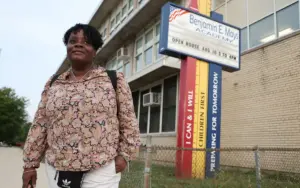




For years, Maria Johnson was a familiar, quiet presence in the hallways of Chicago Public Schools. As a dedicated volunteer parent, she slipped into classrooms to act as an extra pair of hands, helping students sound out difficult words and providing the kind of individual attention that busy teachers sometimes struggle to distribute among dozens of children. She cannot pinpoint the exact date her journey began—her eldest son is now 22—but the motivation was always clear.
"I was not only trying to be there for my son, but I wanted to be there for other children, because I know everybody doesn’t get that," Johnson says.
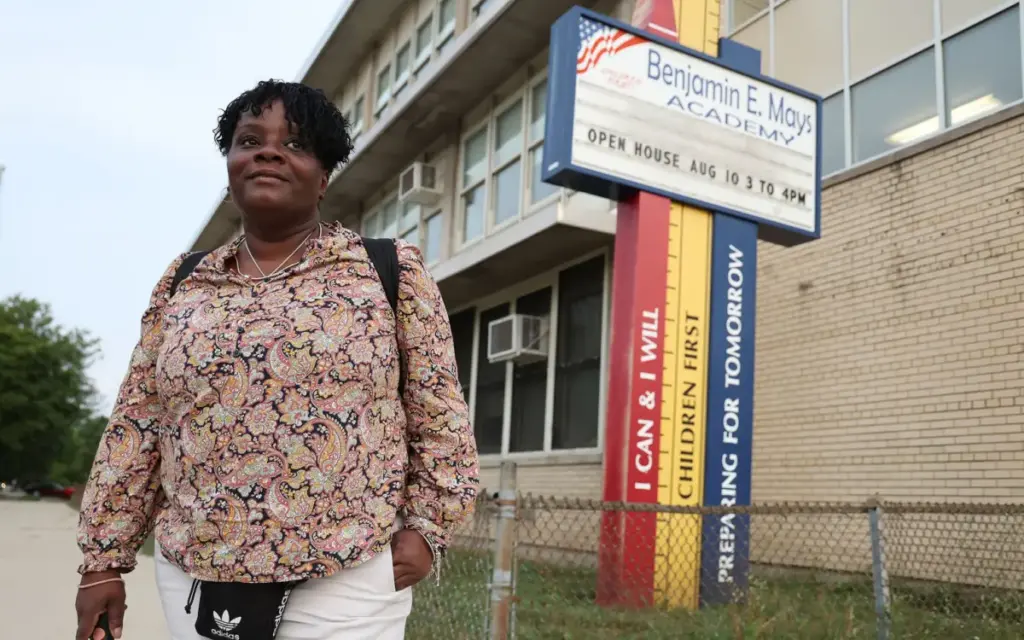
For a long time, Johnson’s role was purely supportive and unpaid. She had no formal intention of transitioning into a full-time school employee. However, a turning point arrived last fall when a statewide nonprofit, Ladders of Opportunity, offered a pathway to turn that long-standing commitment into a stable career. Through a combination of free classes and one-on-one coaching, Johnson began working toward a license as a paid paraprofessional. Seven months later, she officially joined the staff at Benjamin E. Mays Academy in Englewood as a special education classroom assistant, or SECA.

At 53, Johnson had already earned a college degree years ago, but she had not been a student herself for more than three decades. Returning to a structured learning environment was daunting, but she found deep meaning in the transition. "I just felt like that was God opening up a door for me to have a career," she reflects.
Addressing the Paraprofessional Shortage
Ladders of Opportunity is a relatively new statewide nonprofit designed to address Illinois’ chronic, systemic shortage of paraprofessionals. The organization evolved from the Parent Engagement Institute, a program long dedicated to recruiting parents to volunteer in their children’s schools. While the institute focused on fostering a supportive school climate, Ladders takes that mission a step further by identifying parents who have logged at least 100 volunteer hours and expressing an interest in the education sector, then moving them into a formal licensure track.
The demographic makeup of the program reflects the communities it serves, with most participants being Black and Latina mothers from the South and West sides of Chicago.
Within the Chicago Public Schools (CPS) system, perennial staffing imbalances have long left some campuses struggling to fill positions for SECAs, teacher assistants, and other vital support staff. While district-wide vacancy rates are currently at all-time lows, the administration continues to grapple with the challenge of recruiting and retaining high-quality workers for these essential roles. Historically, paraprofessional turnover has been high across Illinois, a trend driven by the combination of relatively low hourly pay and a lack of specialized training.
For organizers, the solution seemed hidden in plain sight: Why not look to the parents who are already physically present on campus?
"You’ve got to have healthy schools for a healthy community. And for that, you’ve got to have engaged and involved parents," explains Flor Dimas, co-manager of Ladders. "They are stakeholders."
Since its inception in 2023, more than 1,100 parents have achieved licensure as paraprofessionals through the program, with 373 of those now working within the CPS system. The initiative is currently supported by a $25 million grant from the Illinois Department of Human Services and has successfully expanded to 11 pilot sites across the state.
A Comprehensive Path to Licensure
The recruitment process is grassroots, utilizing community-based organizers who are already embedded in the schools. Once a parent joins the program, the support is multifaceted. Depending on the specific licensure track, participants undergo weeks of training focused on professional development, digital literacy, and English as a Second Language (ESL)—all carefully curated to ensure they pass the state’s rigorous certification exam.
The program goes beyond academic preparation. Participants receive personal coaching, childcare during program hours, and reimbursement for licensure fees. Coaches remain involved even after the training ends, guiding parents through the often-intimidating hiring process with mock interviews and professional resume-building.
For Maria Johnson, the program was a lifeline during a time of personal crisis. She completed her training even after receiving a breast cancer diagnosis in February, all while balancing the needs of her 6-year-old son, who remains "proud of his mama." She credits her coach, an organizer with Teamwork Englewood, for keeping her focused on her goals. "They were right there. They said, ‘Don’t give up, Maria. No, I’m not letting you give up,’" Johnson recalls.
The value that these parents bring to the classroom is difficult to overstate, according to program organizers. They offer something that money cannot buy: deep-rooted lived experience, relationships forged through years of school drop-offs and pickups, cultural fluency, and hundreds of hours of hands-on experience in the classroom environment.
"Who is impacted by parents in the classroom? Students," Dimas said while addressing two dozen organizers at a recent kickoff event. "They look like them, they talk like them, they live in the community."
Filling Critical Roles in Special Education
Many graduates of the program, like Johnson, are hired as SECAs. These roles are among the most sought-after and critical within CPS. Bilingual SECAs, in particular, are in high demand to serve the city’s diverse student population. Their duties are exacting and varied, ranging from academic tutoring and note-taking to providing mobility support and personal care for students with disabilities.
The need for these roles is urgent. In 2018, CPS was placed under state corrective action for systematically failing to provide mandated services to students with disabilities, including the failure to provide necessary SECAs. Since 2019, the share of students with disabilities in the district has grown from 14.6% to 17.3%, totaling nearly 55,000 students. To keep pace with this growth, CPS has added approximately 3,600 SECA positions. While the district’s 2% vacancy rate—about 160 openings as of early this month—is the lowest in recent memory, these vacancies remain disproportionately concentrated in networks on the South and West sides.
Attempts by district officials to redistribute staff to underserved communities have, thus far, yielded limited results. Barb Cohen, a special education advocate at the Legal Council for Health Justice, argues that the vacancy issue could be significantly mitigated with better training—a gap that Ladders of Opportunity is actively attempting to close.
Current regulations require applicants for SECA positions to pass a state exam covering reading, writing, and math, or alternatively, to hold a college degree or 60 college credit hours in any subject. However, Cohen points out a common pitfall in the current hiring model: "We have people who are hired because they have the required number of college credit hours in anything under the sun, but no particular training to work with children and no particular knowledge of disabilities."
Cultivating Talent Within the Community
Some principals are already seeing the benefits of hiring from this pool of trained parents. At Darwin Elementary in Logan Square, Principal Daniel De Los Reyes hired four Ladders participants last year. While many initially start as miscellaneous workers helping with lunch and recess monitoring, the pipeline allows him to vet and develop the necessary "mindset, the disposition, and the work ethic" before they transition into more permanent roles.
Darwin, which operates a dual-language program, has seen its student body shift as it welcomes scores of immigrant families. The Ladders program provides a vital bridge for Latina mothers to enter the education workforce, where they often help lead school programming and organize cultural events like Hispanic Heritage Month and Día de los Muertos.
"There’s a need in school, and there’s a resource in the community," De Los Reyes says. Having been a paraprofessional himself for four years before moving into teaching and administration, he understands the value of the role. The success of the program is already showing long-term potential; more than 160 Ladders parents have gone on to become accredited substitute teachers, and about a dozen have already obtained full professional educator licenses.
"I have Ladders graduates last year who I can see as primary bilingual teachers," De Los Reyes notes. "I often have the mindset that the solutions lie within the building, or within the community."
In the West Lawn neighborhood, Anna Sanchez represents the success of this model. Hired in April as a substitute SECA at Hurley Elementary, where her 7-year-old daughter is a second-grader, Sanchez initially feared the language barrier. Having moved to the U.S. from Mexico 17 years ago, she was uncertain if she could pass the complex licensure exam. Through the Ladders program, she gained far more than test-taking skills; she learned how to navigate a professional workplace, how to provide specialized support for students with disabilities, and how to foster effective student engagement.
"I learned that we should not only focus on the students, but also support and guide parents on how they can also help their children outside of school," Sanchez says in Spanish. For her, this is just the beginning—her sights are now set on becoming a classroom teacher.