









The core ideas embedded within ancient Buddhist and Daoist spiritual traditions bear a striking resemblance to the commonalities found across human-scale indigenous cultures throughout history. At the heart of these traditions lies a compassionate framework of love defined as vulnerable, mutual knowing—a concept fully compatible with a panpsychic relational philosophy. Everyone desires their lived experience to be taken seriously. As embodied spirits, humans are fundamentally compelled to make sense of the world, yet we can only achieve this understanding in good company.
Life
As ecological thinker Janine Benyus famously observed, life creates conditions conducive to life. This simple yet profound observation hints at the underlying truth that the dynamic process of life consists entirely of feedback loops.
Life is thoroughly relational, sacred, cyclical, fleeting, compostable, nested, regenerative, and forever mysterious to all of its participants. In any high-dimensional space that provides a reasonable description of Gaia—encompassing all of life, including the potential of homo ecologus—the system is best conceptualized entirely through relationships, extending from the foundational layers of physics upward.
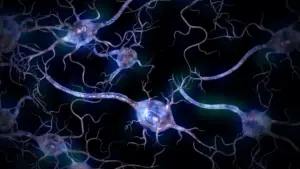
Life consists entirely of relationships, which operate as feedback and learning loops. In aggregate, these loops build the foundation of what human animal-scale perception experiences as consciousness. This perspective is clearly articulated in Eastern spiritual and philosophical texts. While human cognitive limitations mean we will never scientifically prove to an absolute quantifiable certainty that consciousness emerges in this way, science is equally incapable of disproving it. This reality does not render science useless; rather, it highlights the inherent limits of scientific inquiry, which mirror the limits of human comprehensibility.

At the spatial and temporal scales relevant to biological and ecological systems, the smallest feedback loops emerge between molecules, resulting in the staggering complexity observed in cell biology and molecular genetics. These loops scale up to the massive bioregional feedback loops spanning terrestrial and marine ecosystems within Gaia. Popular anthropocentric definitions of consciousness typically generalize only to animals equipped with brains, systematically excluding the countless feedback loops occurring within living systems at both micro and macro scales.
Powered-up, or positive, feedback loops are temporary phenomena where information accumulates within specific living cells or organisms over time. Conversely, healthy biological and social systems maintain their internal feedback loops in a balanced, de-powered state. Human bodies maintain molecular feedback loops between cells and organs by utilizing external energy from living food, generating metabolic building blocks ready to be reassembled into new life through the solar energy of the sun. Similarly, healthy social relationships remain intact through shared experiences, producing cultural outputs that integrate naturally into local ecologies of care.
Conceptualizing the universe entirely through dynamic feedback loops leads directly to a panpsychic philosophy where consciousness is omnipresent across all scales. This view aligns smoothly with Eastern spiritual traditions like Buddhism and Daoism, inviting humanity to adopt non-anthropocentric viewpoints. It exposes the cultural biases embedded within modern, industrialized notions of success and intelligence while drawing attention to our cognitive and emotional boundaries.
Buddhist philosophy focuses heavily on minimizing suffering and unease, a goal that corresponds directly to the desire of hypersensitive neurodivergent individuals to reduce cognitive dissonance. This focus also highlights the social friction that arises when a culture normalizes or enforces high levels of cognitive dissonance over extended periods. Similarly, Daoist virtues such as effortless action, naturalness, simplicity, compassion, frugality, and humility align closely with neurodivergent sensitivity profiles. These virtues serve as a timeless critique of anthropocentric empire-building dating back to the early Warring States period, advocating for the subversion of such extractive systems.

Love
The extent to which living beings are truly alive emerges from mutual trust, shared commitments, and mutual understanding across all relationships. By design, transactional relationships with abstract, super-human scale anthropocentric institutions are entirely devoid of genuine shared understanding. The more modern cultures pressure individuals to invest in these abstract structures, the weaker our capacity becomes for authentic relationships with living beings.
When societies consciously reorient their lives back toward a human scale, the prospect of institutional collapse can be viewed with sobriety—not as a tragedy, but as the rightful expiry of an invalid social license. Modern society has much to learn from indigenous societies that have resisted the myth of homo economicus. Relationships can be understood as continuous, multi-modal, de-powered dialogues within ecologies of care that entangle our inner worlds.
This collaborative framework stands in stark contrast to the cutthroat competition often emphasized in modern evolutionary theory. Scholars and activists across disciplines are increasingly advocating for a reframing of evolution rooted in collaborative niche construction, a concept championed a century ago by thinkers like Peter Kropotkin.
Sensitivity Profiles
Every human possesses a unique sensitivity profile shaped by neurological baselines and lived experiences within specific ecological contexts. This reality is particularly pronounced among hypersensitive neurodivergent people, many of whom have endured chronic trauma within a social world that routinely marginalizes and pathologizes them.

Individual nervous systems evolve across a lifetime. Studies indicate that a vast majority of neurodivergent adults frequently feel overwhelmed, misunderstood, disrespected, or unsafe. Overall wellbeing depends heavily on whether an individual’s sensitivity profile aligns with the surrounding ecology of care. Furthermore, official diagnostic criteria for conditions like autism are deeply entangled with symptoms of complex trauma, making it nearly impossible to separate innate neurodivergence from lifelong trauma responses in an industrialized, hypernormative world.
The modern medical model’s focus on diagnosing and treating isolated individuals often falls short, occasionally causing direct harm to intersectionally marginalized populations. Simplistic diagnostic labels gloss over the uniqueness of lived experience. Activists within the neurodiversity movement continue to advocate for intersectional solidarity beyond rigid diagnostic categories, pointing out that standardized psychological frameworks often enforce a narrow band of culturally acceptable sensitivities while pathologizing everything else.
Persistent, unbalanced feedback loops between humans generate cognitive dissonance, a profound discomfort that demands resolution. Suppressing cognitive dissonance over long periods leads directly to mental, spiritual, and physical illness. Individuals labeled as hypersensitive are often acutely aware of this dissonance and are compelled to take corrective action, whereas others may tolerate dissonance while suffering its bodily consequences beneath the surface.
Culture Co-Evolution
Major evolutionary milestones in the history of Gaia are fundamentally co-evolutionary. Cell biology demonstrates the complementary roles of abstract symbol systems and semantics, proving that evolution is an ecological process rather than a purely species-specific one. Semi-permeable cellular membranes provide a biological model for co-evolutionary exchange that Gaia has road-tested for billions of years.

Co-evolutionary processes among cultural organisms rely on conscious collaborative niche construction rather than wasteful, head-to-head competition. Egalitarian hunter-gatherer societies have practiced these collaborative priorities for hundreds of years, offering a blueprint for life-affirming cultures that prioritize omni-directional learning and mutual aid.
Preventing and de-escalating conflicts between cultural organisms requires recognizing the cognitive and emotional limits of human scale. As industrial institutions decline, society faces the task of designing digital communication and collaboration tools for the next century that avoid centralizing power in the hands of strongmen, relying instead on the deep wisdom embedded in Gaia’s evolutionary history.
The Human Spirit Within Gaia
Humans evolved to make sense of the world at human scales. Radical egalitarianism forms the architecture of adaptive human intelligence, differing fundamentally from the nervous systems of other primates due to our unique capacities for language and culture.
Western, Educated, Industrialized, Rich, and Democratic (WEIRD) societies have grown detached from these evolutionary roots, surrounded by what philosopher Guy Debord termed the Spectacle. In the absence of trust-based human ecologies of care, atomized individuals often anchor themselves to institutional structures led by powerful figures, viewing cultural construction with suspicion.

Examining academia through a feedback-loop lens reveals the cultural assumptions underpinning modern scientific disciplines. While mathematical traditions explicitly state their assumptions, other disciplines—particularly the digital economy, artificial intelligence, and conventional economic modeling—frequently rely on unexamined, extractive premises that normalize violence and maximize short-term utility at the expense of ecological stability.
Reviving Trust in Humanity
When human-scale cultural organisms erode from living memory, the atomized modern social world ceases to make sense, shaking human faith in humanity and Gaia to its core. The competitive framework of homo economicus normalizes the compulsion to appear independent and invulnerable, creating a culture of pervasive mistrust and escalating mental health challenges.
Data from research initiatives clearly show that while neurodivergent individuals deeply wish to help others, many hesitate to ask for help themselves due to fear and isolation. Deep indoctrination into the myth of economic utility leaves individuals blaming themselves for systemic failures, fueling an epidemic of self-hate, shame, and suppressed guilt disguised as narcissistic self-reliance.
To reverse these toxic patterns, society must transition away from the ideology of homo economicus and embrace human-scale ecologies of care. As UN initiatives highlighting cooperatives demonstrate, collaborative economic and social models offer practical pathways to overcome global challenges.

By grounding our actions in mutual trust, vulnerable knowing, and respect for our planetary ecology, humanity can move past the limitations of domination systems and begin the gradual, necessary work of building a sustainable, caring future rooted in the enduring wisdom of Gaia.