



Our individually unique nervous systems and sensitivities develop and evolve over the course of our lives, shaped by our surrounding environments. New participatory research findings released by the Autistic Collaboration Trust and sponsored by S23M reveal a profound disconnect between modern institutional structures and human sensitivities, showing that 85% of neurodivergent adults often or always feel overwhelmed and misunderstood, while over 60% frequently feel disrespected and unsafe.

According to the research, an individual’s overall sense of wellbeing is determined by the alignment between their unique sensitivity profiles and the ecology of care in which they are embedded. Laws and social norms deemed applicable in large-scale societies can never substitute for trustworthy, caring relationships. By definition, such institutional rules are formulated in ignorance of individual sensitivity profiles and specific life circumstances.

Cults vs. Healthy Cultural Organisms
Large-scale, anonymous social environments are inherently traumatising because they involve frequent interactions between people who know very little or nothing about one another. In contrast, small-scale social environments minimise interactions between strangers over time.
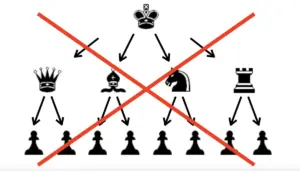

Healing involves collaborative niche construction with others who are committed to nurturing shared understanding and de-powered ecologies of care in egalitarian, human-scale environments. Healthy social ecologies allow individuals to develop a positive relationship with their own sensitivity profiles. The laws and social norms that emerge within egalitarian human-scale cultural organisms are attuned to specific ecological contexts rather than being shaped by abstract institutions located in distant places.

All non-egalitarian social environments, regardless of scale, share the structural characteristics of cults. Civilisations based on hierarchical structures of coercive power are no exception. Empires rely on myths of cultural superiority, which include the normalisation of institutionalised forms of violence, bullying, and neglect. The norms evolving in these structures prioritize the perpetuation of coercive power hierarchies over human and non-human wellbeing. Ultimately, the only difference between smaller cults and modern corporate or nation-state power structures is a matter of scale.

The Reality of Internalised Ableism
The extent to which people consciously experience their social environment as a traumatising cult depends on their level of internalised ableism and their ability to maintain cognitive dissonance over months, years, and decades. This capacity traces back to individual sensitivity profiles.

Participatory research demonstrates that many autistic and intersectionally marginalised people experience dominant culture as highly traumatising. In a hypernormative civilisation, marginalised segments of the population routinely face internalised ableism. Conversely, those who consider themselves culturally well-adjusted experience dominant culture as relatively safe, having successfully internalised the behavioural patterns demanded by modern economic systems.

Cultural and Psychological Safety in Workplace Settings
Global survey results regarding workplace environments highlight a stark contrast in experiences. Non-marginalised employees generally experience typical workplace cultures as normal. In contrast, employees from marginalised population segments feel significantly less safe and welcome at work.

More than 40% of surveyed employees report being often or always afraid to express their authentic selves when interacting with superiors, while over 25% experience this fear around peers. Because the survey dataset includes large numbers of responses from marginalised demographics, a sharp divide emerges when compared against the subset of respondents who consider themselves culturally well-adjusted.

Among employees who view themselves as culturally well-adjusted, over 80% feel at ease engaging with their bosses, and more than 90% are completely comfortable among their peers. However, among employees identifying with one or more marginalised population segments, over 50% report constant fear of authenticity around superiors, and over 25% feel the same apprehension around peers.

For neurodivergent employees, the figures are even more pronounced: 70% are frequently afraid to be authentic with superiors, and over 40% feel unsafe expressing themselves around peers. These discrepancies raise fundamental questions regarding the definition of normality in modern industrialised societies and confirm the persistent reality of internalised ableism in professional environments.

The Neurodivergent Childhood Experience in Modern Civilisation
The experience of encountering internalised ableism begins at an early age within powered-up family structures and educational environments. Among neurodivergent children, 90% report being frequently afraid to be authentic at school, while close to 70% experience this fear within their own families.

Furthermore, over 90% of neurodivergent children constantly feel overwhelmed and misunderstood, more than 80% feel disrespected, and over 70% feel unsafe. Consequently, more than 70% routinely distrust family members, friends, and classmates, and approximately 80% emotionally detach as a coping mechanism for survival. Over 90% experience chronic anxiety, and 80% struggle with depression.

The Adult Neurodivergent Experience in Modern Civilisation
This pattern of encountering internalised ableism extends into adulthood, touching every aspect of daily life unless individuals consciously choose to opt out of the hypernormative path of modern civilisation. The ability to opt out depends entirely on being embedded in a healthy ecology of care—a process that can take decades to establish, leaving it out of reach for many.

Among neurodivergent adults, 70% are often afraid to be authentic at work, nearly 60% hide their authentic selves within their families, and over 45% feel unsafe among friends. Furthermore, 85% frequently feel overwhelmed and misunderstood, while over 60% experience constant disrespect and unsafety. As a result, over 35% regularly distrust family and friends, and over 60% emotionally detach to cope. More than 80% experience anxiety, and 50% face ongoing depression.

The Human Sense of Agency
Human agency is a human-scale phenomenon that emerges from de-powered dialogues within trustworthy relationships. Research indicates that most neurodivergent individuals lack access to healthy, trustworthy relationships, leaving them with limited opportunities for de-powered dialogue.

An individual sense of agency involves feeling understood, respected, and cared for, alongside the experience of contributing to group decisions without facing coercive pressure. Healthy cultures understand agency as a collaborative, human-scale dynamic rather than an individual attribute or a product of abstract institutions. In non-coercive environments, authentic learning styles avoid over-imitation, thereby reducing spurious cultural complexity.

The competitive individual sense of agency promoted by modern economic ideology is incompatible with scientific understandings of human cognition and relational ecology. Acknowledging that human agency operates within a collaborative framework directly challenges the progress myth of industrialised societies. Clinging to anthropocentric myths of technological progress remains a primary obstacle toward achieving ecological wellbeing, intersectional solidarity, and cultural adaptation on a finite planet.

Cognitive Dissonance and Rediscovering Faith in Humanity
Overall wellbeing is dictated by the health of one’s ecology of care, sensitivity profiles, and the ability to resolve cognitive dissonance. Individual wellbeing reflects communal health and the quality of the relationships constituting the self. Cognitive dissonance surfaces whenever human emotional limits are reached.

Recognizing that cognitive and emotional limits are as immutable as the laws of physics allows individuals to pursue intersectional solidarity and healing. It is only within nurturing, small-scale ecologies of care that people can rediscover faith in humanity and connect with the healing powers of the broader cycle of life. The diversity of neurodivergent sensitivity profiles forms a human cultural immune system capable of guiding societies back toward life-affirming cultural organisms.

Healthcare professionals frequently remain uninformed regarding neurodivergent culture, ways of being, and the prevalence of complex trauma among marginalised populations. However, committed allies within the medical community, such as gastroenterologist Dr. Zoe Raos, are increasingly advocating for cultural and psychological safety for neurodivergent patients and colleagues. The Autistic Collaboration Trust and S23M continue to gather ongoing research data through anonymous global surveys focusing on workplace safety, childhood experiences, and cognitive dissonance to support broader educational and systemic reform efforts.