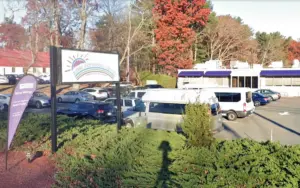




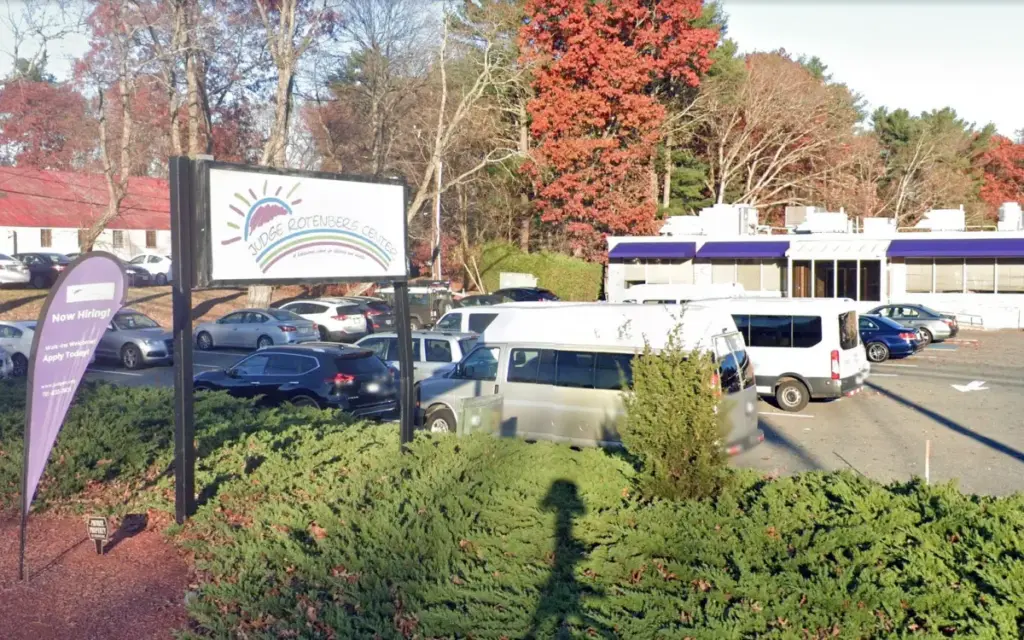
The metal click of the lock was a sound that would define seven years of Jennifer Msumba’s life. It was the sound of her being tethered to a court-ordered electrical stimulation device, a piece of equipment used as a behavioral punishment at the Judge Rotenberg Center (JRC) in Canton, Massachusetts. For Msumba, that sound preceded a reality where even the most basic human interactions could result in agonizing pain.
Msumba, who now resides in Florida, recounts her harrowing initiation into the facility’s "shock program" in the award-winning documentary The Fish Don’t Care When It Rains. Within her first day at the center, she was subjected to two separate electric shocks: the first for the perceived infraction of telling a nurse "No, thank you" when offered medication, and the second for the simple act of rising from her bed to use the bathroom.
"And that was my first day on the shock program," Msumba recalls in the documentary, which recently premiered at the Heartland International Film Festival in Indianapolis.

The JRC has long been a lightning rod for controversy. As a day and residential facility serving individuals with severe developmental disabilities, it remains the only institution in the United States known to employ electric shock devices as a standard method of behavior modification. These devices are attached to students who exhibit self-injurious or aggressive behaviors. While the facility maintains that these methods are a last resort for the most challenging cases, the practice has sparked decades of outcry from disability rights advocates, medical professionals, and former residents who describe the treatment as a form of torture.
For Msumba, those initial two shocks were merely the beginning of a long, traumatic tenure. Her experience at the center, which spanned from 2002 to 2009, involved repeated shocks, the deprivation of food, and forced "self-care" procedures that are depicted in graphic detail within the documentary.
The facility, however, has consistently defended its methodologies. Following a 2023 court ruling that permitted the continued use of the devices, the JRC and its associated Parents Association issued a statement characterizing the equipment as "lifesaving." They argue that the devices remain a necessary tool for those for whom all other traditional treatment options have been exhausted and have failed.
According to JRC representatives, many of their clients arrive at the facility having previously engaged in behaviors that resulted in "profound physical injuries including blindness and mutilation." They assert that in some instances, these individuals have also severely injured family members and loved ones.
"Families turn to JRC after exhausting other options because of its record in successfully addressing the most challenging cases," the JRC’s previous statement read. "Clients live in the community with appropriate monitoring, and their care is overseen by on-site physicians and nurses to maintain the highest standards of safety and treatment. The program operates under rigorous oversight from state agencies and the courts."
When reached for comment regarding the documentary, JRC officials told MassLive that the film presents a "false, distorted and incomplete picture." The center claims the documentary relies heavily on inaccurate accounts while intentionally ignoring the positive experiences of other individuals and families who credit the JRC with transforming—and in some cases, saving—their lives.
"Through highly specialized treatment, individuals whose lives were once defined by dangerous behaviors, heavy medication, restraint and isolation have been able to live with others, pursue employment and participate safely in their communities," the JRC statement continued. "We will continue working to give these individuals the opportunity for safer, healthier and more independent lives."
As of 2024, the JRC serves more than 300 individuals, with approximately 55 currently holding court approval for the use of the shock devices. The facility’s financial footprint is significant; recent reports from WCVB indicate that between 2014 and 2024, New York taxpayers contributed roughly $150 million to the school, while Massachusetts taxpayers provided over $170 million during the same period.
Msumba’s path to the JRC began while she was a patient in a state hospital. She had a history of severe self-harm, including incidents where she would put her head through glass windows. She also lived with autism and obsessive-compulsive disorder (OCD). When the opportunity to move to the JRC was presented, she was desperate for a change. However, upon touring the facility, she felt an immediate, visceral sense of dread.
She recalls walking into classrooms where no one looked up from their computer screens, a silence that felt heavy and artificial. A fellow patient attempted to warn her, telling her, "Jen, don’t let them bring you here. They’re going to shock you," just before he was dragged away by staff. Despite these red flags and her own intuition, Msumba ignored her instincts, hoping the facility would be an improvement over the state hospital system.
Once inside, the reality proved far more restrictive than she had anticipated. She wore the shock device for the entirety of her seven-year stay. During the early years, she reported being shocked on a daily basis. In video testimony provided during a U.S. Food and Drug Administration (FDA) hearing, Msumba described the psychological toll of the environment: "Crying was also a behavior that I got in trouble for, so I had to cry in secret."
In March 2020, the FDA attempted to ban the use of electrical stimulation devices for self-injurious or aggressive behavior, concluding that the devices presented "unreasonable and substantial risks of both physical and psychological injury." The agency’s petition cited testimonies describing the pain as "extremely painful," "excruciatingly painful," and akin to "a thousand bees stinging you in the same place for a few seconds." Despite this, the ban was ultimately overturned.
The documentary further examines other controversial practices, such as the "contingent food program." Msumba described being forced to earn her meals by avoiding specific behaviors. If she performed an "unwanted" action, such as talking to herself, she was required to stand up and discard her food in the trash. "Most days I didn’t earn my food," she says in the film.
Perhaps most disturbing to Msumba was the "self-care" procedure, which she described as a "bath from hell." For the first year of her stay, she was denied a shower and instead strapped to a four-point restraint board while naked. Two female staff members would wash her using buckets of water and soap, all while being observed by male staff via a security camera in the corner. She recalls once being shocked for screaming the word "rape" during this ordeal. She had remained silent about this specific practice for years, fearing for her own safety, but decided it was time to speak out.
JRC officials maintain that the food and restraint programs mentioned in the film were "safe and effective," noting that they were "discontinued over 15 years ago when JRC developed alternatives." They also pointed to video interviews and emails from Msumba shortly after she left the center in 2009, in which she expressed gratitude and stated that her life was "much happier." The JRC also contested details regarding her mother’s guardianship, asserting that her mother eventually became a co-guardian and consented to the treatment programs.
For Msumba, these past positive reflections are a testament to the complex psychological impact of the institution, not an endorsement of its methods. Today, she uses her platform to advocate for systemic change. She dreams of a day when the facility is closed, and she channels her resilience into her creative work. Her music is featured throughout the documentary, which is now being submitted for Oscar qualification and is scheduled for screenings in Boston, Los Angeles, and Tampa.
Beyond the film, Msumba has authored a book titled Shouting At Leaves and shares her story on social media, aiming to prove that the facility’s low expectations of her capabilities were misplaced. Having moved on to pursue her own path—including joining a church worship band—Msumba remains firm in her resolve.
"They wildly underestimated me," she said. The success of her documentary, which recently won the Documentary Feature Grand Prize and the Richard D. Propes Documentary Social Impact Award at the Heartland International Film Festival, suggests that her voice is finally reaching a wider audience, forcing a public conversation about the treatment of people with disabilities that she hopes will lead to a more compassionate future.