






TAMPA, Fla. — For 25-year-old Billy Eckert, conversation is one of his greatest joys. He loves chatting with people so much that he occasionally struggles with the natural back-and-forth rhythm of dialogue, sometimes finding it difficult to gauge when it is his turn to speak and when he should listen. He often fidgets, repeatedly crossing one leg over another when he is excited or deep in thought.
Navigating the social world can be treacherous territory for someone who communicates differently. The painful reality of that disconnect hit home the very first time Billy downloaded a dating application, only to be met immediately by a woman who hurled a derogatory slur mocking individuals with intellectual disabilities.
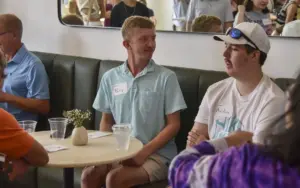
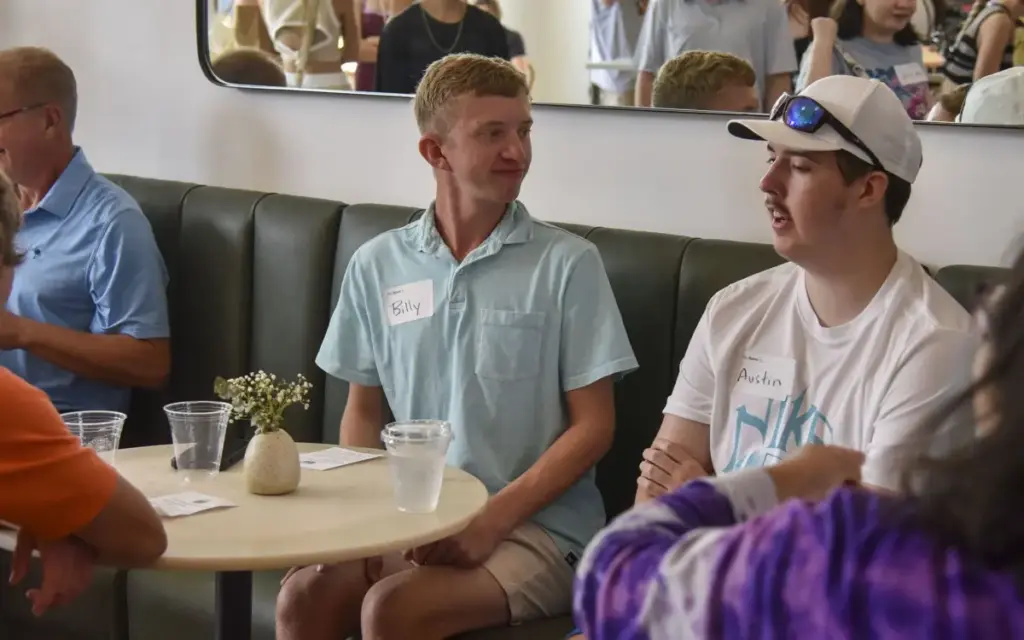
On a recent Saturday afternoon, however, none of those painful memories mattered. Billy and a vibrant group of other twenty-somethings were simply enjoying a weekend outing at Intermezzo, a trendy coffee shop located in downtown St. Petersburg. Inside the air-conditioned café, they sipped iced coffees and found refuge from the blistering Florida summer heat beating down outside.

Smiling and laughing, the young adults chatted comfortably about the topics that genuinely mattered to them: the National Football League, the latest video games, and their favorite places to hang out across the Tampa Bay area.
These young adults had all been brought together by a shared thread in their life experiences: they are on the autism spectrum.
Since May, Billy and his father, Bill Eckert, have been hosting an initiative called "Fun on the Spectrum St. Pete." It operates as a dedicated social club specifically designed for neurodivergent adults and individuals with autism between the ages of 20 and 29. What began as a simple, heartfelt idea hashed out between a father and his son has rapidly evolved into an essential social lifeline for young adults with autism searching for community in Florida.
There’s Power in a Good Hang
As the participants trickled into the coffee shop, each person was greeted warmly by Bill Eckert, Billy’s father and the co-organizer of the event. Bill spent time sitting down, trading relaxed conversations with the attendees and their respective parents as they arrived and filled out a simple icebreaker card. The cards asked a straightforward question: What is your absolute favorite place to go and thing to do in your free time?
For some of the parents in attendance, visible signs of nervousness lingered. Years of parenting a child with autism in a society that is frequently unaccommodating and not built to suit their needs can easily foster a sense of overprotectiveness. Parents often find themselves forced into the role of constant defenders.
Yet, a brief conversation and a reassuring smile from Bill quickly put them at ease. He understands the emotional landscape intimately because he has lived through the exact same anxieties.
Once the final attendee finished filling in the blanks on their card, Bill gathered the group of roughly 10 participants and led them outside into the open air. He arranged them in two lines facing one another. Their task was straightforward yet impactful: speak directly with the person standing across from them about the personal information they had just written down on their cards.
Parker Shirey, a 28-year-old participant, explained to his partner that his favorite local destination has nothing to do with nightlife, but rather involves animals. He loves spending time among the canines at The Dog Bar.
"I don’t drink alcohol. It’s the funniest thing," Shirey said with a laugh, explaining his motivation. "I go there to pet the dogs."
Meanwhile, Andrew Inabinet, 23, shared a passion that aligns him with countless other young adults living in the Tampa Bay area. His happy place is participating in a local running club.
Nearby, Melody Englmann, 24, wiped a bead of sweat from her brow, using her hand to fan her face while playfully sticking out her tongue to emphasize the oppressive humidity. "I can see why you want ice cream this time of year," she said to the man standing across from her. "It’s so hot!"
Watching the interactions unfold from nearby, Bill offered a warm, subtle grin. "They’re like snowflakes," he reflected. "All special in their own way."
‘It Makes You More Confident’
Securing a stable career, navigating a first date, or moving into an independent apartment are quintessential milestones of early adulthood for anyone. However, being on the autism spectrum can render the pursuit of these milestones exceptionally difficult.
According to recent research data, just over half of all adults diagnosed with autism have ever held a paying job. Similarly, only about half have ever experienced a romantic relationship. Even fewer—fewer than 2 in 10—have managed to live independently from their families.
At the same time, the broader cultural face of autism is shifting significantly. More young adults are receiving diagnoses along the spectrum in recent years, a trend driven largely by growing societal awareness regarding the diverse ways autism presents itself. Over a single decade, public health numbers noted a dramatic 450% increase in autism diagnoses.
For many parents of adults on the spectrum, supporting a son or daughter through the transition into adulthood remains a continuous, hands-on process. Bill and his wife, Diane, have dedicated themselves to helping guide Billy along that path.
Billy has long harbored dreams of living independently and eventually starting a family of his own. In pursuit of that future, he and two other young men on the spectrum successfully secured employment at Angels in Action Pinellas. That organization is a nonprofit commercial cleaning company founded by Billy’s parents specifically to provide stable employment opportunities for adults with autism.
The genesis of Fun on the Spectrum stemmed directly from Billy’s personal desire to forge meaningful friendships as an adult. Previous attempts to expand his social circle—such as visiting local sports bars and attending traditional social outings—largely failed to yield lasting connections.
That frustration prompted Bill to think more deeply about the problem. After watching the hyper-popular reality television series Love on the Spectrum, which follows young adults with autism as they navigate the dating world, inspiration struck. He asked himself a fundamental question: Why not create a structured social group specifically for people just like his son?
These gatherings have also inadvertently fostered a secondary support network: a community for the parents themselves.
Jeanette Kooser and Laura Englmann greeted one another with a warm embrace inside the coffee shop, illustrating a genuine friendship that has blossomed through the club’s meetups.
"It’s been really therapeutic for the parents," Englmann noted, reflecting on the shared experience.
"We’re not alone in this, you know?" Kooser added. "Knowing that really does help."
As the weekend event drew to a natural close, the attendees streamed out of the café into the sunlight to gather for a group photograph, capturing the afternoon’s success.
By every measurable account, the meetup was a triumph. Billy moved through the group collecting phone numbers so he could establish a dedicated messaging group chat to keep everyone connected. Meanwhile, parents looked on with a mixture of awe and bewilderment as their children—who had arrived feeling shy or hesitant—engaged enthusiastically and effortlessly in animated conversations with peers who truly understood them.
"My social skills, I think they’ve gotten better," Melody said, reflecting on her experience with the club. "Being around people that are loving, it makes you more confident."