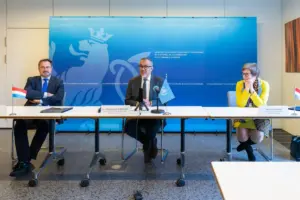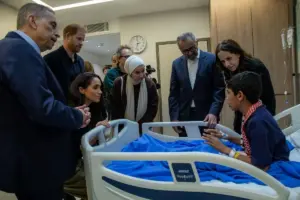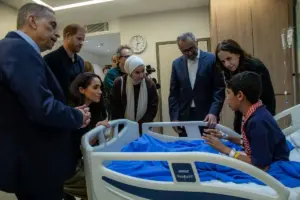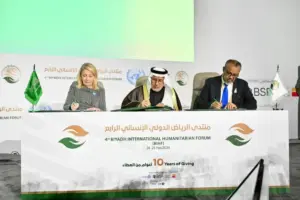







Global leaders, humanitarian organizations, and health diplomats converged in the Saudi capital for the Riyadh International Humanitarian Forum, held on February 24-25, 2025. The high-profile gathering brought together key stakeholders from across the international humanitarian sector to address some of the world’s most pressing and urgent health and humanitarian emergencies. Marking the tenth anniversary of the King Salman Humanitarian Aid and Relief Centre (KSRelief), the two-day event served as a critical platform for high-level advocacy centered on human survival, health diplomacy, individual well-being, and the protection and dignity of populations caught in the crosshairs of conflict and crisis. Beyond high-level discussions, the forum witnessed the formalization of major partnerships, financial commitments, and strategic agreements aimed at mitigating acute humanitarian suffering in the Middle East and surrounding regions, while also underscoring the paramount importance of ensuring the safety and security of aid workers operating in volatile environments.
The milestone anniversary of KSRelief provided a fitting backdrop for deepening collaboration between the Kingdom of Saudi Arabia and its international partners, most notably the World Health Organization and UNICEF. Over the course of the forum, leaders emphasized that contemporary humanitarian challenges—ranging from resururgent infectious diseases to mass displacement driven by protracted conflicts—demand a unified, well-resourced, and sustained global response. By leveraging health diplomacy and strategic financing, the participating organizations sought to transform high-level dialogue into concrete, life-saving interventions on the ground.

A cornerstone of the forum’s announcements was the formalization of several targeted funding agreements between the World Health Organization and KSRelief, designed to tackle severe disease outbreaks and health system vulnerabilities in Yemen and Egypt. In Yemen, where years of conflict have crippled health infrastructure and left millions vulnerable to preventable illnesses, the new partnerships direct critical resources toward malaria prevention and cholera control. Specifically, the agreements allocate US$ 12 million specifically for comprehensive malaria control initiatives, alongside an additional US$ 2.1 million dedicated to expanding cholera treatment capacities across affected areas. These targeted investments are intended to stem the tide of preventable morbidity and mortality in a population facing compounded humanitarian hardships.
In addition to the interventions in Yemen, the collaboration between KSRelief and the WHO Country Office in Egypt yielded a vital agreement worth US$ 3.6 million. This funding is specifically earmarked to provide essential dialysis treatment for Sudanese refugees currently residing in Egypt. The ongoing and devastating conflict in Sudan has forced millions to flee their homes, creating a massive regional displacement crisis and placing immense strain on neighboring countries. For Sudanese refugees suffering from chronic kidney conditions, access to regular dialysis is a matter of life and death, making this specialized health intervention a critical lifeline for vulnerable displaced populations.
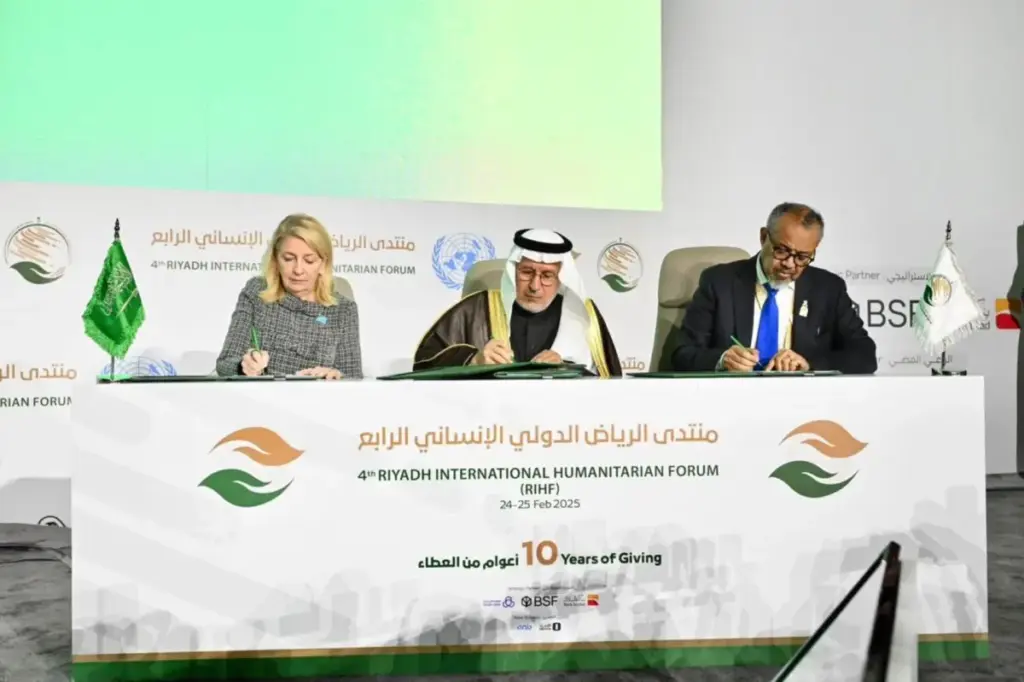
Expanding upon these regional health initiatives, the Riyadh forum also served as the stage for a monumental global health commitment. The Kingdom of Saudi Arabia officially reaffirmed its substantial US$ 500 million pledge to the Global Polio Eradication Initiative, a commitment that was originally announced in April 2024. To operationalize this massive financial backing, two major funding agreements were signed during the forum: a US$ 300 million agreement with the World Health Organization and a US$ 200 million agreement with UNICEF.
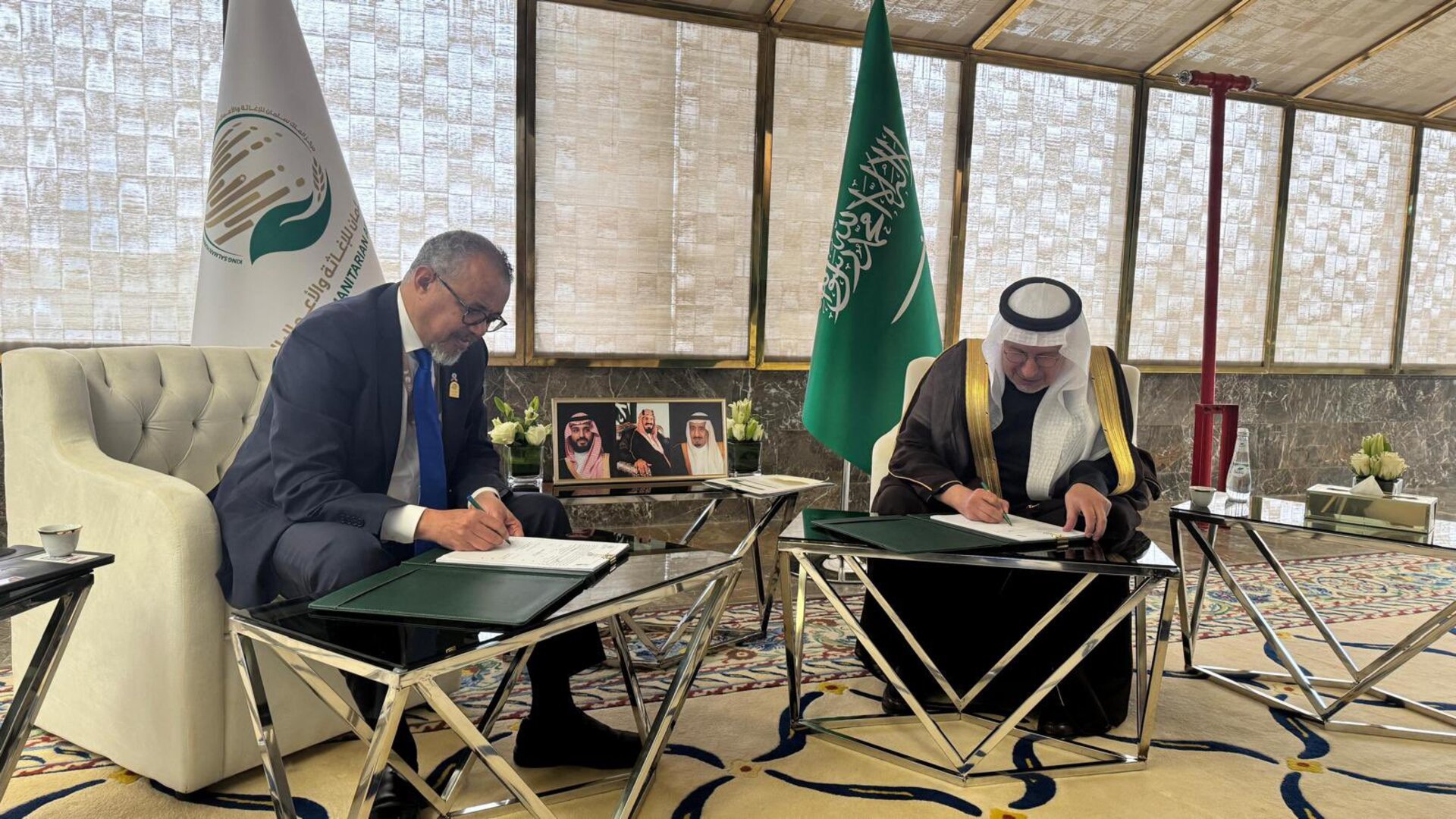
This robust injection of capital is designed to fuel expansive immunization campaigns aimed at vaccinating approximately 370 million children annually, with the ultimate goal of achieving worldwide eradication of the polio virus. The renewed financial commitment highlights Saudi Arabia’s prominent and proactive role in combatting vaccine-preventable diseases, with a strategic focus on high-risk, conflict-affected regions where polio has unfortunately experienced a troubling resurgence. Nations and territories such as Pakistan, Afghanistan, and Gaza stand to benefit significantly from the enhanced surveillance, logistical support, and vaccination coverage made possible by these funds. The presence of high-ranking officials, including WHO Director-General Dr. Tedros Adhanom Ghebreyesus, KSRelief Supervisor-General Dr. Abdullah Al Rabeeah, and UNICEF Executive Director Catherine Russell, at the signing ceremony underscored the collective global resolve required to finally rid the world of polio.
The Riyadh International Humanitarian Forum 2025 concluded by cementing a renewed consensus on the necessity of sustained multilateral cooperation in the face of escalating global crises. By bridging the gap between high-level diplomatic advocacy and tangible financial contributions, the forum demonstrated how targeted partnerships can effectively address complex emergencies. The agreements forged between KSRelief, the World Health Organization, UNICEF, and other international entities represent a vital shield against devastating diseases such as malaria, cholera, and polio, while offering essential medical care to refugees and displaced persons. Ultimately, the landmark event reaffirmed Saudi Arabia’s enduring leadership and commitment to international humanitarian action, setting a collaborative benchmark for addressing the world’s most critical health challenges in the years ahead.