






In the world of speech-language pathology, few hurdles are as notoriously difficult to clear as the /r/ sound. Known for its complex articulatory requirements and the hidden nature of its production, the /r/ sound remains one of the most persistent challenges for both children and the clinicians who work with them. Recognizing the significant need for better tools and clearer methodologies, a new initiative has been launched to provide speech therapists and parents with a comprehensive elicitation pack, designed to demystify the process of teaching this elusive phoneme.
The complexity of the /r/ sound stems largely from its invisibility. Unlike sounds such as /p/ or /b/, which rely on visible lip contact, or /f/, which involves the teeth and lip, the /r/ sound is produced deep within the oral cavity. The tongue must be positioned with precise tension and elevation, often requiring subtle adjustments that are nearly impossible for a child to replicate simply by watching someone else. For many children and teenagers, the struggle to find the correct tongue placement can lead to frustration and a sense of defeat, making the early stages of speech therapy particularly critical.
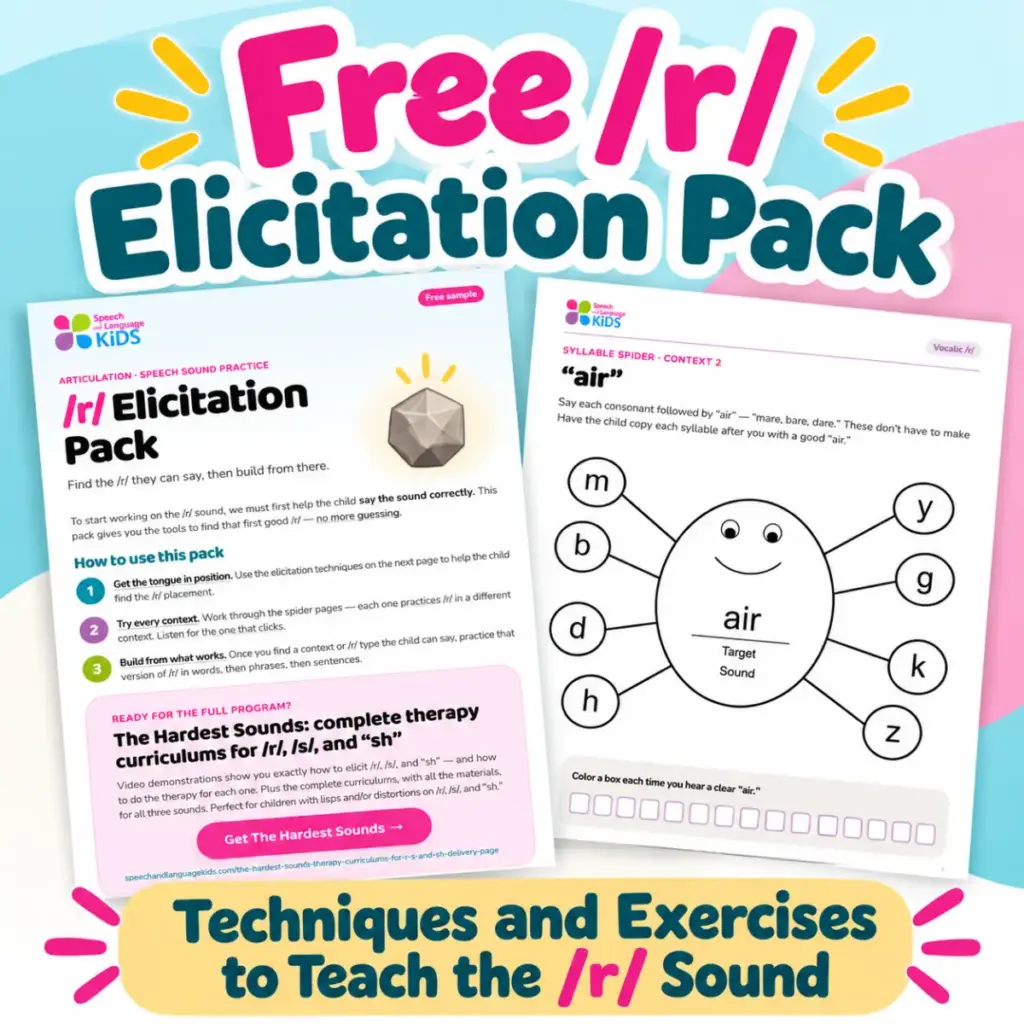
Addressing this clinical challenge, the newly released /r/ Elicitation Pack provides a suite of techniques and exercises specifically tailored to help individuals establish the sound in isolation. The core philosophy behind these resources is that successful speech therapy must prioritize the development of a stable, consistent /r/ sound before moving on to the more complex demands of words, phrases, or conversational speech. By focusing on elicitation—the process of prompting the correct physical movement and sound production—clinicians can build a foundation that supports long-term success.

The release of these materials comes at a time when many parents are increasingly involved in their children’s speech development, often seeking home-based activities to supplement professional therapy sessions. By providing clear, accessible strategies, the pack aims to bridge the gap between formal clinical instruction and daily practice. The resources include specialized exercises that guide the user through the mechanical aspects of sound production, helping them understand where their tongue needs to be and how much tension is required to achieve the correct auditory output.

This initiative is accompanied by professional instructional content, including a video demonstration that serves as a visual guide for the techniques outlined in the pack. The video is designed to assist both professionals and parents in visualizing the coaching process, offering a window into how an experienced speech-language pathologist approaches the nuance of sound elicitation. By observing these methods in practice, users can gain a better understanding of how to provide constructive feedback, when to adjust their approach, and how to maintain the child’s engagement throughout what can often be a repetitive and demanding learning process.
The importance of this work cannot be overstated. When a child struggles with a sound as high-frequency as /r/, it can impact their overall intelligibility and confidence in academic and social settings. Traditional methods often involve a trial-and-error approach that can be time-consuming and discouraging. By moving toward a more structured, evidence-informed framework for elicitation, educators and therapists hope to streamline the learning process, allowing children to reach their speech goals more efficiently and with less frustration.
Building upon the release of the elicitation materials, there has also been an expansion of the broader curriculum focused on the "hardest sounds" in speech therapy. While /r/ is frequently cited as the most difficult, it is often grouped with /s/ and the "sh" sound as the most common targets for intensive remediation. These sounds share a common requirement for precise oral-motor coordination, and they are frequently the final sounds mastered by children in the course of normal development. When a child experiences a delay or persistent difficulty with these specific phonemes, a targeted, systematic approach is usually necessary to achieve correct production.
The comprehensive curriculum for these three sounds—/r/, /s/, and "sh"—offers a more extensive roadmap for long-term intervention. This program is designed for use in both formal speech therapy settings and home environments, providing a structured progression that guides the learner from sound identification and isolation through to generalization in everyday speech. This holistic approach ensures that the skills learned during the elicitation phase are not lost, but are instead integrated into the child’s broader communication repertoire.

The development of these resources reflects a shift in the field toward providing more actionable, high-quality support materials for those managing speech-sound disorders. As speech-language pathologists continue to look for ways to optimize their therapy sessions, the availability of clear, field-tested materials has become a vital component of the treatment process. Whether it is a therapist seeking new ways to break through a plateau with a stubborn /r/ sound, or a parent looking for guidance on how to practice effectively at home, the focus remains on the same goal: giving the child the tools they need to communicate clearly and confidently.
The /r/ Elicitation Pack and the broader "Hardest Sounds" curriculum are designed to be flexible, allowing users to tailor the intensity and pace of the exercises to the specific needs of the individual child. Because every child’s anatomy and learning style are unique, there is no "one-size-fits-all" solution in speech therapy. However, by providing a variety of techniques—from tactile cues to auditory discrimination tasks—the materials empower clinicians and parents to experiment and find the combination of methods that works best for their specific situation.
As speech-language pathology continues to evolve, the integration of digital resources and structured curricula is expected to play an increasingly important role in how therapy is delivered. These tools not only provide the necessary technical guidance but also offer a sense of structure that can be deeply reassuring to families navigating the complexities of speech development. By grounding these efforts in sound pedagogical principles and a deep understanding of articulatory phonetics, the creators of these new resources hope to make the journey toward clear speech a more achievable milestone for children and teenagers everywhere.
The ongoing commitment to refining these tools underscores a fundamental truth in speech therapy: that persistence, combined with the right strategy, is the key to overcoming even the most difficult articulatory challenges. As more families and clinicians adopt these structured approaches, the hope is that the frustration often associated with the /r/ sound will give way to the confidence that comes with successful, clear communication. With the release of these new resources, the field takes another step forward in providing the support necessary to help children master the sounds that define their language and their interactions with the world around them.