







In an era where educational technology is often synonymous with progress, a persistent question frequently arises from parents and educators interacting with the team at Speech and Language Kids: "Where are the interactive digital games we can pull up on our screens for the children?" It is a logical expectation in a world dominated by tablets, smartboards, and educational apps. Yet, the answer from the organization is as unexpected as it is firm: they do not offer them, and there is a compelling, research-backed reason for that decision.
While the modern education system leans heavily into screen time and technology-assisted learning—often out of a genuine necessity to manage limited teacher time and attention—the leadership at Speech and Language Kids has decided to take a different path. Rather than following the digital trend, they are championing a return to tactile, analog materials. The organization argues that the pursuit of the most effective and efficient methods for helping children bridge communication gaps leads not to a screen, but to the classic combination of paper and pencil.
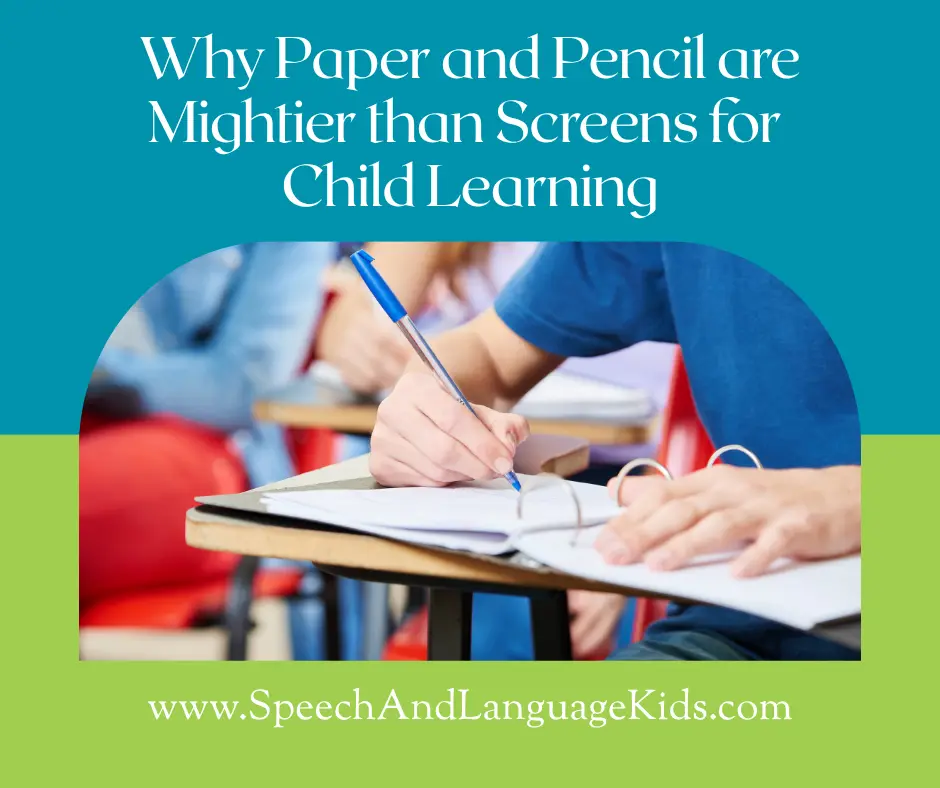
The decision to eschew interactive screen games is rooted in a growing body of academic literature that suggests humans, particularly children in developmental stages, learn best through sensory engagement with physical objects. By prioritizing a PDF-based curriculum that is designed to be printed and held, the organization is betting on the idea that physical interaction with learning materials creates a more profound cognitive connection than the passive experience of clicking through a digital interface.

The fundamental shift in their philosophy is a direct response to the saturation of digital devices in the daily lives of students. Children are already exposed to screens for a significant portion of their day, both in the classroom and at home. By providing printed materials, Speech and Language Kids aims to create a distinct, focused environment where the tactile nature of writing and reading on paper can serve as a catalyst for growth. They contend that by moving away from the screen, they are "homing in" on the specific, high-impact activities that truly "move the needle" for clients and students struggling with communication.
This approach is not a rejection of progress, but rather a strategic focus on neurological and psychological research regarding how the human brain processes information. When a child writes by hand or touches physical pages, they are engaging multiple sensory systems simultaneously—a process that digital interfaces, which often rely primarily on visual and auditory input, frequently fail to replicate.
The scientific community has provided substantial evidence to support this move toward analog learning. One of the primary pillars of this argument is the 2014 study by P.A. Mueller and D.M. Oppenheimer, "The pen is mightier than the keyboard: Advantages of longhand over laptop note taking." Their research, published in Psychological Science, suggests that while digital devices may offer speed, the physical act of longhand writing forces a different level of cognitive processing, leading to better conceptual understanding and retention.
This is further supported by the work of A. Mangen and A. Velmans in their 2013 research, "Handwriting versus keyboard writing: Effect on word recall," which explored how the specific motor movements involved in handwriting contribute to memory and recall. For children who are still in the process of developing their linguistic and communication skills, these motor connections are vital. K.H. James and L. Engelhardt, in their 2012 study, "The effects of handwriting experience on functional brain development in pre-literate children," found that the physical experience of handwriting plays a crucial role in shaping the functional development of the brain. Their findings suggest that the act of writing letters by hand is not merely a task of transcription, but a foundational exercise that aids in the development of the neural pathways necessary for literacy and language.
The benefits of print are not limited to the act of writing, but extend to reading comprehension as well. In a 2018 meta-analysis, "Don’t throw away your printed books: A meta-analysis on the effects of reading media on reading comprehension," researchers P. Delgado, C. Vargas, R. Ackerman, L. Salmerón, and J.A. Ibáñez-Alfonso found that the medium in which text is consumed significantly affects how well a reader understands and retains that information. Their research indicates that print media consistently outperforms digital media in terms of deep comprehension. This is complemented by the 2017 findings of L.M. Singer and P.A. Alexander, who explored reading across different mediums and found that the shift from physical text to digital screens can affect a reader’s ability to calibrate their understanding and focus on the material.
For Speech and Language Kids, integrating these findings into their curriculum is part of a broader, more comprehensive system. They are not merely suggesting the use of paper; they are building a framework that integrates these insights into a unified, powerful tool designed to accelerate the progress of children. By curating their materials in a format that encourages physical interaction, they are attempting to strip away the distractions inherent in digital platforms, allowing children to engage directly with the language-building exercises that are essential for their development.
The organization acknowledges the convenience that digital tools provide to educators, noting that they understand why schools rely on them so heavily. When teacher resources are stretched thin, a screen can act as an automated monitor or a gamified substitute for direct instruction. However, the team at Speech and Language Kids is prioritizing clinical efficacy over the convenience of automation. Their goal is not to fill time with interactive media, but to ensure that the time spent in therapy or practice is as efficient as possible.
This shift toward "tactile learning" represents a significant critique of the current digital-first trajectory of modern education. It posits that while technology has its place in the modern world, it may be overused in contexts where the primary objective is cognitive and linguistic development. By opting for a curriculum that requires a printer, a desk, and a pencil, they are asking parents and educators to slow down and engage in a more deliberate, hands-on process.
The "massive tool" the organization has developed is essentially a rejection of the "one-size-fits-all" approach that many digital software companies utilize. By focusing on the specific mechanics of how children learn—touch, movement, and physical manipulation—they are tailoring their approach to the biological reality of child development. They argue that the kids have enough screen time already, and that adding more—even in the name of "interactive learning"—may actually be counterproductive to the goal of catching up in communication.
As the organization continues to implement this approach, the message to their clients remains clear: the focus is on the things that truly move the needle. By moving away from the digital noise and returning to the fundamental interaction between the hand, the eye, and the paper, they believe they have found a more effective path forward. Whether this will spark a broader conversation about the role of technology in specialized education remains to be seen, but for now, the evidence-based move toward paper and pencil stands as a deliberate, thoughtful choice in a digital-dominated market. The organization’s commitment to this method suggests that they are willing to challenge industry norms if it means delivering better, faster results for the children they serve.