









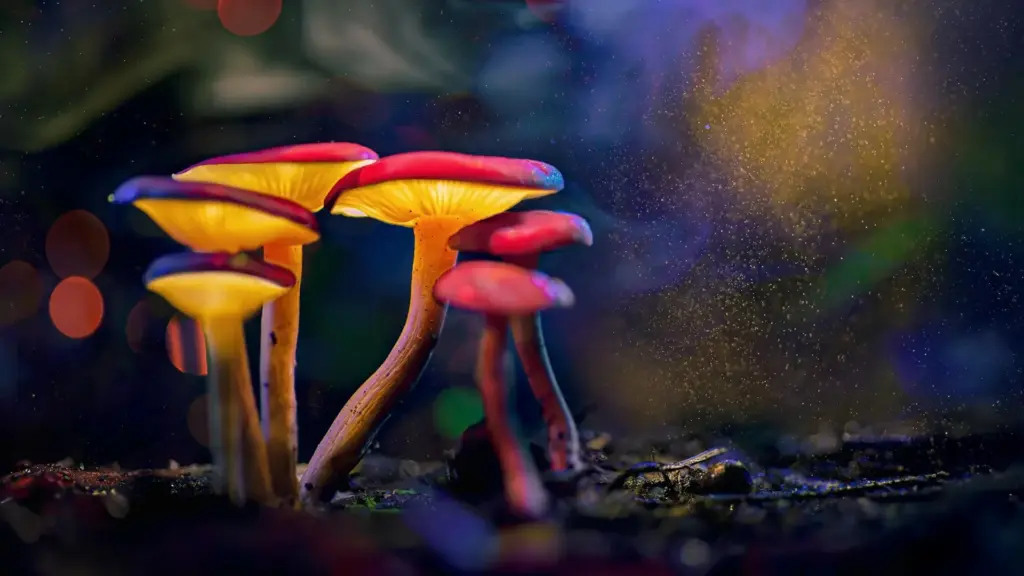
Psilocybin, the psychoactive compound naturally occurring in more than 200 species of mushrooms—most notably those within the Psilocybe genus—has long been a subject of intense scientific fascination for its profound effects on the human mind. In mammals, the substance is known to interact with serotonin receptors, acting as a chemical modulator that can alter mood, appetite, and emotional states. Yet, despite the growing interest in the therapeutic potential of psychedelics for human mental health, the scientific community has historically possessed a limited understanding of how these compounds influence social dynamics and behavioral patterns across the broader animal kingdom.
A groundbreaking new study conducted by researchers in Canada has begun to bridge this knowledge gap. By observing the amphibious mangrove rivulus fish (Kryptolebias marmoratus), a species renowned for its pugnacious nature, scientists have discovered that even a brief, low-dose exposure to psilocybin can significantly dampen aggressive tendencies without hindering the fish’s ability to engage in normal social interactions. The findings, recently published in the journal Frontiers in Behavioral Neuroscience, offer a rare, controlled glimpse into how neurochemical modulation can selectively target specific social behaviors.
"We show that an acute, low dose of psilocybin significantly reduces activity and aggressive attack behavior during social interactions in adult mangrove rivulus fish, a species that is naturally highly aggressive," said Dayna Forsyth, the study’s first author and a research associate who conducted the work while completing her MSc at Acadia University in Nova Scotia.

The study represents a significant milestone in behavioral biology, as it provides the first empirical evidence that psilocybin can selectively suppress escalated aggression in a vertebrate model while leaving baseline social communication intact. "These findings provide the first evidence that psilocybin can selectively reduce escalated aggression in a vertebrate model without suppressing social interaction," added senior author Dr. Suzie Currie, a biologist at The University of British Columbia.
The Unique Suitability of the Mangrove Rivulus
The selection of the mangrove rivulus as a research subject was not accidental. These small, amphibious fish are naturally combative, particularly when they encounter a conspecific—another member of their own species. This innate volatility makes them an ideal model for behavioral studies because their aggressive responses are highly predictable, easily recognizable, and quantifiable. This clarity allows researchers to detect even subtle shifts in behavior that might be obscured in more passive species.
Beyond their temperament, these fish possess a biological quirk that makes them a gold standard for laboratory experiments: they are self-fertilizing hermaphrodites. This unique reproductive strategy results in offspring that are genetically identical to the parent. By utilizing these clonal lines, researchers can effectively minimize genetic variation, ensuring that any observed behavioral changes can be confidently attributed to the administration of psilocybin rather than inherent, inherited personality traits.
For the purposes of this study, the research team utilized three distinct genetic lines of lab-bred fish. The experimental design was rigorous: one group was treated with psilocybin, a second group served as the "stimulus" fish—the counterparts used to provoke social interactions—and a third group provided the necessary data to track how the substance was metabolized and accumulated within the animals’ bodies.
Experimental Methodology and Behavioral Shifts
To establish a behavioral baseline, the researchers placed two fish into a shared tank, separated by a fiberglass mesh barrier and an opaque cover. This setup was designed to prevent physical harm while allowing the fish to perceive one another through sight and scent once the partition was removed. After a five-minute acclimation period, the opaque cover was lifted, and the team meticulously recorded the ensuing social interactions.
The experimental trial occurred 24 hours later. The target fish were placed in water infused with a controlled dose of psilocybin for 20 minutes. Following this exposure, they were returned to the tank to interact once more with the same fish they had encountered the previous day. As the opaque cover was removed for the second time, the researchers observed a marked shift in the fish’s demeanor.
The data revealed a striking divergence from the baseline. Fish treated with the psilocybin compound exhibited a notable decrease in overall movement and displayed significantly fewer "swimming bursts" compared to the control group. These bursts are critical indicators of aggression; they represent high-energy, explosive movements that signal an escalation toward a physical attack, even when the fish are separated by a barrier.
Dr. Currie noted the distinction between these high-energy attacks and other social displays. "Swimming bursts are high-energy attack behaviors that represent an escalation of aggression towards the stimulus fish without making physical contact," she explained. "Other types of aggressive behaviors, like head-on displays, are more about communication and social assessment and require very little energy."
Crucially, the psilocybin did not act as a total sedative. While the fish were less likely to engage in the intense, energy-demanding attacks that characterize their usual combativeness, their more nuanced, low-energy social displays remained largely untouched. This selective effect is perhaps the most significant takeaway from the study.
"Psilocybin’s calming effect appears to selectively reduce energetically costly, escalated behaviors while lower-energy social display behaviors remained largely unchanged," Forsyth said. "This suggests that this compound can selectively dampen escalated social conflict rather than shutting down behavior altogether."
Implications for Future Psychedelic Research
The findings suggest that psilocybin’s influence on behavior is highly specific. Rather than simply rendering the animals lethargic or unresponsive to their environment, the compound seems to act as a precision tool that modulates the threshold for conflict. By reducing the tendency to initiate high-energy attacks while preserving the fish’s capacity for social communication, the study provides a compelling case for the nuanced, receptor-level influence of serotonin-modulating substances.
The researchers believe that these findings could open new doors for understanding the biological mechanisms of behavior. By identifying exactly which social responses are most sensitive to psilocybin, scientists may be able to uncover pathways in the brain that are incredibly difficult to isolate in human clinical trials. Such animal models provide a foundational layer of understanding that could eventually inform how we approach therapeutic research in human populations.
However, both Forsyth and Currie were quick to caution against over-interpreting these results. The study is a piece of foundational science, not a clinical trial. It does not establish that psilocybin is a safe or effective treatment for human aggression, and the transition from fish behavior to human psychology is complex and fraught with biological differences.
Furthermore, the study left several questions unanswered. The researchers focused on an acute, single-dose exposure, meaning the long-term effects of the compound remain a mystery. It is not currently known whether the fish might develop a tolerance to the substance, whether repeated exposure would lead to different behavioral outcomes, or if the observed "calming" effect would persist over extended periods.
Future research, according to the team, will aim to map the neural signaling pathways involved in these observations. By identifying which specific serotonin receptors are triggered and why some social behaviors remain resistant to the compound while others do not, scientists hope to piece together a more comprehensive map of how psychedelics influence the vertebrate brain.
"Future studies can build on this work to explore how psilocybin alters neural signaling, which serotonin pathways are involved, and why some aspects of social behavior are affected while others are not," Dr. Currie concluded. "These are questions that are difficult or impossible to answer directly in humans."
For now, the mangrove rivulus has provided a fascinating, if unexpected, look into the chemistry of conflict, demonstrating that even in the world of small fish, the regulation of aggression is a complex, delicate, and chemically sensitive balance.