








At Monroe Carell Jr. Children’s Hospital in Nashville, the newest and perhaps most revolutionary piece of mobility equipment is not a high-end import from a specialized medical manufacturer. Instead, it is a 3D-printed wheelchair, built layer by layer by a hospital gaming and technology specialist who had never set out to design a medical device at all.
That detail matters immensely. It serves as a small, tangible sign of a much broader and systemic shift currently underway in pediatric healthcare. Across the country and around the world, hospitals, educational institutions, and even individual families are beginning to manufacture their own assistive technology. They are turning to on-demand digital fabrication to bridge gaps that the traditional medical supply chain has long struggled to close. Conventional medical supply chains have frequently failed to deliver equipment affordably, quickly, or in a way that feels genuinely tailored to an actual child rather than a generic patient profile.
What Is Actually Happening at Monroe Carell Jr. Children’s Hospital
The story centers on Graden Knapp, whose day job at the Nashville hospital involves making prolonged and often stressful hospital stays more bearable for young patients through toys, interactive video games, and other therapeutic entertainment tools. While working directly with children at Monroe Carell, however, Knapp noticed a more fundamental absence in the hospital’s resources: the facility lacked an adequate supply of wheelchairs properly suited to the unique, evolving needs of its youngest patients.

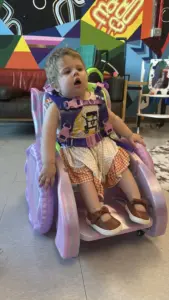
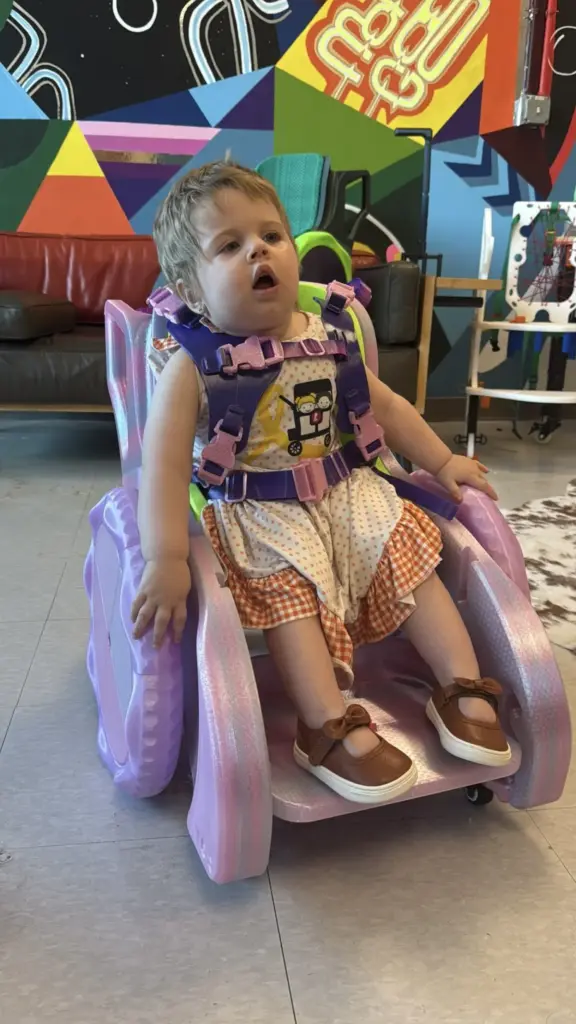
Recognizing this unmet need, Knapp took the initiative to teach himself an entirely new skill set. According to local reporting from WTVF and NewsChannel 5, Knapp encountered designs provided by "Made Good"—almost certainly a reference to MakeGood, a prominent New Orleans-based disability design nonprofit whose name and core mission align perfectly with the project. Using blueprints provided by the group, Knapp spent two to three months printing the various plastic and structural components. He ultimately assembled what has now become the hospital’s first nearly complete 3D-printed wheelchair, marking a milestone for the pediatric facility.
The institutional plan for this innovative device goes far beyond merely parking the chair in a hospital storage closet for occasional use during visits. Knapp’s explicit intent is for young patients to take the custom wheelchair home with them following their discharge. This approach effectively transforms a clinical piece of durable medical equipment into a personal possession that a child can keep, personalize, and literally grow into over time.
While it remains a relatively grassroots and localized project, this initiative points directly toward where the future of pediatric assistive technology may be heading. It envisions a landscape where medical devices are produced on-site, perfectly tailored to the anatomy and preferences of the individual child, and designed around the foundational idea that a wheelchair can be both fully functional and genuinely exciting for a kid to use every day.
The Likely Design Behind the Wheelchair: MakeGood’s Toddler Mobility Trainer
While local news coverage did not explicitly name the exact model Knapp constructed, a careful examination of available public data points strongly toward a specific open-source initiative. MakeGood’s flagship offering—and, according to all public reporting, its only fully 3D-printable wheelchair design—is the Toddler Mobility Trainer. This device matches the news reports with striking accuracy, being a printed children’s mobility apparatus sourced from a collaborative network of nonprofit designers and engineers.
The Toddler Mobility Trainer is a fully 3D-printable mobility device engineered specifically for children roughly between the ages of one and eight years old. It was developed by MakeGood in close collaboration with the industrial design firm LINK PBC and the nonprofit organization TOM Global, with its public rollout announced via PRNewswire. Nearly every structural component of the device—including the primary frame, the wheels, the outer tires, the supportive seat, and even the restraining straps—is designed to be printed on widely available, consumer-grade 3D printing machinery, with the project specifically optimized for machines like the Bambu Lab A1.
Furthermore, the physical parts are engineered to snap together seamlessly without requiring specialized tools, metal screws, or messy adhesives, utilizing an intuitive jigsaw-style assembly method. If a specific component or section sustains damage or breaks under heavy use, caregivers do not need to discard or replace the entire mobility device; they simply reprint the single broken part.
MakeGood has distributed the Toddler Mobility Trainer as a completely free, open-source design hosted on platforms like MakerWorld. This distribution model is deliberate, ensuring that anyone with access to a standard 3D printer and common polymer filament—whether they are a parent, a school librarian, or a hospital technologist like Knapp—can independently manufacture a functional chair at home, in a classroom, or within a clinical workshop. According to organizational data released by MakeGood, the nonprofit has successfully delivered over 3,000 free assistive devices of various descriptions since it was originally established.
The Real Story: Cost and Economic Accessibility
This intersection of digital fabrication and clinical need is precisely where the project transcends a feel-good local news feature and establishes itself as a transformative accessibility story.

A traditional pediatric wheelchair in the United States typically carries a commercial price tag ranging from $1,200 to $5,000. Furthermore, specialized custom or powered pediatric mobility models can easily run well past $12,000 once specialized seating systems, proprietary materials, and electronic controls are factored into the total bill, according to comprehensive pricing breakdowns published by medical equipment retailers Nurture Mobility and BetterCare. That steep baseline financial barrier exists before accounting for the biological reality that growing children naturally outgrow standard wheelchairs every couple of years. This rapid physical development multiplies the lifetime cost of mobility for families, a burden compounded by the frequent reality that private health insurance providers frequently deny or only partially cover these essential claims.
By stark contrast, MakeGood reports that a complete Toddler Mobility Trainer can be manufactured for approximately $150 in raw material costs. Technical breakdowns from participating hardware platforms itemize this production cost as roughly eight to ten spools of PETG plastic filament, two to three spools of TPU flexible filament, and a minimal amount of standard hardware components, such as six bolts, two nuts, two washers, and small caster wheels.
While exact confirmation of the exact model and material costs for Knapp’s specific Nashville build remains unverified by the original source reports, WTVF directly documented Knapp’s own assessment that his hospital-printed wheelchair came out to roughly ten times cheaper than a standard commercial wheelchair. This reported savings ratio lines up closely with the economic disparity between a $150 open-source build and a traditional $1,200 to $5,000 commercial device.
The root cause of these dramatic financial savings is not merely the use of inexpensive raw polymers. Rather, it is the total elimination of an entire traditional commercial layer involving industrial manufacturing, complex global distribution networks, and heavy retail markups typically associated with durable medical equipment. A conventional wheelchair must be engineered, tooled for mass production, manufactured in a centralized industrial plant, shipped across continents, stocked by regional medical suppliers, and marked up at each transitional step. A 3D-printed mobility device bypasses almost the entirety of this traditional supply chain. The underlying design exists purely as a digital file, and the manufacturing facility can be whatever printer happens to sit inside a hospital office, a community school library, or a family’s spare bedroom.
Why This Matters on a Global Scale
While the Nashville narrative highlights a single hospital housing one printer and one motivated employee, the underlying technological implications stretch far beyond the borders of Tennessee. The potential impact is particularly profound for low- and middle-income countries, where public and private access to basic mobility devices remains drastically more restricted than it is in wealthy industrialized nations.
The sheer scale of this global accessibility gap is starkly documented by international health organizations. Data compiled in the Global Report on Assistive Technology, published jointly by the World Health Organization and UNICEF, reveals that more than 2.5 billion people worldwide require at least one assistive product—such as a wheelchair, a hearing aid, or communication assistance—yet nearly one billion of those individuals are systematically denied access. An analytical breakdown across 35 countries demonstrated that access levels can drop as low as 3 percent of total need in impoverished nations, contrasted with approximately 90 percent in wealthy nations.
Similarly, peer-reviewed scientific studies on global wheelchair service provision, relying on WHO population metrics, estimate that roughly 77 million people worldwide require a wheelchair to achieve basic mobility. Among that massive global population, only an estimated 17 to 37 percent possess access to a device within less-resourced settings. This leaves an estimated 33 to 65 million people who medically require a wheelchair entirely without one. Furthermore, earlier findings from the World Health Organization’s World Report on Disability highlight that approximately 80 percent of all individuals living with disabilities reside in developing or low-resource countries—precisely the regions where commercial medical supply chains are thinnest and import costs are highest.
This structural void is precisely the gap that low-cost, open-source, 3D-printed designs are uniquely positioned to address. By decentralizing production, empowering local technicians, and removing the reliance on expensive imported hardware, digital manufacturing offers a scalable pathway to independence for millions who would otherwise go without mobility support.
Why Hospitals and Institutions Should Pay Attention
The mounting case for hospitals, educational institutions, and disability-focused nonprofits to invest in localized digital manufacturing technology rests upon several clear demonstrations. These projects prove that customized medical equipment can be produced rapidly on-site, at a fraction of traditional retail costs, and with a level of personal adaptability that conventional mass-market manufacturing simply cannot match.
None of this suggests that 3D-printed assistive devices are currently prepared to fully replace clinically prescribed, heavily engineered, insurance-subsidized wheelchairs for every patient with complex medical needs. Factors such as long-term structural durability, strict weight limits, and comprehensive clinical validation remain active areas of ongoing research and refinement within the engineering and medical communities.
However, for specific use cases such as the one demonstrated at Monroe Carell Jr. Children’s Hospital—rapidly and affordably placing a functional, well-fitted mobility device directly into the hands of a young child who urgently needs it—the technology is already functioning successfully in the real world. For other regional hospitals, educational facilities, and global health organizations, the primary question moving forward is no longer whether this decentralized approach to mobility is viable. Instead, it is simply a matter of who will choose to print the next one.