





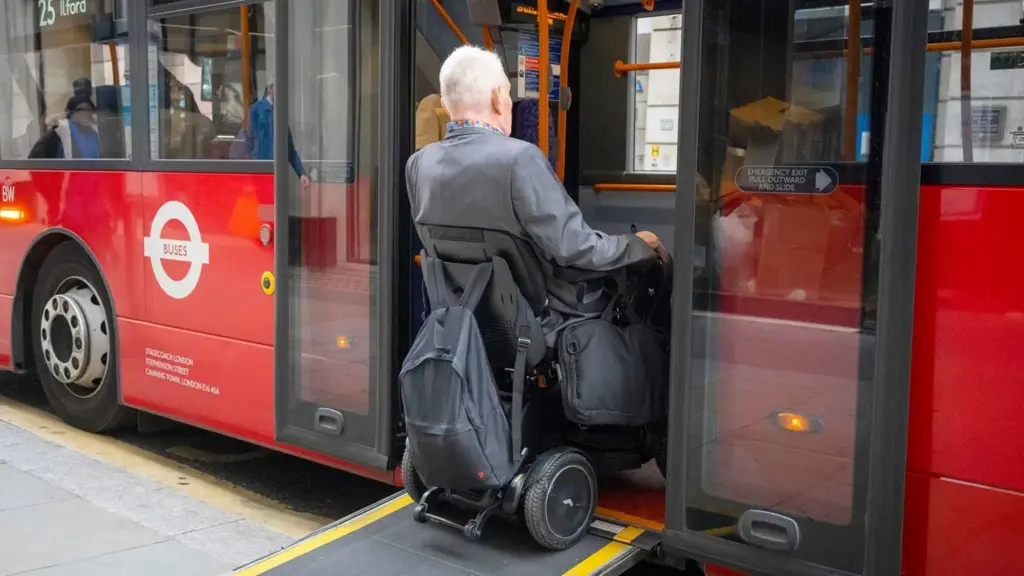
Starting April 1, disabled people across England will be able to travel by bus for free at any time of day, marking a monumental shift in the country’s public transportation accessibility. Previously, free bus passes were strictly restricted to off-peak hours on weekdays—specifically between the hours of 09:30 and 23:00. These legacy time limits created persistent barriers for pass holders attempting to commute to standard morning jobs, early appointments, or late-night social and cultural events. The removal of these time constraints will directly benefit an estimated one million people nationwide, effectively transforming the national bus network into a true full-time lifeline for disabled citizens seeking independent mobility.
The landmark policy follows a highly successful trial period implemented within Greater Manchester’s integrated “Bee Network.” It also responds directly to years of relentless campaigning by prominent disability rights organizations, including Scope and Transport for All. Advocates have widely celebrated the government’s move, praising it for eliminating an unfair "postcode lottery" where the validity of a concessionary pass depended entirely on arbitrary local council rules and regional funding decisions. However, while disability organizations have lauded the extension of travel hours, they continue to emphasize that this reform is only a single step forward. They note that eligibility requirements across various local authorities still require broader standardization to ensure true equity nationwide.
To secure the permanence of the program, the £60 million scheme is being jointly funded through the Department for Transport and the Department for Work and Pensions. Government officials have framed the reform as an essential workforce and cost-of-living initiative. This policy joins existing transit measures designed to ease financial pressures on the public, such as the nationwide £2 single-fare cap. Furthermore, the decision brings England into alignment with similar 24/7 concessionary transit programs that have successfully operated in Scotland and Wales for years.
Global Takeaways: How Other Countries Can Make Accessible Commuting Possible
Making daily commuting accessible and affordable for disabled citizens requires a comprehensive combination of thoughtful policy design, advanced digital systems, and targeted public investment.
Why Was the UK Able to Do It?
The ability to implement a nationwide policy of this scale stems from a combination of centralized funding frameworks, long-standing statutory concessionary travel schemes, and coordinated advocacy efforts. By pooling resources through national departments like the Department for Transport and the Department for Work and Pensions, the UK government was able to subsidize local operators and absorb the costs associated with increased ridership during peak travel windows. This centralized backing avoids the pitfalls of relying solely on municipal budgets, which often fluctuate and create regional disparities in service quality and pass utility.
Does It Depend on Existing Infrastructure?
Yes, heavily. Free transit passes only work if the public transport network is physically and technologically accessible to begin with. Concessionary fare policies lose their practical value if potential passengers cannot physically board a vehicle or navigate the transit environment.
A successful 24/7 free travel program requires robust physical infrastructure, such as low-floor buses with functional wheelchair ramps, audible and visual next-stop announcements, and well-maintained boarding spaces at stops and stations. Beyond physical modifications, technological accessibility is equally critical. Real-time passenger information systems, digital apps that communicate service disruptions or accessibility equipment failures, and streamlined ticketing and validation technology ensure that disabled commuters can plan their journeys with confidence and independence. Without these foundational elements in place, expanding operating hours for free passes risks leaving behind passengers who encounter physical or informational barriers at the curb.
What Is Needed to Make Commuting Affordable for People with Disabilities?
Achieving true affordability and accessibility in public transportation requires aligning financial concessions with broader structural improvements across the entire transit ecosystem. Policymakers must look beyond simply waiving fares during specific hours and address the comprehensive needs of disabled commuters.
First, financial support mechanisms must be standardized on a national level to prevent regional inequalities and administrative confusion. When pass validity and eligibility criteria vary wildly from one municipality to another, commuters traveling across regional boundaries face unnecessary hurdles.
Second, continuous investment must be directed toward modernizing the fleet and upgrading transit infrastructure to guarantee that accessibility features are reliable and universal. This includes maintaining lifts and ramps, training operating personnel in disability awareness and assistance, and ensuring that stations meet modern accessibility standards.
Finally, ongoing collaboration between transit authorities, regional governments, and disability advocacy groups is essential. By maintaining an open dialogue with the communities they serve, policymakers can identify emerging bottlenecks, address persistent service gaps, and ensure that public funding translates into tangible, everyday improvements for disabled travelers relying on public transport to participate fully in the workforce and society.