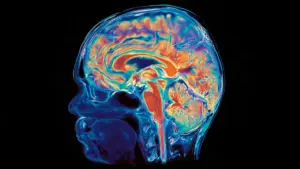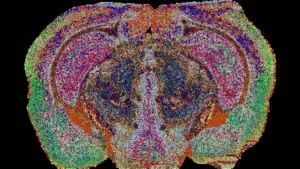




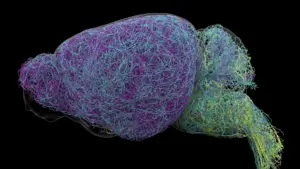




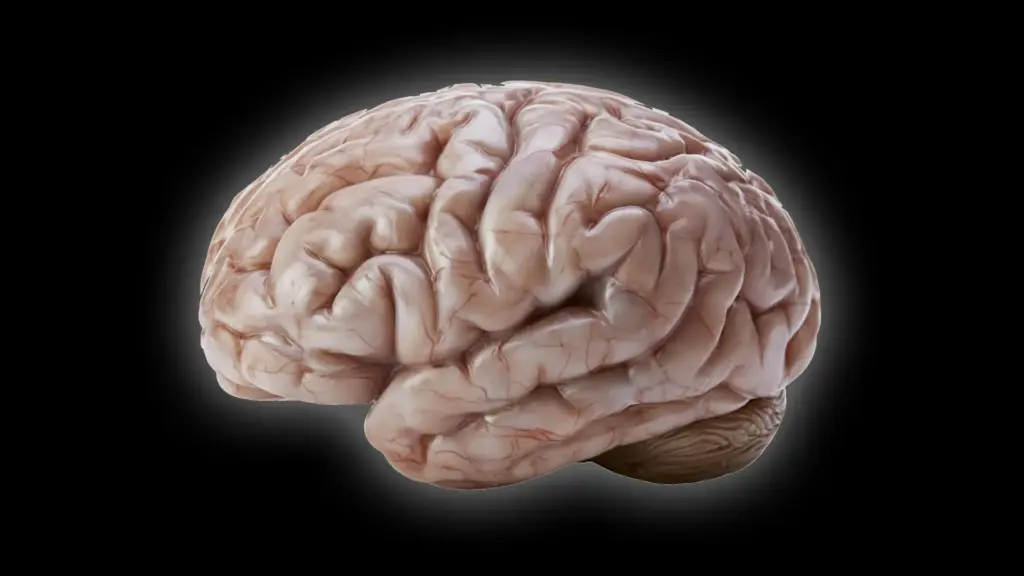
Most primates are characterized by their expansive, highly complex brains, often described as possessing a surface marked by a dense topography of folds and grooves. This intricate architecture, known as gyrencephaly, is a hallmark of primate evolution, allowing for the massive expansion of the cerebral cortex—the seat of higher cognitive function—within the confines of the skull. Yet, nestled within the primate family tree, there exists a striking exception: the common marmoset (Callithrix jacchus). These small South American monkeys possess brains that are almost entirely smooth, a condition known as lissencephaly.
For years, the stark contrast between the walnut-like surface of the human brain and the smooth exterior of the marmoset brain has intrigued evolutionary biologists. Now, researchers at the German Primate Center (DPZ), the Leibniz Institute for Primate Research in Göttingen, have unveiled a series of cellular mechanisms that help clarify why these two species diverged so dramatically in brain morphology. Their findings, recently published in the journal Science Advances, offer a new window into the cellular orchestration of brain development and the evolutionary pressures that shape primate cognition.
The Developmental Divergence
To understand why a marmoset brain remains smooth while a human brain develops its characteristic folds, the research team focused on the foundational stages of neural development. The cerebral cortex is built by neural progenitor cells—the "builders" of the brain. These cells are responsible for generating the billions of neurons that eventually form the complex circuitry of the cortex.
"We wanted to understand which changes at the cellular level cause the marmoset brain to grow less and form fewer folds," says Lidiia Tynianskaia, a PhD student in the Junior Research Group Brain Development and Evolution at the DPZ and a co-first author of the study. Tynianskaia notes that the early stages of marmoset brain development actually mirror those of larger, folded-brain primates. It is only as development progresses that specific, divergent processes emerge, effectively throttling the production of new neurons and limiting the expansion of the cortex.
The research team hypothesized that the key to this difference lay in the behavior of these progenitor cells. To test this, they utilized brain organoids—miniature, three-dimensional models of brain tissue grown from stem cells. These organoids have revolutionized neurodevelopmental research by providing a controlled environment to observe how cells divide, differentiate, and interact over time, mimicking the early stages of organogenesis without the ethical and logistical constraints of working exclusively with live primate models.
Investigating the Mechanisms of Growth
By comparing organoids derived from human cells with those from common marmosets, the researchers discovered that the smaller, smoother cortex of the marmoset is not the result of a single genetic "switch," but rather a confluence of multiple cellular adjustments. The marmoset’s brain is limited by a combination of reduced speed, simpler architecture, and a curtailed window of productivity within its progenitor cell populations.
"Our investigations have shown that certain progenitor cells in the common marmoset divide significantly more slowly than in humans," explains César Mateo Bastidas Betancourt, the study’s other first author and a PhD student in the Junior Research Group. "Other progenitor cells have a simpler structure than their human counterparts, with fewer processes, and are therefore less proliferative."
In human brain development, progenitor cells often possess complex, elongated structures that allow them to produce a vast number of daughter cells. These cells undergo rapid and repeated cycles of division, creating the massive surplus of neurons required to force the cortex to expand and fold. In contrast, the marmoset’s progenitor cells operate with a more conservative strategy. Because these cells divide at a slower rate and possess fewer cellular "processes" to facilitate rapid expansion, the total output of neurons is significantly lower. Furthermore, the researchers identified that the marmoset has a shorter overall developmental window during which these progenitor cells can multiply at their peak rate. Together, these factors restrict the growth of the cerebral cortex, precluding the development of the folds seen in larger primates.
Bridging the Gap with Miniature Brains
The use of organoids was central to the study’s success, allowing for a level of statistical rigor that would be impossible with traditional methods. Because they can generate large numbers of organoids, the researchers were able to perform high-resolution comparisons that yielded statistically robust data. To ensure that their findings in the laboratory accurately reflected biological reality, the team performed validation studies using fetal brain tissue, confirming that the patterns observed in the organoids were consistent with those found in vivo.
A critical component of this study was establishing a "developmental clock" that could accurately synchronize the organoids with natural brain growth. Brain organoids do not always grow at the same pace as a developing fetus, which can make cross-species comparisons difficult. The DPZ researchers meticulously calibrated these growth rates, discovering that a marmoset brain organoid grown for 50 days corresponds to the developmental stage of a natural marmoset brain at 90 days. This synchronization was essential; it allowed the scientists to make meaningful comparisons between the two species and interpret their experimental data with confidence.
"The study combines the advantages of in vivo and in vitro methods," says Michael Heide, head of the Junior Research Group Brain Development and Evolution at the DPZ. By bridging these two worlds, the researchers provided a clear view of how microscopic cellular differences scale up to create massive differences in macroscopic anatomy.
Evolutionary Implications and Human Health
The implications of this research extend far beyond the anatomy of the marmoset. Understanding how these developmental "brakes" are applied in one primate species provides a framework for understanding how evolutionary pressures have driven the dramatic expansion of the human brain. The study suggests that relatively subtle shifts in the timing and behavior of progenitor cells can lead to profound differences in brain size and surface complexity. This evolutionary flexibility likely allowed primates to adapt to a wide variety of ecological niches, with some species evolving larger, more complex brains to handle complex social or environmental challenges, while others, like the marmoset, maintained a more compact and metabolically efficient brain.
Furthermore, these findings offer a potential roadmap for researchers studying human neurodevelopmental disorders. Many human conditions, such as lissencephaly (a condition in which the brain lacks normal folds), involve the same cellular processes that the researchers identified in the marmoset. By understanding the cellular mechanics that naturally limit brain folding, scientists may be better equipped to investigate what happens when these processes go awry in humans.
As the common marmoset becomes an increasingly important model in biomedical research, understanding the fundamental differences between its brain and our own is essential. The work conducted by the team at the German Primate Center highlights the importance of comparative biology in decoding the mysteries of the human mind. By looking at the "smooth" brains of our evolutionary cousins, we are gaining a clearer picture of the intricate, multi-step process that allows the human brain to achieve its remarkable complexity. Through the lens of these miniature organoids, the researchers have turned a spotlight on the hidden, cellular choreography that dictates the architecture of the primate brain, providing a foundation for future inquiries into evolution and medicine alike.