








As the excitement of summer fades and school districts welcome students back for the autumn academic term, occupational therapists are rolling out seasonal lesson plans designed to merge early-fall traditions with crucial developmental skill-building. Across school caseloads nationwide, September has officially ushered in the popular "apple theme," a comprehensive framework utilized by practitioners to address everything from fine motor control and sensory processing to executive functioning and social-emotional development.
Practitioners utilizing platforms like The OT Toolbox Membership have increasingly turned to digital dashboards to sort and print specialized thematic materials tailored to individual student needs. By selecting apple-themed resources from resource directories, school-based occupational therapists are able to quickly source geoboard activities, emotions-based "I Spy" games, directed drawing prompts, handwriting sheets, and connect-the-dots worksheets. These printable assets are frequently paired with specialized physical tools—such as using connect-the-dots sheets with Wikki Stix positioned on walls to encourage proper posture and heavy work input—to form an integrated approach to early intervention.
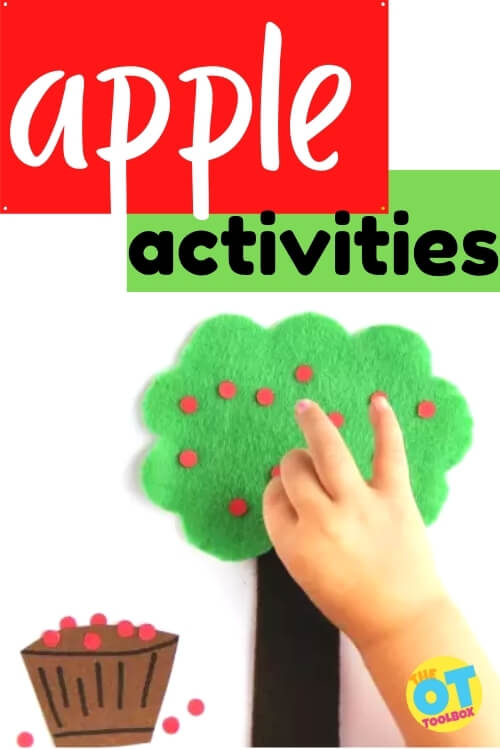
The transition from summer to crisp autumn days provides an ideal backdrop for thematic learning, evoking imagery of hot apple cider, apple picking, and fresh pie while grounding developmental therapy in familiar seasonal concepts. According to school-based practitioners, breaking down activity lists into specific developmental domains allows therapists to seamlessly target sensory, motor, visual, cognitive, or social skills during a single session.
Apple Sensory Activities
Sensory integration forms a foundational pillar of early occupational therapy, and apple-themed interventions offer multifaceted tactile and proprioceptive experiences. Practitioners frequently incorporate activities that deliver heavy work through the hands, such as crafting baked cotton ball apples. These tactile mediums are utilized during sensory play and fine motor exercises to help regulate children who experience hyper- or hyposensitivity.
Sensory bins also serve as a primary experiential learning tool in modern therapy settings. An apple-and-cinnamon-themed sensory bin, for instance, can be configured to conceal magnetic letters that children must locate and arrange to spell the word "apple." For students struggling with shape constancy and letter reversals, physically manipulating three-dimensional letters within a sensory medium helps wire their memory for future academic applications.
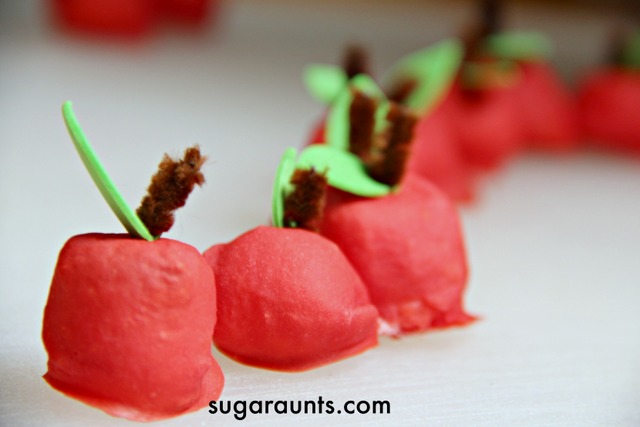
Additionally, therapists have adopted variations of traditional sensory mediums, such as applesauce oobleck. By substituting standard slime ingredients with applesauce, the mixture yields a distinct texture accompanied by the natural scent of apples and cinnamon. Beyond addressing sensory processing concerns, practitioners frequently employ slime and oobleck creation as a vehicle for building attention span, sequencing abilities, and direction-following skills. When paired with guided discussion, these sensory exercises can also function as a supportive adjunct to socio-emotional interventions.
Apple Fine Motor Activities
Developing hand strength, finger dexterity, and muscle tone is essential for functional tasks such as handwriting, independent dressing, pencil management, and scissor control. To accomplish these goals, therapists rely on multi-sensory math and craft exercises featuring apple motifs.
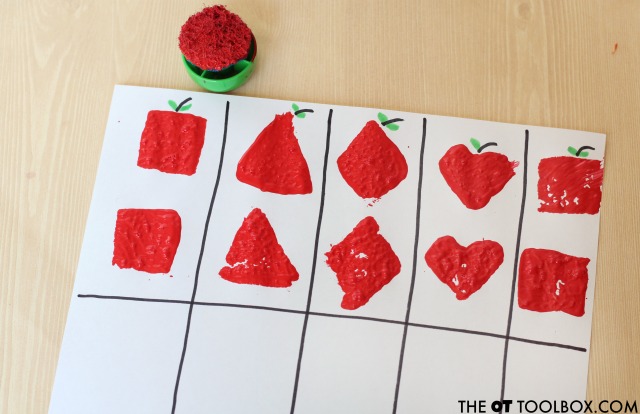
Simple classroom materials are frequently repurposed for clinical objectives. For example, using toilet paper tubes as apple stamps allows occupational therapists to target visual-motor integration, precision, eye-hand coordination, and midline crossing during craft sessions. Similarly, apple poke activities utilizing toothpicks require children to engage a precise pincer or tripod grasp, directly preparing small hand muscles for the demands of daily student life, including buttoning, zipping, and writing.

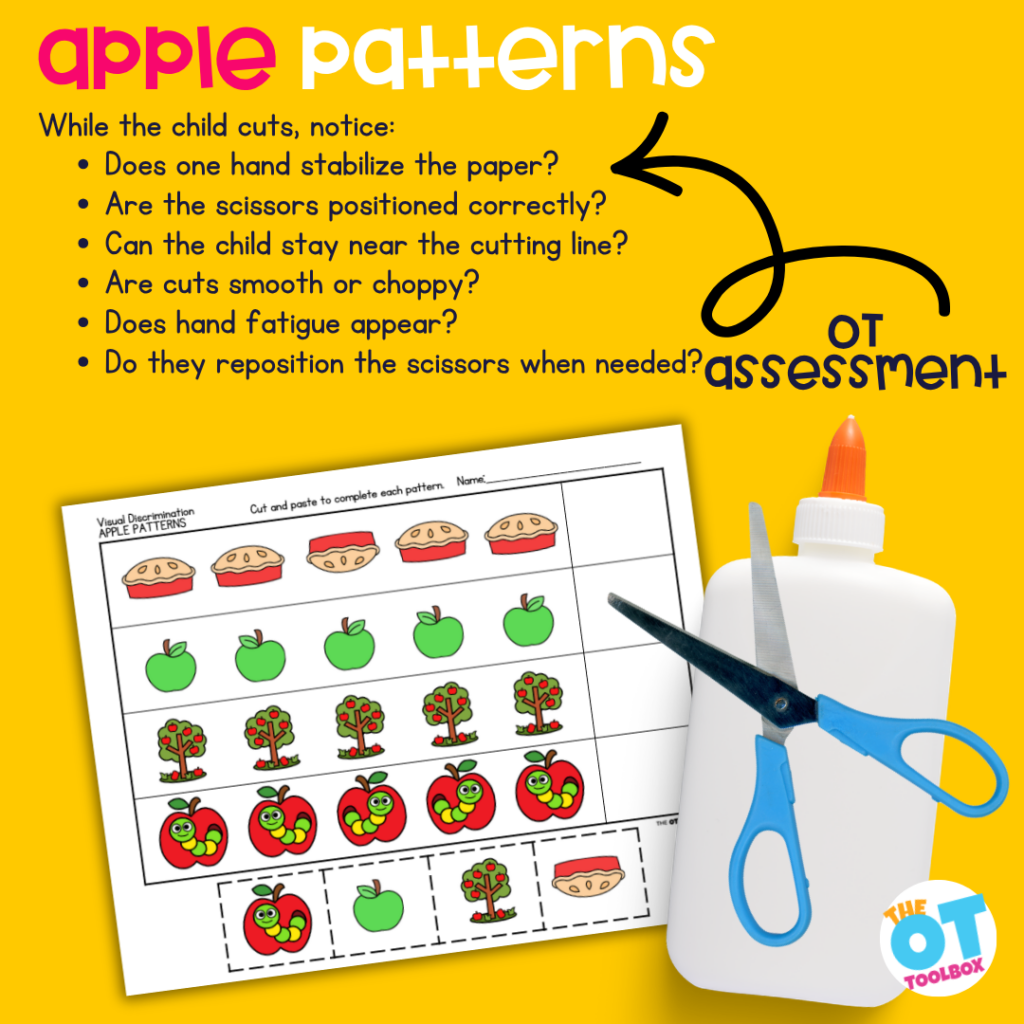
Pointillism art projects utilizing standard hole punches offer another effective method for strengthening hand muscles while encouraging pincer grasps during the collection of tiny paper circles. Pattern worksheets, available in both full-color and printer-friendly outlines, provide comprehensive opportunities to observe and evaluate student capabilities at the start of the school year. When children engage in cutting exercises using these thematic worksheets, therapists can monitor baseline performance metrics—such as grasp patterns, bilateral coordination, and visual-motor planning—to inform initial screening tools and progress notes.
Apple Gross Motor Activities
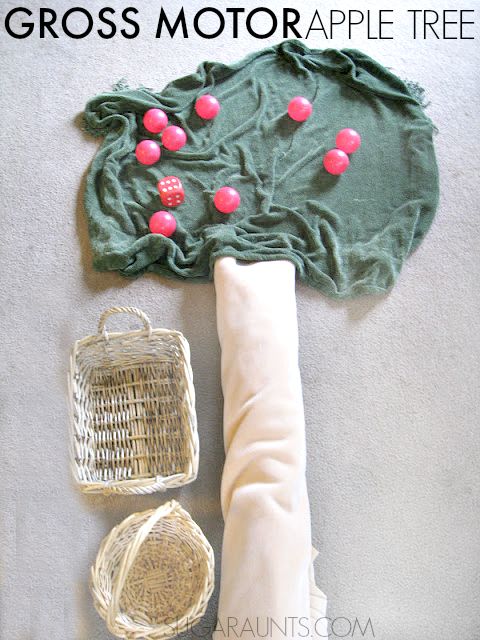
Gross motor development remains a critical requirement for maintaining postural stability, core strength, endurance, and balance during the school day. To integrate gross motor planning with the autumn theme, practitioners utilize custom tools and movement-based interventions.
Indoor balance beams decorated with apple motifs allow therapists to address balance, core stability, proprioceptive feedback, and vestibular processing within a controlled environment. Movement-based brain breaks provide students with structured opportunities for self-regulation through whole-body kinetic movement.

Literary connections are also leveraged to inspire physical activity. Classic children’s literature, such as Dr. Seuss’s Ten Apples Up on Top, is frequently adapted beyond its traditional use for sequencing and number identification. Therapists encourage students to mimic the physical movements of the animal characters in the story, or incorporate felt apples for children to balance on their heads, thereby challenging postural stability and coordination.
Apple Visual Perception Activities
Visual perceptual skills—including visual discrimination, form constancy, visual closure, and spatial awareness—are heavily emphasized through thematic puzzle and construction tasks. Activities utilizing geometric shapes, tangrams, and Lego block structures require children to replicate visual patterns and models, fostering critical problem-solving abilities.
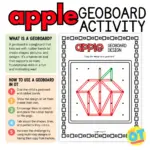
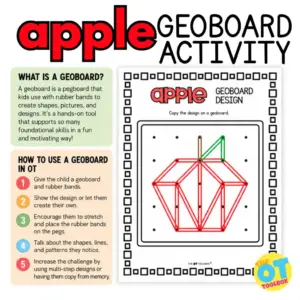
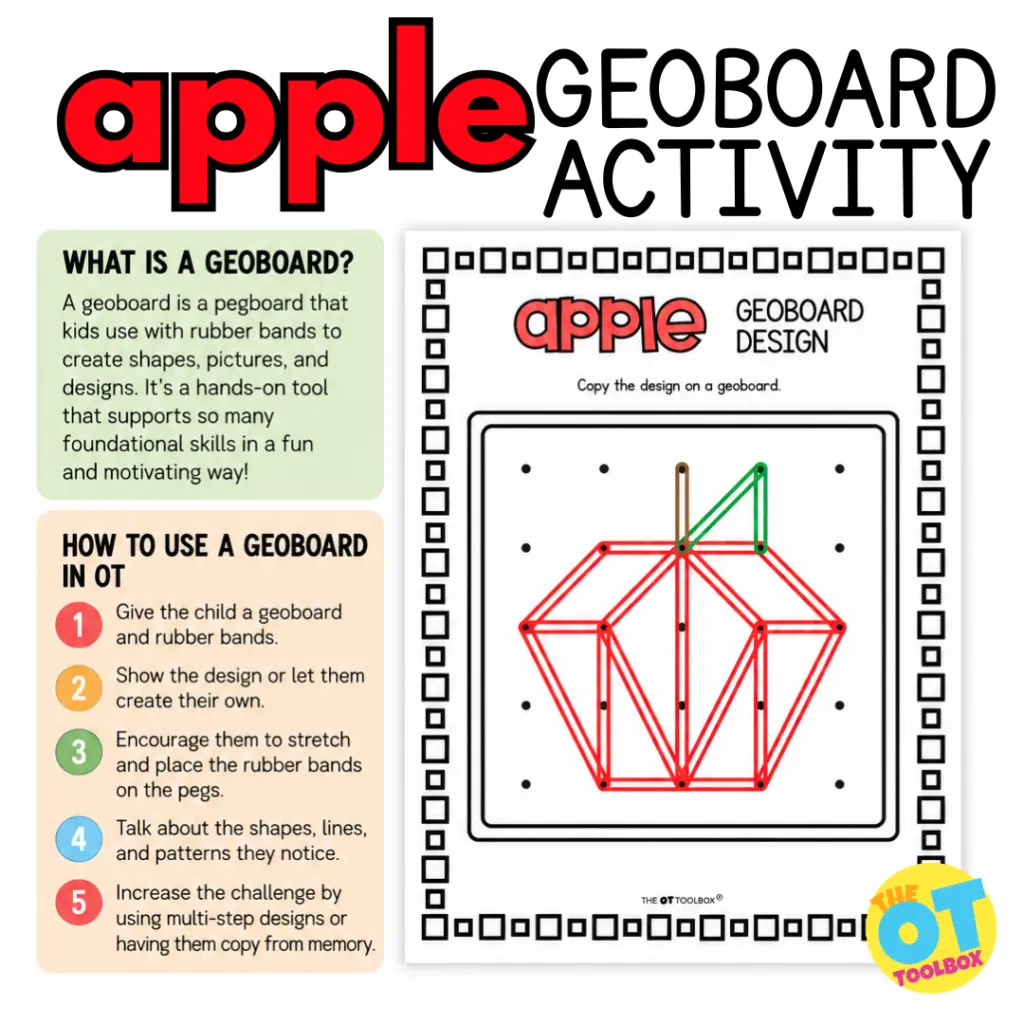
Printable apple geoboards represent another core resource utilized in occupational therapy sessions. By having children replicate apple designs onto physical geoboards using rubber bands, therapists simultaneously target hand strength, arch development, finger isolation, bilateral coordination, and visual-motor integration. The physical resistance provided by the rubber bands offers tactile feedback while the child visually maps the correct peg coordinates.
Practitioners frequently adapt geoboard activities to match varying developmental levels within their caseloads. Interventions can be simplified by assigning only a portion of the apple design, or made more advanced by briefly displaying the complete pattern, covering it, and requiring the child to reconstruct the image from memory. To bridge visual-motor work with academic output, therapists often conclude the activity by asking students to write descriptive words related to the apple design.
Apple Executive Function Activities
Executive functioning skills, encompassing working memory, emotional control, flexible thinking, and planning, are naturally developed through multi-step kitchen and craft projects. Preparing salt dough apples provides a combined sensory, fine motor, and planning experience that requires children to follow sequential directions from conception to completion.
Storybooks focusing on the agricultural life cycle, such as Zoe Hall’s The Apple Pie Tree, offer narrative structures that support attention span and memory sequencing while introducing basic culinary concepts. Hands-on sorting and spelling games utilizing red apple cups further reinforce attention, letter recognition, and word formation through interactive play.
Apple Handwriting Activities
Handwriting proficiency is systematically addressed through a tiered approach to writing prompts and directed drawing exercises. Within structured therapy sessions, writing tasks are scaled according to the developmental stage of the student.
Beginning writers typically focus on producing a single apple-related vocabulary word, while developing writers construct complete sentences. Older students are challenged to compose descriptive narratives detailing the botanical life cycle of an apple from seed to fruit. For advanced executive functioning challenges, students utilize structured writing prompts to brainstorm topics, organize their thoughts, draft text, and independently edit their work.
Apple Activities for Social Emotional Skills
Structured thematic activities also serve as a vehicle for enhancing social communication and peer interaction. Specialized programs, such as those developed by the Social Butterflies Club, incorporate apple-themed group exercises designed to encourage cooperative play, turn-taking, and verbal communication among children in school and clinical settings.
The integration of these seasonal resources highlights a broader trend among school-based practitioners who utilize familiar cultural motifs to engage students meaningfully. As the autumn term progresses, occupational therapists continue to expand their seasonal repertoires with supplementary water table activities, gross motor play, and fine motor crafts designed to support holistic childhood development.
Sydney Thorson, an occupational therapist with a background in human development and family studies, notes that individualized and meaningful treatment remains central to effective school-based therapy. As both a clinician and a children’s author and illustrator, Thorson emphasizes the value of versatile, thematic programming in addressing the diverse physical, cognitive, and emotional needs of students entering the classroom each fall.