








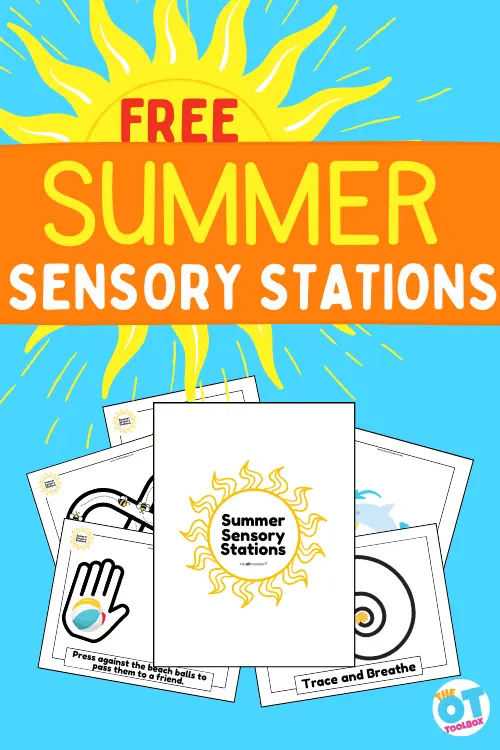
As families and educators navigate the long stretch of the summer months, maintaining children’s routines, attention spans, and emotional regulation can present a unique challenge. To address this need, therapy professionals and educators have welcomed a popular self-regulation resource: an all-new set of printable Summer Sensory Stations. Designed by pediatric occupational therapist Colleen Beck, OTR/L, this new seasonal installment follows a series of successful seasonal sensory path activities aimed at supporting children through movement, body awareness, and motor planning.
The printable activities are designed for versatility and ease of use. Educators, parents, and occupational therapists can print the pages, laminate them or place them in protective page sleeves, and hang them along a hallway wall or lay them out on the floor. This setup allows children to transition smoothly from station to station, engaging in activities that require jumping, stomping, crawling, balancing, and moving purposefully without the need for expensive or specialized equipment.
The introduction of the summer-themed set comes in response to overwhelming positive feedback regarding previous seasonal sensory stations offered on platforms like The OT Toolbox. Summer offers countless opportunities to incorporate movement into a child’s day, making it an ideal window for sensory-focused activities. However, the changing routines of summer camps, summer school sessions, and extended time at home can disrupt a child’s sense of internal regulation. Structured movement breaks help support attention, emotional regulation, and motor planning during these transitional months.
A DIY sensory path provides a streamlined approach to incorporating physical activity into daily schedules. Rather than asking children to complete one long, continuous task, sensory stations encourage short bursts of movement. These brief intermissions help reset the nervous system and improve focus before children return to learning, social play, or seated tasks. The movement-based stops are engineered to integrate physical coordination and visual input with deep breathing and heavy work, making them effective brain breaks or transitional warm-ups for therapy sessions.
Unlike random physical activities or unstructured playtime, printable sensory paths offer visual cues that guide children through a carefully sequenced series of movements. This design supports executive functioning and motor planning while simultaneously engaging multiple sensory systems. By combining vestibular input, proprioception, visual processing, and interoception, sensory paths provide balanced sensory input that can either calm or alert a child depending on their individual neurological needs.
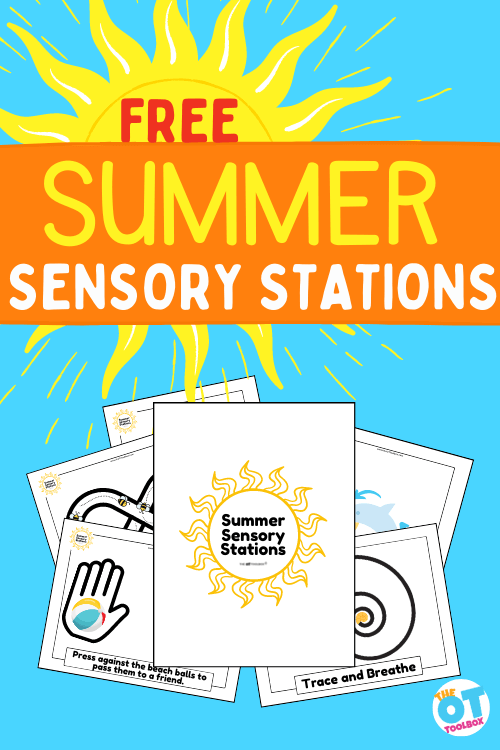
The newly released Summer Sensory Stations packet features a distinct series of stops, each tailored to specific developmental and sensory goals. The first page introduces the bee path infinity loop, an activity centered on mindfulness, deep breathing, crossing the midline, and eye-hand coordination. By tracing the infinity loop, users follow the paths of summer bees as they move along the graphic. This visual tracking encourages visual attention, self-awareness, coping skills, and concentration.
Therapists and educators can modify the bee infinity loop activity to increase the challenge. For instance, users can stand on an uneven surface—such as a gymnastics mat, a slant board, or balance pods—to test their balance and visual skills. Alternatively, children may kneel or assume a lunge position while tracing the loop. Because the printable stations are easily mounted at varying heights on walls, they adapt readily to different physical requirements and age groups.
The second component of the summer packet is the "leap like a dolphin" activity, which is designed to deliver vestibular input, motor planning challenges, and proprioceptive heavy work. Proprioception plays a critical role in waking up the body’s joints and muscles, offering vital feedback regarding body position, weight, pressure, stretch, and movement in space. This leaping exercise can be performed from a standing or kneeling position, integrating a fun summer theme into essential heavy-work routines.
The packet also includes a beach ball wall push-up page. This station provides whole-body proprioceptive input through the upper extremities, targeting the shoulder girdle, elbows, wrists, and the arches of the hands. Additionally, wall push-ups serve as a foundational strength and stability exercise for the core. This activity can be modified by placing the page lower on the wall to encourage a lunge position, or by performing the push-ups from a seated position to challenge seated balance. Such modifications ensure that the material remains accessible and beneficial for wheelchair users and children with varying mobility levels.
A seashell trace and breathe printable forms the fourth station in the kit. Building on the popularity of spiral path deep breathing exercises, this station encourages children to follow a circular path from a crab to a seashell while inhaling, and then trace it again while exhaling. This visual guide assists users in fully filling and emptying their lungs, serving as a powerful interoception and proprioception exercise for mindfulness and emotional self-regulation.
The final element of the packet features summer sand squats. This open-ended visual guides users through a targeted number of squat repetitions to promote balance and coordination. Educators and therapists can further customize the exercise by asking children to pick up objects from the floor during the movement or by encouraging them to maintain visual focus on a specific target to enhance visual attention.
These summer sensory stations can be seamlessly integrated into occupational therapy clinics, classrooms, summer camps, and home programs. Because they require minimal preparation and can be reused throughout the season, they offer a sustainable method for incorporating structured sensory diets into daily routines. The printables are currently available through digital distribution channels, including direct access for members of specialized online educational networks and therapy resource platforms.