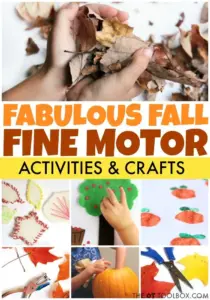








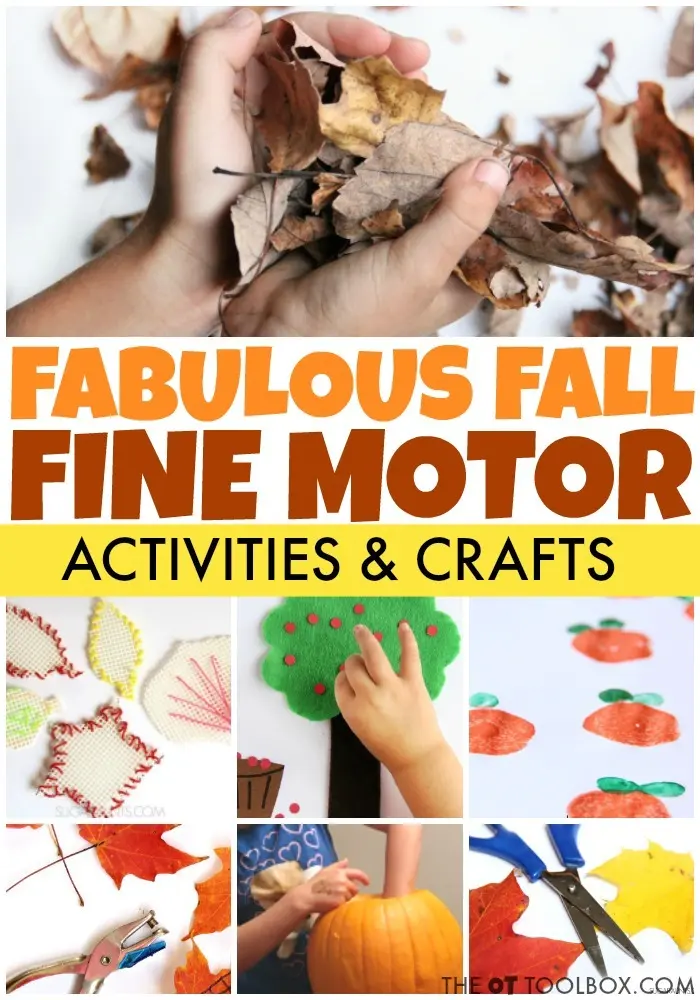
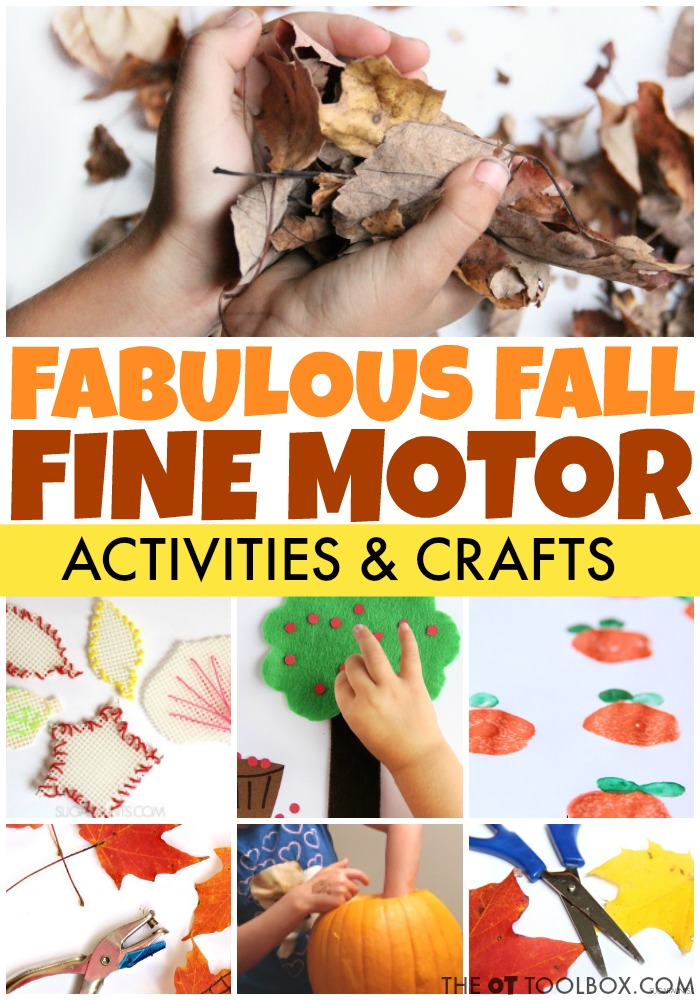
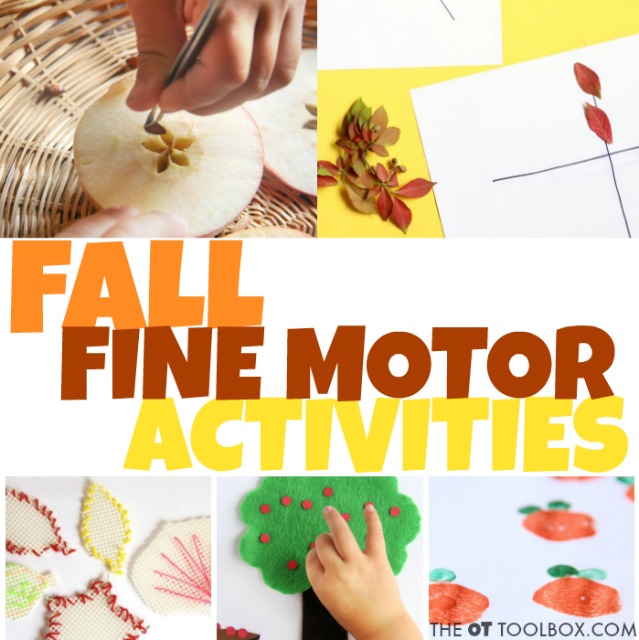
As the crisp autumn air arrives, bringing changing leaves, pumpkin spice, and the distinct sights and sounds of the harvest season, pediatric occupational therapists, educators, and parents are finding creative ways to weave seasonal motifs into developmental play. Rather than choosing fall-themed activities simply because they fit the calendar, professionals are increasingly utilizing apples, leaves, pumpkins, acorns, and farm materials to target specific fine motor, visual-motor, and sensory processing needs in children.
This comprehensive approach allows therapists to address foundational abilities such as hand strength, finger dexterity, scissor proficiency, visual-motor integration, and handwriting readiness. Because many traditional autumn crafts and sensory experiences naturally overlap several developmental domains, practitioners are able to adapt everyday seasonal items to meet the diverse needs of individual children on their therapy caseloads.
The integration of seasonal themes into pediatric therapy offers a practical framework for addressing developmental challenges without making the exercises feel like clinical work. From tactile exploration involving squishy play dough and scented leaves to precision-based tasks like manipulating paper clips and hole-punching natural foliage, autumn provides a rich landscape for pediatric developmental support.
Fall Hand Strength Activities
Hand strength is a fundamental prerequisite for countless daily tasks, ranging from writing with a pencil to managing clothing buttons and opening containers. When children exhibit weak hand strength, therapists often look for resistive materials that encourage the small muscles of the hands to engage.
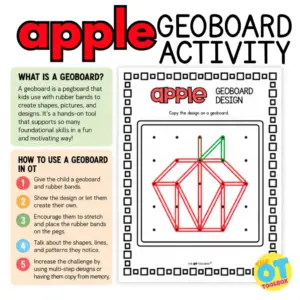
Apple-themed geoboards have emerged as a popular tool within therapeutic settings. By having a child stretch rubber bands across the pegs of a geoboard to recreate a specific apple design, therapists provide targeted resistance to the fingers and hands. This activity not only builds finger and hand strength but also promotes bilateral coordination, visual-motor skills, and motor planning. The challenge can be easily modified by swapping out standard rubber bands for thicker, more resistant alternatives or by simplifying the visual design for children who find the spatial demands too difficult.
Play dough remains a staple across all seasons, but autumn offers unique opportunities to incorporate tactile sensory challenges and proprioceptive feedback. Rolling, squeezing, pinching, and pressing dough engage the intrinsic hand muscles, supporting pincer grasps, tripod grasps, wrist stability, and arch development. Therapists frequently hide miniature items inside the dough, such as fall-colored beads, tiny plastic leaves, or seasonal erasers, prompting children to dig and pinch to retrieve them. Printable play dough cards featuring autumn shapes further bridge the gap between creative play and structured skill-building.
Hole-punching activities offer another effective avenue for building hand strength. By drawing or printing leaf and apple templates and asking children to punch holes along the outer edges, therapists harness the sustained hand force required to operate a standard hole punch. Simultaneously, the visual requirement of following a curved edge introduces a vital visual-motor component.
Fall Dexterity Activities
Manual dexterity relies on the coordinated, precise movement of the fingers. For children to manipulate small objects efficiently, they require a combination of speed, precision, strength, and visual-motor integration. When these systems fail to coordinate properly, fine motor tasks can become frustrating. Seasonal manipulatives—such as craft pom-poms, seeds, mini erasers, paper clips, and small craft supplies—transform simple sorting tasks into engaging dexterity exercises.
Fall tree geoboards, for instance, require children to manipulate rubber bands around individual pegs, demanding that they use their fingertips to grasp, stretch, reposition, and release the bands with control. Therapists encourage the use of fingertip precision rather than whole-hand pulling, which directly supports the refined movements needed for effective pencil grips.
Similarly, apple paper-counting cards utilize standard paper clips to address multiple fine motor goals simultaneously. When children attach the correct number of paper clips to a laminated card, they practice precise fingertip movements and bilateral hand coordination, with one hand stabilizing the card while the other manipulates the clip.
Pom-pom transfers offer yet another adaptable dexterity exercise. By using tongs or tweezers to move fall-colored craft pom-poms into ice cube trays or muffin tins, children refine their tool use. Therapists can easily adjust the difficulty of the task by altering the size of the pom-poms or changing the grabbing tools to require varying levels of pinch strength.
Fall Scissor Skills and Cut-and-Paste Crafts
Scissor use is a complex bilateral task that requires both hands to perform entirely different jobs simultaneously. While the dominant hand opens and closes the scissors, the non-dominant helper hand must stabilize, rotate, and guide the paper along a visual path.
Apple cutting practice pages provide structured opportunities for children to cut along designated lines, allowing therapists to observe critical bilateral coordination patterns. Beyond structured paper worksheets, actual fall leaves gathered from outdoors offer a compelling medium for scissor practice. Children frequently enjoy snipping real leaves into small pieces or cutting intricate shapes from foliage. If colorful leaves are not locally available, paper alternatives serve the same developmental purpose.
Cut-and-paste crafts introduce executive functioning demands that extend beyond basic cutting skills. Farm-themed craft assemblies require a child to cut out various components, visually determine where each piece belongs, orient them correctly, follow a sequential set of directions, and apply glue precisely. This multifaceted process reinforces scissor skills, bilateral coordination, visual-spatial awareness, and multi-step direction following.
Visual-Motor Integration in Autumn Activities
A child may possess adequate hand strength and finger dexterity yet still struggle when a task requires them to coordinate what they see with how their hands move. Visual-motor integration challenges often manifest as difficulties copying designs, following written lines, locating specific targets on a page, or maintaining proper spatial awareness.
Fall-themed directed drawing activities help address these challenges by prompting children to observe a visual model of an acorn, leaf, apple, or pumpkin and reproduce its spatial relationships on paper. By determining where each line begins and ends, children practice the exact visual-motor skills required for early handwriting and shape formation.
Pattern block designs combine fine motor manipulation with visual discrimination and spatial awareness. Children must identify the correct geometric pieces, determine their proper orientation, and position them accurately in relation to neighboring pieces.
Seek-and-find or "I Spy" pages with autumn themes offer robust practice in visual scanning, figure-ground perception, and sustained visual attention. Therapists often utilize cut-out cardboard frames to restrict the viewing area for children who become easily overwhelmed by visual clutter. By adding a fine motor component—such as having the child circle each found item, cover it with a small manipulative, or secure it with a clothespin—practitioners seamlessly blend visual processing with physical dexterity.
Fall Handwriting and Writing Prompts
Rather than relying solely on isolated drill-and-practice worksheets for letter formation, therapists often incorporate seasonal writing prompts into meaningful literacy tasks. Fall-themed writing cards can be scaled to accommodate diverse developmental stages within a single classroom or therapy group.
Emerging writers may focus on producing a single fall-related vocabulary word, while beginning writers construct a complete sentence. Developing writers tackle short thematic responses, and older students plan and draft multi-paragraph essays. By utilizing a unified set of prompts, instructors can differentiate the activity to address individual student needs—such as line awareness, letter spacing, proper formation, and writing endurance—without isolating students who require different levels of support.
No-Prep Natural Materials and Extended Sensory Play
Many of the most effective fine motor interventions require little to no preparation and utilize items readily found in nature or around the home. Fallen leaves can be torn, crumpled, punched, cut, sorted, or strung onto yarn to promote hand strength and bilateral coordination. Acorns and pumpkin seeds can be picked up with tongs, sorted by size or color, counted, and transferred between containers to build pincer grasps and in-hand manipulation skills.
Natural elements also lend themselves well to sensory-rich art projects. Educators and therapists frequently dye pumpkin seeds using food coloring or liquid watercolors, engaging children in the physical process of scooping, sorting, and dyeing before utilizing the seeds for color-sorting games, mosaic suncatchers, or intricate seed-placement crafts. Similarly, incorporating household items like plastic bread ties into seasonal crafts allows children to manipulate rigid fasteners, further challenging their intrinsic hand muscles.
As pediatric professionals and educators continue to plan their seasonal curricula, the integration of autumn themes offers a practical, engaging pathway for supporting childhood development. By anchoring therapeutic exercises in the sensory-rich experiences of the harvest season, practitioners can help children build the foundational motor skills necessary for academic and daily living success, all while enjoying the vibrant traditions of the fall season.