









We all harbor a private list of aspirations—behaviors we hope to adopt and patterns we long to shed. Perhaps you have promised yourself you would finally prioritize regular exercise, reduce your alcohol intake, choose more nutritious meals, or nurture your relationships through more frequent check-ins. Others may yearn to cultivate a more intentional listening style, practice spontaneous acts of kindness, or simply scroll through social media with less mindless frequency. These goals are rarely born of a lack of desire; they are genuine reflections of the lives we wish to lead. Yet, the cycle remains frustratingly consistent: we make a brief, spirited commitment to change, only to find ourselves sliding back into the well-worn ruts of inertia within a matter of days or weeks.
For many, these recurring lapses are interpreted as a personal failing. We assume that if we were only more disciplined, more motivated, or simply possessed a greater reservoir of raw willpower, we could force these changes to take root. We castigate ourselves for our perceived lack of grit, convinced that our failure is a testament to our lack of character. This self-critical narrative, however, is not only inaccurate—it is counterproductive. When we internalize these frustrations, our mood often declines, which in turn saps the very motivation we believe we are lacking, creating a self-defeating feedback loop. Contemporary behavioral research suggests that the solution is not to "try harder," but rather to fundamentally rethink how we approach the mechanics of habit formation. By applying established principles of behavioral psychology, we can move away from the myth of willpower and toward a more effective strategy for lasting change.
Managing Context and Environmental Cues
The most significant hurdle in changing behavior is understanding that our actions are rarely the result of a conscious, moment-to-moment decision-making process. Instead, our habitual responses are triggered by specific environmental cues. Once these cues are triggered, our brain essentially enters "autopilot" mode, and our behavior proceeds with a sense of inevitability. We stop choosing and start reacting.

Consider the common habit of checking work email. Many professionals find themselves reaching for their phone to check for messages the moment they have a spare second—in an elevator, while waiting for a meeting to start, or even the second they wake up. While there may be an initial, valid intent to stay on top of responsibilities, the action eventually becomes decoupled from that original intention. It transforms into a reflexive "groove" in the brain. The mere sight of the device becomes the cue, and the email check becomes the automatic response.
Breaking this cycle often requires a physical intervention in one’s environment. Research suggests that if we remove the cue, we can effectively disrupt the habit loop. For example, simply removing a distracting app icon from a home screen can prevent the reflexive, unconscious act of opening it. By removing the environmental trigger, we create a necessary "pause" that allows for conscious choice to return to the forefront.
Conversely, when we wish to increase a desired habit, the same principle applies in reverse: we must engineer our environment to provide the cues we need. If your goal is to eat more healthily, the placement of your snacks matters significantly. Moving healthy options to the front of the cupboard or placing them on the counter where they are visually prominent makes them the "default" choice when the habit of snacking takes over. Similarly, using visual reminders—such as quotes, photographs, or symbolic objects—can serve as cues for values-based behaviors. When we encounter these triggers throughout the day, they act as gentle nudges, pulling us back toward our intentions and making it easier to practice the behaviors that truly matter to us.
The Necessity of Consistent Practice
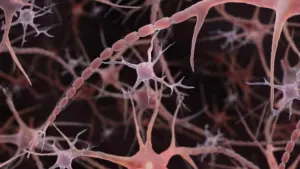
A common misconception is that changing a habit is a singular event—a decision made once and finalized. In reality, behavior change is a slow process of attrition. Because our old habits have been reinforced over months or years, they possess a significant amount of "habit strength." Every time we engage in a new behavior, we are essentially building a new neural pathway while simultaneously weakening the old one.
This is why the adage "practice makes perfect" holds such weight in the context of psychology. As we repeatedly perform a new action, the mental effort required to initiate it begins to decrease. Eventually, what once felt like a deliberate, taxing chore begins to feel natural, automatic, and even easy. The key is to view the process not as a pass-fail exam, but as a long-term project of incremental strengthening. Patience is not just a virtue in this context; it is a clinical necessity.
Cultivating Compassion During the Process
Perhaps the most significant barrier to successful change is the emotional weight we place on our own stumbles. When we fall short of our goals, we often resort to a harsh inner monologue, characterized by disappointment and self-criticism. This voice, however, rarely serves as a catalyst for growth. Instead, it creates a psychological environment where we are more likely to retreat into the comfort of our old, unhealthy habits as a form of self-soothing.
To mitigate this, psychologists often suggest techniques to externalize that inner critic. By giving that voice a name—such as the example of "Mortimer"—we create a psychological distance between our true self and our critical thoughts. When we hear that voice criticizing us for a lapse, we can acknowledge it with a sense of irony or detachment: "Thanks for your opinion, Mortimer!" This allows us to pivot toward a more compassionate response. Meeting ourselves with the same care we would offer a friend—perhaps through a simple, grounding physical gesture like placing a hand on our own arm—can help us maintain the resilience needed to keep going. We can remind ourselves, "You can do it, dear one. One step at a time."
Remember that because habits operate beneath the level of conscious awareness, they are inherently slippery. Lapses are not evidence of moral failure; they are simply data points that reveal the strength of our old neural pathways. When you notice a lapse, instead of judging it, try to view it with curiosity. Ask yourself what the specific trigger was and how you might modify your environment or your strategy to better support your goals next time.
Starting Small for Long-Term Success
We often fall into the trap of setting "vaulting" goals—ambitious, broad intentions that we expect to implement perfectly starting tomorrow. Given the strength of our existing habits, these grand gestures are often destined for failure. A more sustainable approach is to focus on a single, small change that is realistically implementable, even on our busiest or most stressful days.
Every time we interrupt our "habit energy" to do something different, we are making progress. A quick, two-minute text to a friend is a small act that strengthens the habit of social connection. A five-minute stretch to break the habit of being sedentary at a desk is a victory over the inertia of a workday. Working on a project for only thirty minutes can shatter the well-worn, reflexive habit of avoidance. These micro-interventions are not "lesser" than big, bold moves; they are the fundamental building blocks of a new lifestyle.
By choosing one or two small, manageable habits and repeating them consistently, we gradually reshape the architecture of our daily lives. When we inevitably falter, we must recognize that this is a fundamental part of the human experience. The goal is not to achieve a state of perfect, uninterrupted performance, but rather to cultivate the ability to recognize the lapse, offer ourselves grace, and simply try again. Change is not a race to a finish line; it is the quiet, steady work of choosing who we want to be, one small action at a time.