








For more than 130 years, the theories of Sigmund Freud have occupied a contentious space in the scientific landscape, often viewed as either foundational to our understanding of the human psyche or relegated to the margins of empirical science. However, a groundbreaking scientific analysis published in the journal Entropy suggests that the divide between the father of psychoanalysis and modern researchers may be narrower than previously believed. The paper posits that several of Freud’s fundamental concepts regarding the mind share striking, substantive similarities with one of the most influential frameworks in contemporary neuroscience: the "prediction paradigm."
This emerging synthesis explores the profound intersections between Freud’s original psychoanalytic theories, the evolution of clinical practice, and the modern neuroscientific view of the brain as a sophisticated prediction machine. By mapping the subjective experiences long documented by psychoanalysts onto the physiological models now being developed by neuroscientists, researchers Erik Stännicke, Bendik Hovet, and Line Indrevoll Stännicke, along with their colleagues, are providing a new vocabulary for understanding human behavior. They argue that psychoanalysis has long been tracking the subjective side of a physiological process that cognitive neuropsychology is only now beginning to map in the laboratory.
The Brain as a Prediction Machine
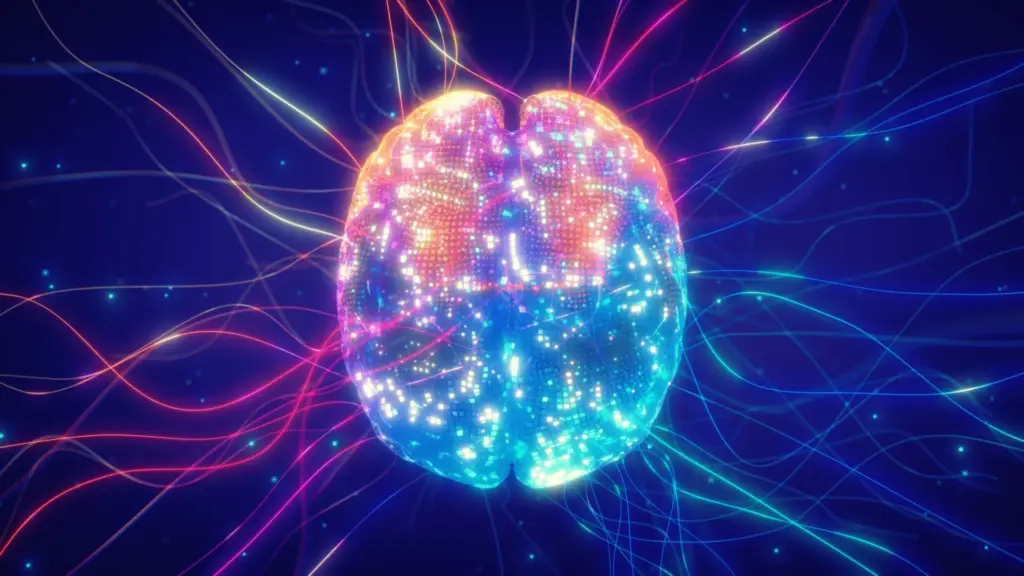
At the heart of this discussion is the "predictive brain" hypothesis. This model flips the traditional view of the brain as a passive receiver of sensory data on its head. Instead, modern neuroscientists increasingly describe the brain as an active, anticipatory organ. Rather than waiting for information to arrive from the outside world and then formulating a response, the brain is constantly generating predictions about what is likely to happen next. It utilizes past experiences and internal models to create a continuous forecast of reality.
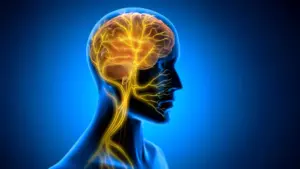
When sensory information arrives, the brain compares this incoming data with its pre-existing predictions. The primary goal of this neural mechanism is to minimize "prediction error"—the discrepancy between what the brain expected to happen and what actually occurred. Scientists believe this ongoing, high-speed process is the central architect of human perception, decision-making, behavioral regulation, and emotional stability. By constantly adjusting these predictions, the brain attempts to maintain homeostasis, or a stable internal state, amidst a chaotic and unpredictable environment.
The research team behind the Entropy paper suggests that this modern understanding of brain function bears an uncanny resemblance to the theories that psychoanalysts have been refining for over a century. As the researchers note, "For over 130 years, psychoanalysis has developed psychological theories about how predictions take place at a subjective level, which cognitive neuropsychology is now studying at a physiological level."
Connecting Freud to the Predictive Brain
While neuroscience and psychoanalysis traditionally utilize disparate methodologies—one relying on mathematical modeling and physical mechanisms, the other on narrative, unconscious processes, and relational history—the researchers argue that both are effectively describing two sides of the same coin. Neuroscience investigates the "how" of brain function at the level of neurons and synapses, while psychoanalysis explores the "why" and "what" of human experience as lived by the individual.
A compelling point of convergence is found in the psychoanalytic concept of "projection" and the neuroscientific concept of "prediction." In clinical psychoanalysis, projection refers to the mechanism by which an individual attributes their own feelings, intentions, or qualities to another person. The Entropy paper suggests this is fundamentally similar to how the brain utilizes learned expectations to interpret new, often ambiguous, sensory input.
"When we attribute qualities, intentions, or feelings to other people, our brain shapes our experience of the world in line with established expectations," explains Stännicke. Consider the case of an individual who has suffered a history of rejection. Because their brain has been "trained" by these past events, they may become hypersensitive to signals of social exclusion. Even a neutral facial expression or an innocuous remark from a stranger might be interpreted as a sign of hostility. In this scenario, the brain is not seeing the world as it objectively is, but rather as it expects it to be, effectively projecting its internal model onto the external environment to maintain a sense of certainty.
This process highlights the neuroscientific distinction between "perceptual inference" and "active inference." Perceptual inference is the brain’s attempt to update its internal model when sensory data contradicts expectations. Active inference, conversely, involves the individual taking physical or social actions that force the world to conform to their existing predictions. Together, these mechanisms explain why individuals often struggle to see the world objectively; their internal expectations act as a filter, shaping what they notice, how they interpret it, and how they choose to respond.
The Persistence of Negative Patterns
One of the most significant insights provided by this intersection of fields is an explanation for why humans often cling to negative or harmful expectations. Both the predictive brain model and psychoanalytic theory posit that the mind seeks stability above all else. In the predictive brain model, reducing uncertainty is a primary driver of homeostasis. Familiarity, even if it is painful, feels "safer" to the brain than the unknown.
"Psychoanalysts refer to the tendency in the mind to recreate familiar relational patterns, even when these are poorly adapted," Stännicke observes. This phenomenon clarifies why patients often repeat destructive relationship cycles or maintain a persistently negative outlook despite clear evidence that their assumptions are inaccurate. When an individual has a long-standing "internalized critical voice," for example, that model becomes a stable, if rigid, framework for processing the world.
The researchers argue that such symptoms are "stable but not very flexible prediction models." Because these models have been entrenched over years, the brain treats them as reliable guides. Changing them would require the brain to accept a higher degree of uncertainty, which it is naturally designed to avoid. This offers a compelling neurobiological explanation for why some psychological symptoms are so resistant to change and why successful therapeutic intervention often requires a significant investment of time. The persistence of these patterns suggests that some mental health challenges are not merely matters of conscious belief, but deeply embedded procedural expectations that operate automatically.
The Relational Path to Change
The study highlights a crucial distinction between conscious, intellectual knowledge and the knowledge stored in "procedural memory." Procedural memory governs our habits and automatic skills—the things we do without thinking. The researchers propose that relational patterns function much like procedural memory; they are ways of "being" in the world that are learned through experience and expressed through social interaction.
This distinction is vital for clinical practice. A patient might intellectually recognize that their peers are not hostile, yet they may still react with an instinctive defensive posture when faced with the slightest hint of criticism. Because these expectations are embedded in procedural memory, they cannot be unlearned through logic or reasoning alone.
This is where the relational component of psychotherapy becomes essential. "Psychotherapy sometimes has to work relationally," Stännicke notes. "New experiences in the relationship between therapist and patient can gradually help to change entrenched relational patterns." By providing a consistent, corrective emotional experience, the therapist allows the patient to update their predictive models. Over time, repeated positive interactions can challenge and eventually override the outdated, automatic expectations that have fueled the patient’s symptoms, allowing for more flexible and adaptive ways of relating to others.
A More Holistic Psychology
By bringing together the frameworks of psychoanalysis and modern predictive neuroscience, the research team hopes to pave the way for a more holistic approach to mental health. Neuroscience provides the rigorous, biological scaffold necessary to validate and refine the subjective insights that have been the hallmark of psychoanalysis for over a century. Simultaneously, psychoanalytic theory provides a rich, granular description of how those biological processes are experienced by the individual in the context of their emotional life and relationships.
This effort does not seek to claim that Freud was correct in every detail, nor does it suggest that the two fields are identical. Rather, it emphasizes that both traditions are studying the same complex human reality from different, yet complementary, angles. By integrating the investigation of physical brain mechanisms with the study of subjective experience, researchers believe they can move toward a more comprehensive understanding of human behavior. As Stännicke concludes, "Bringing these two fields together can open up for a more holistic psychology, in which both neurological mechanisms and subjective experience are included. In this way, we can understand subjectivity in a more scientific manner."