







As the summer months bring disruptions to daily routines, educators, parents, and therapy professionals are increasingly turning to structured movement breaks to help children manage their energy levels and maintain focus. Addressing this seasonal need, pediatric occupational therapy resource creator Colleen Beck, OTR/L, has launched a new set of printable summer-themed sensory station activities designed to serve as versatile self-regulation and motor planning tools.
The newly released resource, developed for the OT Toolbox platform, offers a series of movement-based stops that can be printed, laminated or placed inside protective sleeves, and hung along hallway walls or classroom doors. Built on the concept of DIY sensory paths, the printable activities allow children to engage in purposeful movement without requiring specialized or costly gym equipment. By simply placing the pages on the floor or mounting them at varying heights on walls, adults can guide children through structured sequences of jumping, stomping, crawling, and balancing.
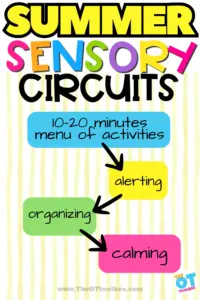
Sensory paths have gained widespread popularity among therapy professionals as a method for supporting children’s attention, body awareness, emotional regulation, and motor planning. During long summer breaks—whether children are participating in summer school, attending day camps, or spending extended hours at home—maintaining a regulated nervous system can prove challenging. Purposeful movement provides an accessible avenue to address these needs, functioning as an effective brain break between seated tasks or as an introductory routine before formal therapy sessions.

Unlike random physical activity, sensory paths are intentionally designed to integrate input from multiple sensory systems simultaneously, including the vestibular, proprioceptive, visual, and tactile systems. This multi-sensory engagement helps organize the nervous system, facilitating better executive functioning and focus before children transition back to learning, reading, or other structured tasks.
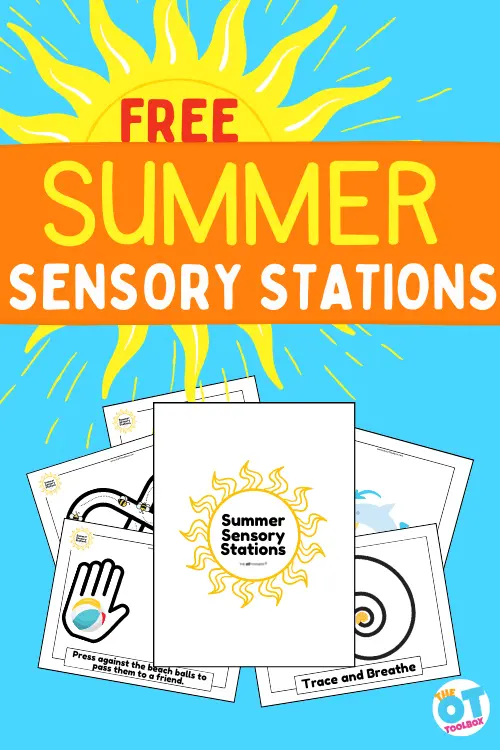
The summer sensory station packet features five distinct stops, each targeting specific developmental and sensory processing skills through seasonal imagery and imaginative play.
The first activity in the sequence is a bee-themed infinity loop, which encourages mindfulness, deep breathing, crossing the midline, and eye-hand coordination. By tracing the continuous loop, users engage in visual tracking while synchronizing their movements with mindful breathing patterns. The activity can be adapted to increase physical challenge; therapists and educators can have children stand on uneven surfaces such as balance pods, or execute the task from a kneeling or lunge position to further test core stability and balance.
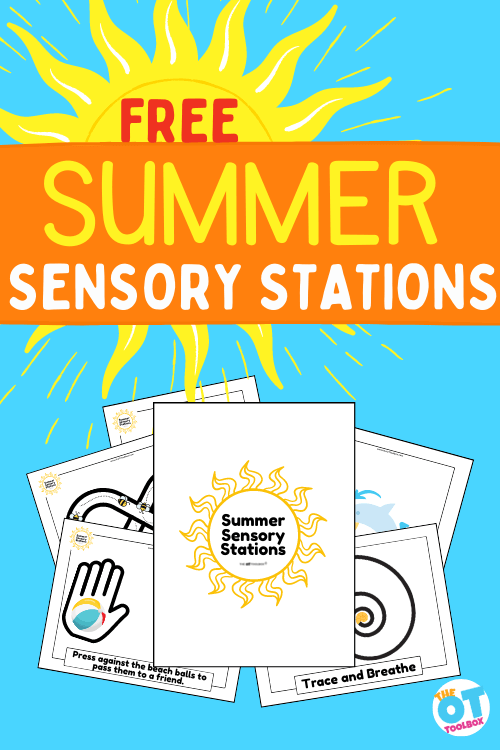
Following the infinity loop, the packet introduces a "leap like a dolphin" station. This movement offers high-intensity vestibular input and proprioceptive heavy work, helping to wake up joints and muscles through active leaping. Proprioceptive input provides the brain with essential feedback regarding body position, weight, pressure, and movement in space, making it a foundational element for physical self-regulation.
The third station incorporates a beach ball wall push-up, designed to deliver whole-body proprioceptive input through the upper extremities, targeting the shoulder girdle, elbows, wrists, and the arches of the hands. In addition to upper-body strength, wall push-ups promote core stability. This station can be easily modified for various physical abilities, including placement lower on the wall for a lunge stance or execution from a seated position to challenge seated balance and accommodate wheelchair users.
A seashell trace-and-breathe printable serves as the fourth stop, utilizing circular path graphics to guide children through deep breathing exercises. Users follow the visual pathway from a crab to a seashell while inhaling, and then retrace the path during exhalation. This exercise promotes interoception and proprioception by encouraging full lung capacity utilization, functioning as a calming self-regulation strategy.
The final activity in the summer series features sand-themed squats, combining a visual prompt with repetitive squatting motions to challenge balance, lower-body strength, and coordination. The open-ended nature of the visual allows supervising adults to introduce additional cognitive and visual challenges, such as picking up objects from the floor or maintaining visual focus on a targeted point.
These summer sensory station ideas can be integrated into indoor or outdoor environments, making them suitable for classrooms, therapy clinics, summer camps, and home programs. They function effectively as scheduled sensory diet activities, transition cues, or calm-down tools for groups and individuals alike.
The release adds to an expanding library of seasonal sensory resources available through the OT Toolbox platform, which provides downloadable educational and therapeutic tools for professionals and parents seeking to support child development.