







As school districts transition from the lazy days of summer into the crisp atmosphere of September, educators and pediatric specialists are rolling out seasonal educational frameworks. Among the most popular initiatives is the integration of apple-themed modules into school-based occupational therapy sessions. Designed to address a wide array of developmental domains—ranging from fine motor dexterity and sensory processing to executive functioning and social-emotional development—these seasonal activities provide a multifaceted approach to early autumn learning.
Therapists utilizing resources such as The OT Toolbox Membership dashboard are currently sorting materials by theme to accommodate diverse student caseloads. By selecting seasonal modules, clinicians can immediately access and print targeted worksheets and exercises. These materials address fundamental student needs, allowing practitioners to seamlessly blend seasonal fun with essential developmental interventions during the opening weeks of the academic year.
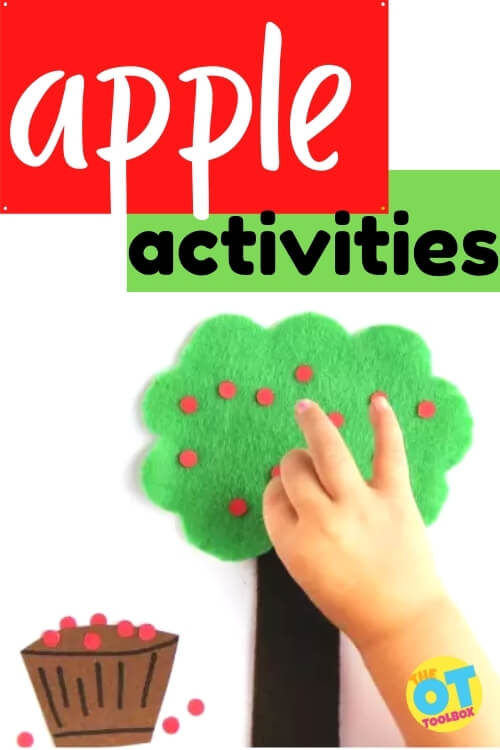
The transition back to school often introduces new challenges for students adjusting to structured environments after summer break. To ease this adjustment, pediatric occupational therapists are incorporating tactile and multisensory experiences into their weekly schedules. Programs frequently begin with immersive activities like apple pie sensory bins, which combine tactile exploration with foundational fine motor play. Similarly, specialized toolkits focusing on visual-motor integration and handwriting are being utilized to establish baseline motor skills as children return to the classroom.
Experts emphasize that thematic learning units can be systematically broken down into distinct therapy categories, enabling clinicians and educators to target specific developmental objectives on any given day. These categories encompass sensory modulation, motor planning, visual perception, cognitive processing, and social communication skills.
Apple Sensory Activities
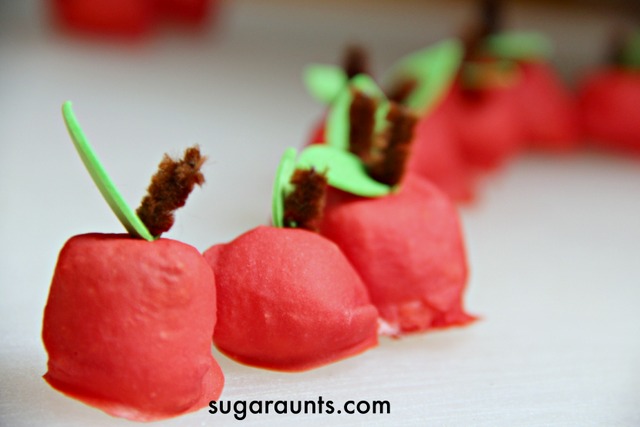
Sensory integration remains a cornerstone of early childhood occupational therapy, and autumn themes offer a wealth of tactile and proprioceptive opportunities. Clinicians report utilizing baked cotton ball apples to provide heavy work through the hands, delivering crucial proprioceptive input alongside tactile sensory experiences. These lightweight yet textured items are frequently integrated into structured sensory play and fine motor exercises.
Another staple of the autumn curriculum is the apple-cinnamon sensory bin. These setups frequently incorporate hidden magnetic letters that students must locate and identify to spell out specific words. Specialists note that this tactile method of letter recognition is particularly beneficial for children struggling with shape constancy and letter reversals, as physically manipulating the objects helps anchor the memory for future academic applications.
Variations on traditional chemistry experiments are also making their way into therapy rooms. Applesauce oobleck, a seasonal twist on standard slime, introduces novel olfactory and tactile experiences through the inclusion of applesauce and cinnamon. While such mixtures are frequently employed to address sensory hypersensitivities or hyposensitivities, therapists also leverage them to target secondary goals, including sustained attention, task sequencing, and direction following. When paired with guided discussion, these sensory media can even serve as an adjunct to socioemotional interventions.
Apple Fine Motor Activities
Developing hand strength, dexterity, and pencil control is a primary objective for school-based occupational therapy caseloads at the start of the academic year. Activities designed to prepare children for functional tasks such as handwriting, clothing independence, and scissor manipulation are receiving heightened focus this September.

Multi-sensory math activities incorporating apple motifs allow students to practice counting while simultaneously engaging their fine motor systems. Meanwhile, traditional crafting techniques, such as creating apple stamps from recycled toilet paper tubes, encourage precision, eye-hand coordination, and bilateral integration as children cross the body’s midline.
Simple yet effective tasks, such as poking toothpicks into apples, require a refined pincer or tripod grasp, effectively conditioning the intrinsic hand muscles necessary for daily tasks like buttoning shirts and manipulating zippers. Similarly, pointillism art projects utilizing standard hole punches offer robust strengthening exercises for hand muscles while encouraging the precise grasp needed to pick up tiny paper circles.
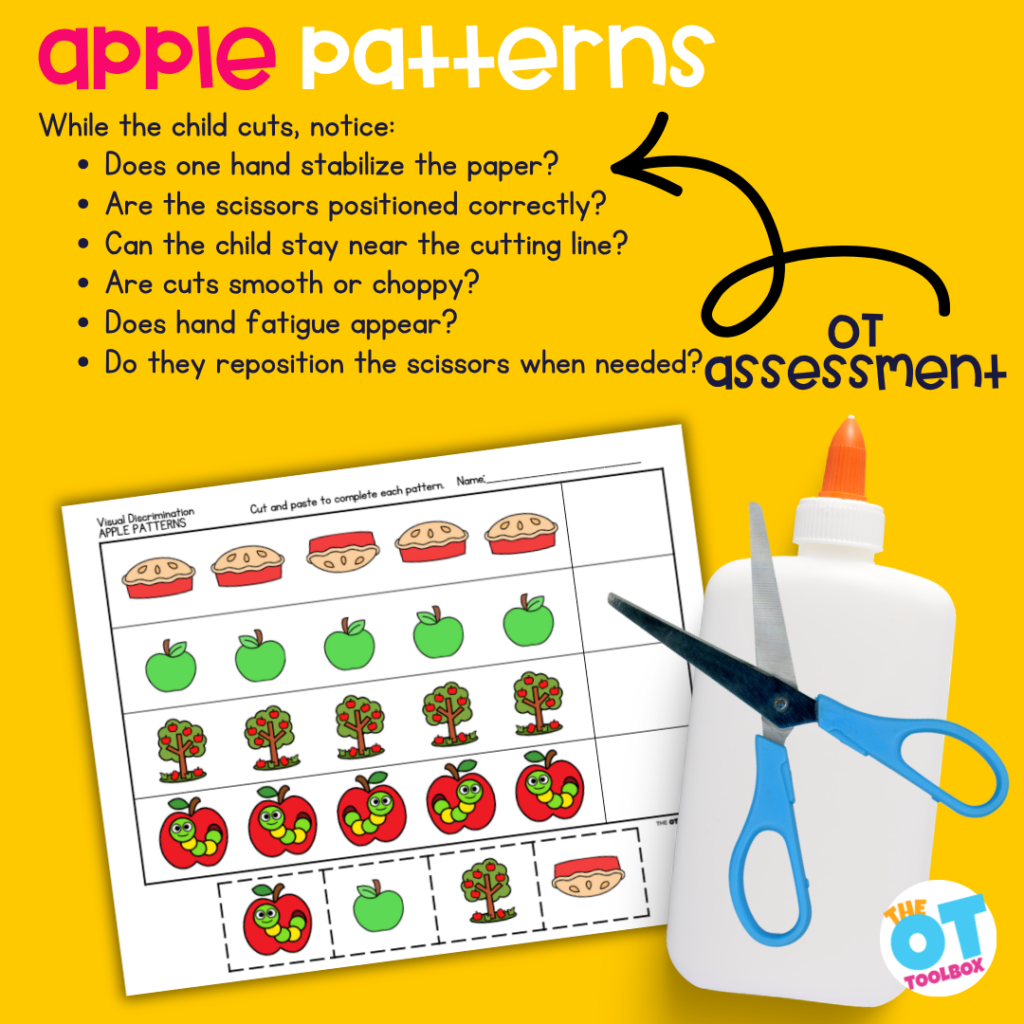
Pattern worksheets tailored to the autumn theme allow therapists to evaluate baseline scissor skills during initial student screenings. By observing how a child approaches cutting tasks at the start of the term—noting posture, tool control, and cutting accuracy—practitioners can establish reliable benchmarks and track developmental progress throughout the school year.

Apple Gross Motor Activities
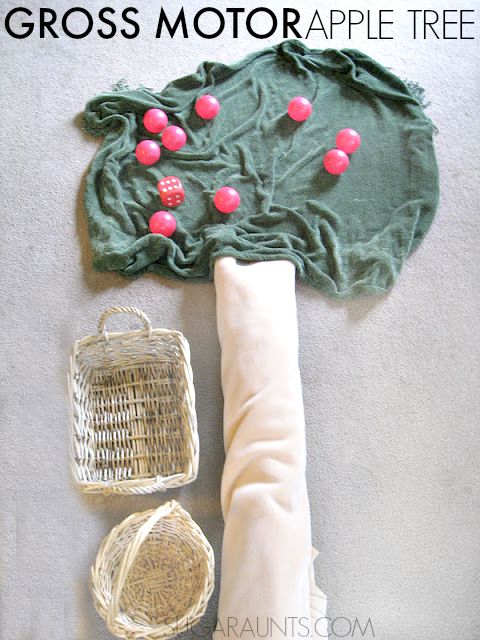
Gross motor engagement is vital for building core strength, postural stability, endurance, and balance, all of which support classroom performance and seated tolerance. Occupational therapists are incorporating full-body movement through specialized indoor balance beams featuring apple motifs, which challenge vestibular processing and proprioceptive awareness.
Movement-based brain breaks themed around the autumn harvest provide students with structured opportunities for self-regulation through whole-body movement. Classic literature is also being adapted for physical education and motor planning. Activities inspired by Dr. Seuss’s classic text Ten Apples Up on Top encourage children to mimic animal movements, thereby enhancing coordination and balance. To increase the level of difficulty, some sessions incorporate felt apples that students must balance on their heads while navigating movement courses.
Apple Visual Perception Activities
Visual perceptual skills, including visual discrimination, form constancy, spatial awareness, and visual closure, are essential components of academic success. Therapists are deploying shape-based apple activities and Lego construction exercises that require students to replicate visual patterns and spatial layouts.
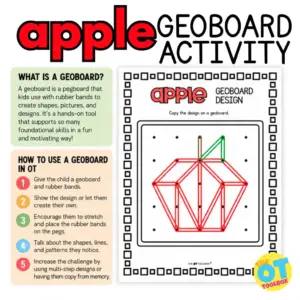
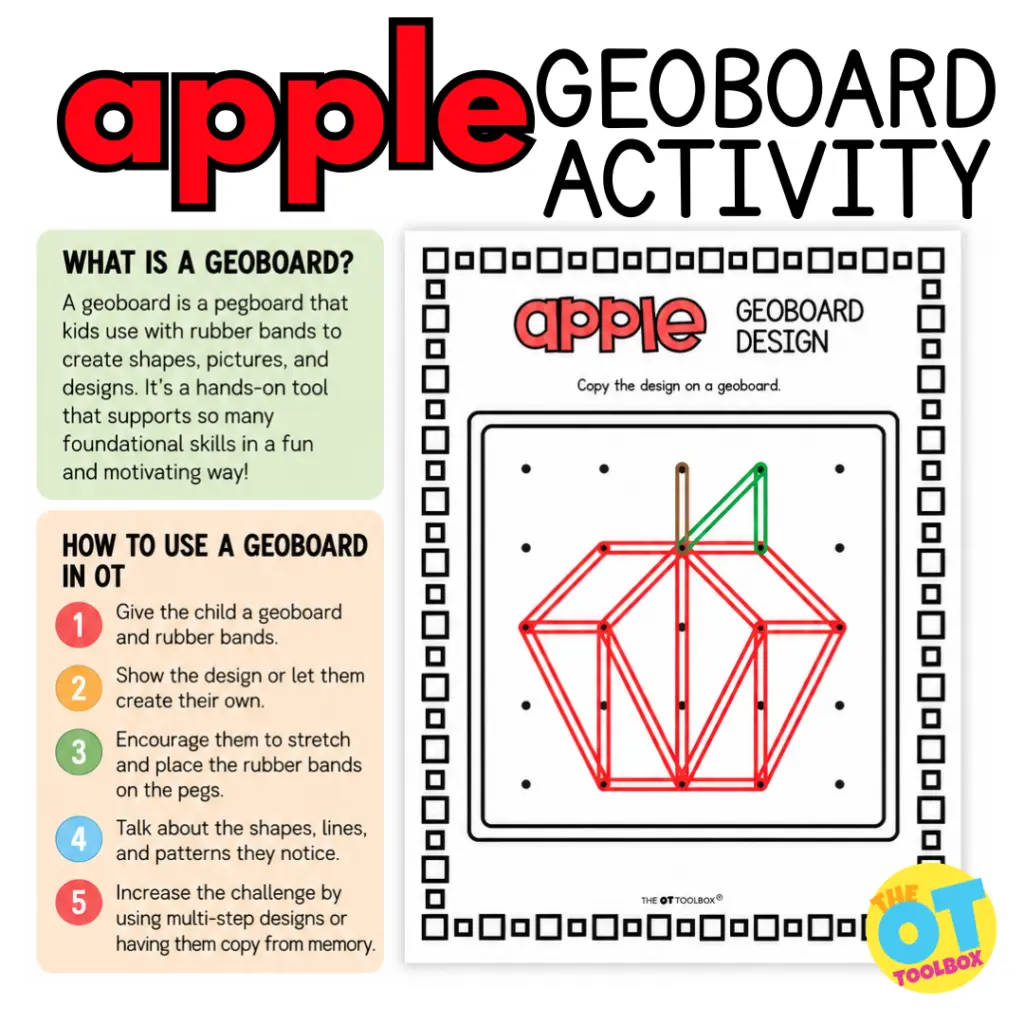
Printable geoboards featuring apple designs have emerged as a prominent tool within therapy memberships. By stretching and positioning rubber bands across pegs to match a visual model, students engage in fine motor strengthening, finger isolation, bilateral coordination, and visual-motor integration. Clinicians can easily adjust the complexity of these tasks—simplifying them by utilizing only a portion of the design or increasing the challenge by asking children to recreate patterns from memory—making them adaptable for a wide range of developmental levels and student needs.
Apple Executive Function Activities
Executive functioning skills, encompassing working memory, emotional control, flexible thinking, and task initiation, are frequently targeted through structured cooking and crafting projects. Salt dough apple modeling provides a rich sensory experience that simultaneously demands planning, measurement, and execution.
Storybooks focusing on the agricultural life cycle, such as Zoe Hall’s The Apple Pie Tree, offer narrative frameworks that therapists use to reinforce sequencing, attention, and comprehension. Additionally, manipulative resources like stackable red apple cups are being utilized to address attention span, memory retention, and literacy skills within a playful intervention context.
Apple Handwriting Activities
Handwriting interventions are heavily integrated into seasonal therapy sessions, with practitioners utilizing a tiered approach tailored to each student’s developmental stage. Beginning writers focus on producing single vocabulary words associated with the theme, while developing writers construct complete sentences. Older students are challenged with narrative writing tasks describing the biological life cycle of an apple from seed to fruit. Advanced executive functioning challenges require students to brainstorm topics, organize their thoughts, and independently write and edit their work.
Apple Activities for Social Emotional Skills
Social communication and interaction are increasingly emphasized in school-based interventions. Specialized resources designed to encourage peer collaboration through structured apple-themed group activities are helping children develop critical pragmatic language skills in supportive environments.
As school districts settle into the autumn term, the integration of these comprehensive, thematic resources continues to support the diverse needs of students. Occupational therapists and educators alike are finding that seasonal curricula provide an effective bridge between foundational skill development and engaging, real-world learning experiences.