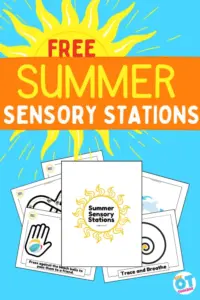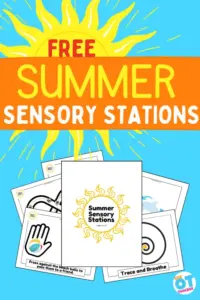







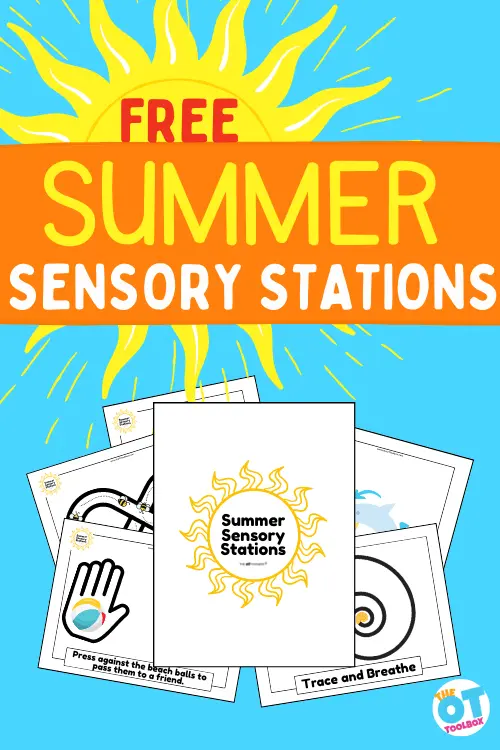
As the warmer months approach and daily schedules shift, educators, parents, and pediatric therapy professionals are welcoming a new resource designed to help children stay grounded, focused, and physically active. Developed by occupational therapist Colleen Beck, OTR/L, founder of The OT Toolbox, the newly released Summer Sensory Stations set provides an innovative, printable sensory path solution aimed at supporting self-regulation, attention, and motor planning in children.
The release arrives at a time when long summer days, changing routines, and fewer structured classroom environments often present challenges for children’s sensory processing and emotional regulation. Designed to function as a versatile self-regulation tool, the summer-themed packet can be printed, laminated, or placed inside page protector sleeves and hung in hallways, classrooms, therapy clinics, or home environments.
According to developers, the new summer stations build upon the strong positive feedback received for previous seasonal sensory path releases. Occupational therapy activities during the summer months are crucial for keeping children engaged while simultaneously addressing underlying developmental needs. Whether utilized in summer schools, camps, pediatric clinics, or home-based therapy programs, movement-based interventions play a vital role in supporting body awareness, emotional regulation, and motor planning.
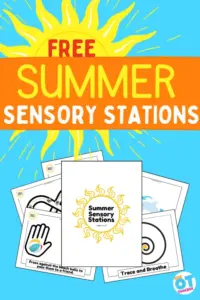
A printable sensory path offers a straightforward and cost-effective way to encourage purposeful movement without requiring specialized or expensive equipment. By simply printing the pages and arranging them on the floor or walls, facilitators can invite children to jump, stomp, crawl, balance, and transition smoothly from one station to the next. This movement helps reset the nervous system, offering an effective brain break between seated tasks or a preparatory routine before a formal therapy session.
Unlike random physical activity or unstructured recess games, structured sensory paths strategically combine multiple sensory systems simultaneously. These include the vestibular system, which governs balance and spatial orientation; proprioception, which provides crucial feedback from the muscles and joints regarding body position and pressure; visual input; and interoception. By integrating these systems, the stations offer a balanced combination of calming and alerting sensory input tailored to individual needs.
The newly released summer packet features five distinct interactive stops, each carefully crafted to target specific developmental and sensory goals. The journey begins with the Bee Path Infinity Loop, an activity centered around mindfulness, deep breathing, crossing the midline, and eye-hand coordination. By tracing the creative loop that mimics the paths of summer bees, users are encouraged to practice concentration and present-moment awareness. The activity can be further adapted for children requiring balance challenges by placing the station near or on uneven surfaces such as gymnastics mats, slant boards, or balance pods, or by inviting users to kneel or lunge.
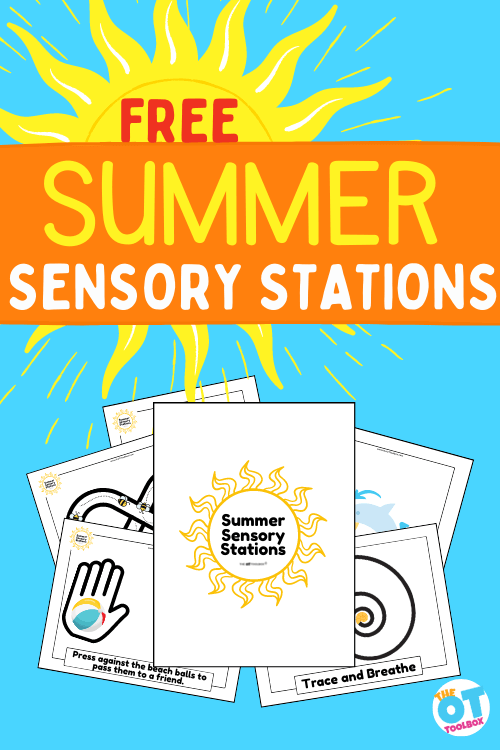
The second station invites children to "Leap Like a Dolphin," providing high-value vestibular input, motor planning challenges, and proprioceptive heavy work. This movement wakes up the joints and muscles, offering vital feedback about the body’s position in space. Following this, the Beach Ball Wall Push-Up station engages the upper extremities, targeting the shoulder girdle, elbows, wrists, and the arches of the hands, while simultaneously building core strength and stability. This station is easily adjustable, allowing for modifications such as lower wall placement for a lunge position or seated wall push-ups to accommodate wheelchair users and challenge seated balance.
The fourth station, the Seashell Trace and Breathe Printable, utilizes spiral path visuals to guide children through deep breathing exercises. Users follow the circular path from a crab to a seashell while inhaling deeply, and reverse the path during exhalation. This visual breathing exercise promotes full lung expansion, serving as an effective interoceptive and proprioceptive strategy for mindfulness and self-regulation.
The final component of the packet consists of the Summer Sand Squats, an open-ended balance and coordination exercise. Children perform a set number of repetitions guided by the visual prompt, with opportunities for facilitators to introduce additional cognitive or visual challenges, such as picking up objects from the floor or maintaining visual focus on a specific target.
Professionals emphasize that these stations can serve multiple functions within a daily schedule, acting as scheduled sensory diet activities, transition tools, or calm-down breaks. Because the materials are adaptable for groups or individuals, they suit settings ranging from sensory summer camps to individualized clinical sessions.
From an occupational therapy perspective, the benefits of incorporating these printable stations extend well beyond physical movement. Regular engagement with sensory paths supports the refinement of gross motor skills, bilateral coordination, postural stability, spatial awareness, and executive functioning. By organizing the central nervous system through targeted sensory input, children are better prepared for academic learning, reading, handwriting, and daily occupations.
The Summer Sensory Stations are currently available to the public via digital download through The OT Toolbox platform, alongside membership options that provide immediate access to a comprehensive library of pediatric therapy resources, printable worksheets, and developmental tools.