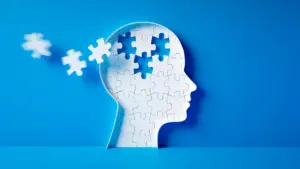








For generations, the narrative surrounding human aging has been defined largely by the concept of deficit. We are told that as the calendar pages turn, our cognitive faculties inevitably fray, our memories become porous, and our mental acuity begins a slow, unavoidable descent. It is a story of loss—a gradual erosion of the sharp, high-speed processing power that characterizes our younger years. However, new research from the University of Arizona is challenging this pervasive cultural script, suggesting that what we have long dismissed as "deterioration" may actually be a sophisticated, biologically driven adaptation.
Researchers at the University of Arizona, led by Fabian-José Fernandez, an associate professor of cognition and neural systems, have proposed a provocative new framework they call the “adaptive aging hypothesis.” Published in Perspectives on Psychological Science, this work suggests that the brain does not simply degrade as we age; instead, it shifts its priorities. Rather than functioning as a broken version of a younger brain, the aging brain appears to be optimizing itself for a new stage of life, one where the synthesis of a lifetime of experience, wisdom, and social connection takes precedence over the rote memorization of every fleeting detail.
A Shift in Biological Priorities
The core of the adaptive aging hypothesis rests on the interplay between two critical regions of the brain: the hippocampus and the frontal cortex. In neurobiology, the hippocampus is the primary engine for episodic memory—the ability to record specific information about events, their contexts, and their intricate details. It is the librarian of the mind, meticulously filing away the "what, where, and when" of our daily existence. The frontal cortex, conversely, operates at a higher level of abstraction. It is responsible for executive function, pattern recognition, and the distillation of information into "gist"—the underlying meaning or central message of an experience.
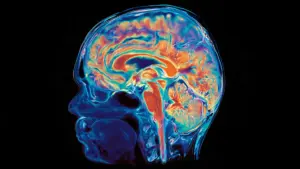
Fernandez and his colleagues argue that during the course of healthy aging, the brain undergoes a fundamental recalibration. As we move into our later decades, the brain begins to downregulate the hyper-precise, detail-oriented work of the hippocampus and pivots toward the more integrative, meaning-making capabilities of the frontal cortex.
"If we look at normative aging as a story of just decline, we are really missing the boat," Fernandez explains. "The older brain is optimized for different things than the younger brain, predominantly the sharing of stored expertise and social relationships."
This shift is not a failure of the system; it is a developmental milestone. In early life, the brain is essentially a sponge, operating in a state of high hippocampal activity. Because a child or young adult lacks a robust foundation of life experience, they must prioritize the intake of massive amounts of raw, episodic data to build an internal model of how the world functions. They are the architects of their own knowledge base. However, by the time an individual reaches middle or later adulthood, that foundation is already built. They possess a vast, internal library of concepts, historical context, and personal experience. At this stage, the biological utility of recording every minor detail of a new event diminishes, while the utility of connecting that new information to existing knowledge structures increases exponentially.
An Evolutionary Argument for Wisdom
The universality of these brain changes—observed not just in human studies but across various animal models—suggests that this transition is driven by evolutionary forces. If the aging brain were merely "breaking," one might expect more random patterns of decline. Instead, the consistency of this shift suggests a purposeful biological design.
From an evolutionary standpoint, the survival of a species depends not just on the individual, but on the success of the collective. Older adults, by virtue of having navigated the complexities of life for decades, hold a wealth of information that is vital for the survival of younger generations. The adaptive aging hypothesis posits that the brain undergoes these specific biological changes to facilitate the transmission of this knowledge.
"Given those goals, it makes sense that you aren’t interested in nitty-gritty details," says Fernandez. "You are interested in safeguarding the vast knowledge you already have. Evolution may be saying that if you make it long enough, there’s a need to transmit this information, so we put into motion biological changes that enforce and protect your semantic and autobiographical memories."
This perspective recontextualizes the role of older adults in society. Rather than viewing them as individuals who have "lost" their memory, we might see them as repositories of wisdom, uniquely equipped for teaching, mentoring, and storytelling. Their brains are no longer preoccupied with the minutiae of the present, but are instead primed to provide the context and judgment that only a lifetime of experience can offer.
Distinguishing Aging from Pathology
A significant challenge in cognitive science has been distinguishing between normal, healthy aging and the onset of neurodegenerative diseases like Alzheimer’s. For years, there was a tendency in the scientific community to view Alzheimer’s as an accelerated or more severe form of the aging process. The University of Arizona team argues that this is a fundamental misconception.
"When I was in grad school, people thought about Alzheimer’s as a more intense version of cognitive aging, but that is just not the case," Fernandez notes. "They are completely different."
The distinction lies in the behavior of the brain’s networks. In the healthy aging process, the transition away from hippocampal-heavy processing is a controlled, regulated shift that generally occurs between the fifth and seventh decades of life. In contrast, Alzheimer’s disease is marked by the intrusion of pathological processes—specifically the accumulation of amyloid and tau proteins—which disrupt this transition.
Crucially, while healthy aging is characterized by a "de-emphasis" of hippocampal activity, Alzheimer’s often exhibits the opposite: a state of hippocampal hyperactivity. This suggests that the very networks that should be gracefully shifting their focus to the frontal cortex are being derailed by disease. These disruptions effectively hijack the brain’s ability to consolidate semantic and autobiographical memories, leading to the severe impairments that define the disease. By understanding this, researchers hope to gain a clearer picture of both the "beautiful developmental transition" of healthy aging and the pathological disruptions that must be treated as distinct medical emergencies.
Rethinking the Future of Aging
The implications of the adaptive aging hypothesis for society are profound. If we continue to measure the success of an aging brain by its ability to perform tasks designed for a younger, detail-oriented mind, we will continue to pathologize the natural evolution of human cognition.
Fernandez suggests that our societal expectations may be working against our own biological strengths. "For many individuals, the weight of how you process information should probably not be so hippocampal-centric by the sixth or seventh decade," he says. Instead of forcing older adults to compete on metrics that prioritize rapid, detail-heavy recall, society could benefit more from fostering environments that value the strengths inherent in the later stages of life.
This includes rethinking social structures to encourage intergenerational interaction. When older adults are marginalized, the knowledge they have spent a lifetime gathering is effectively locked away. When they are integrated—through mentorship, collaborative storytelling, or community leadership—that knowledge becomes a public resource.
"People see older individuals and look at them as not being on par with younger individuals across a lot of metrics," Fernandez observes. "The way I look at it is that you’ve got someone with a brain that has been active for several decades and has seen a lot. There is tremendous value there, and we don’t do a good job of unlocking it."
The adaptive aging hypothesis offers a more optimistic and, perhaps, more accurate view of our later years. It suggests that while our cognitive tools change, they do not necessarily lose their utility. By recognizing and embracing these hidden strengths, we may find that the aging brain is not simply winding down, but is instead transitioning into a final, essential role: serving as the collective memory and guiding intelligence for the generations that follow.