






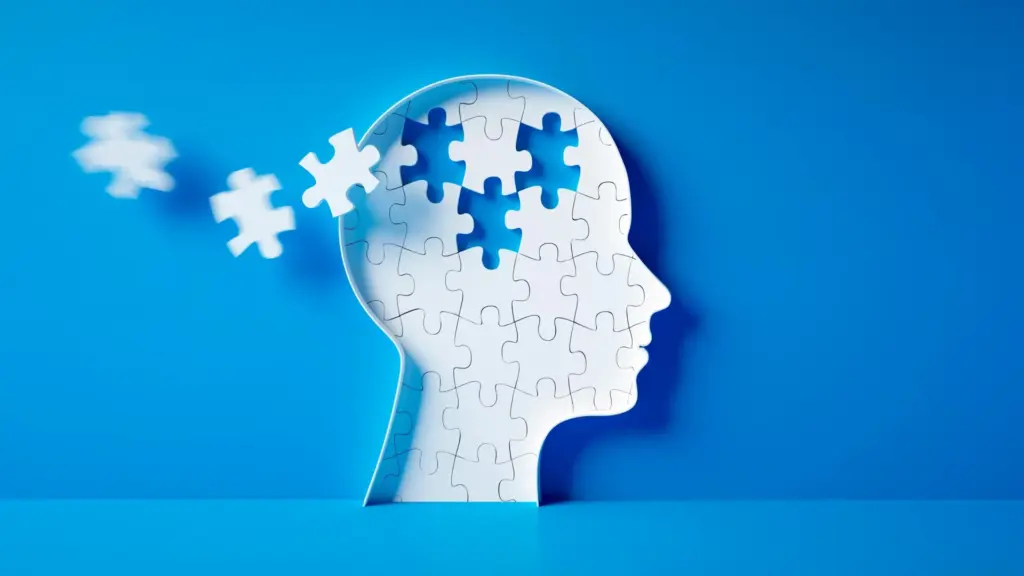
For generations, the narrative surrounding the aging human brain has been one of inevitable erosion. We are often told that as the candles on the birthday cake multiply, our cognitive faculties—specifically our memory and mental processing speed—are destined to fray. This perspective paints the aging brain as a decaying vessel, slowly losing the sharpness that defined its youth. However, a groundbreaking shift in neuroscientific research is challenging this pessimistic paradigm. Scientists are now proposing that what we once categorized as "deterioration" may actually be a sophisticated, natural stage of human development, where the brain pivots from the relentless acquisition of data to the mastery of meaning.
Researchers at the University of Arizona are leading this intellectual shift, proposing what they term the "adaptive aging hypothesis." Their findings, published in the journal Perspectives on Psychological Science, suggest that the changes we observe in the aging brain are not merely signs of wear and tear, but rather a deliberate biological recalibration. According to this theory, the brain adjusts its priorities to capitalize on a lifetime of accumulated experience, favoring the synthesis of knowledge over the rote memorization of individual events.
The Shift From Memory to Meaning
To understand this transformation, one must look at the structural division of labor within the brain. Two specific regions play pivotal roles in how we navigate our reality: the hippocampus and the frontal cortex. The hippocampus is the brain’s archivist; it is primarily responsible for the preservation of episodic memories—the specific details, circumstances, and raw data of the events that make up our daily lives. In contrast, the frontal cortex operates as the brain’s strategist, responsible for executive function, pattern recognition, and the extraction of "gist"—the underlying meaning or central message of an experience.
According to the University of Arizona researchers, the trajectory of healthy aging is defined by a distinct shift in the balance between these two regions. As individuals advance into their fifth, sixth, and seventh decades, the brain begins to deemphasize the hippocampus while increasing its reliance on the frontal cortex.
Fabian-José Fernandez, a coauthor of the study and an associate professor of cognition and neural systems at the University of Arizona, argues that viewing this process as a simple decline is a fundamental misinterpretation. "If we look at normative aging as a story of just decline, we are really missing the boat," Fernandez explains. "The older brain is optimized for different things than the younger brain, predominantly the sharing of stored expertise and social relationships."
This evolutionary transition serves a clear purpose. In our youth, the brain is akin to a sponge. Because a child or young adult lacks a comprehensive foundation of how the world operates, they must prioritize the collection of raw data. The hippocampus is highly active during these years, facilitating the rapid storage of declarative memories to build an internal archive. By the time a person reaches later adulthood, however, they have already amassed a vast library of concepts, lessons, and experiences. At this stage, the most efficient path forward is not to continue recording every trivial detail of existence, but to leverage that pre-existing archive to interpret new situations and identify broader patterns.
An Evolutionary Argument for Wisdom
The observation that similar transitions occur across various animal models suggests that this phenomenon is not a quirk of human psychology, but an evolutionary imperative. Fernandez posits that the brain’s adaptation in later life is a biological mechanism designed to ensure the survival and success of the species.
"One could argue you are developing your entire life, and development occurs in lockstep with the needs of your brain," says Fernandez. "Evolution may be saying that if you make it long enough, there’s a need to transmit this information, so we put into motion biological changes that enforce and protect your semantic and autobiographical memories."
In this light, the "wisdom" often attributed to the elderly is not a poetic abstraction, but a biological output. By shifting focus toward the "gist" of life—understanding social dynamics, identifying core truths, and applying lessons from the past—older adults become uniquely equipped for roles that require mentorship, storytelling, and complex social judgment. The brain, effectively, stops focusing on the "nitty-gritty" of individual moments because it has recognized that the transmission of accumulated knowledge is a more valuable contribution to the next generation than the ability to recall what one had for lunch three weeks ago.
Distinguishing Healthy Aging From Alzheimer’s
One of the most critical implications of the adaptive aging hypothesis is the clarity it brings to the distinction between normal cognitive aging and neurodegenerative conditions like Alzheimer’s disease. For many years, there was a tendency in clinical circles to view Alzheimer’s as simply an accelerated or more extreme form of standard cognitive aging. Fernandez and his colleagues argue that this is a dangerous misconception.
"When I was in grad school, people thought about Alzheimer’s as a more intense version of cognitive aging, but that is just not the case," Fernandez notes. "They are completely different."
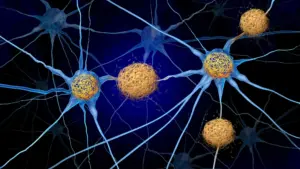
The biological signature of healthy aging is a regulated transition—a "beautiful developmental transition," as Fernandez describes it—where the hippocampus takes a backseat to the frontal cortex. In Alzheimer’s disease, however, this transition is sabotaged by pathological processes, such as the accumulation of amyloid plaques and tau protein tangles.
Crucially, while the healthy aging brain shows reduced activity in the hippocampus, the Alzheimer’s-affected brain often exhibits paradoxical, hyperactive signals in that same region. This hyperactivity is not a sign of improved memory function; rather, it represents a breakdown of the regulatory circuits that allow for the orderly retrieval of personal history and linguistic knowledge. By identifying these pathological disruptions, researchers hope to better distinguish between the natural, adaptive evolution of the healthy mind and the destructive, disjointed processes of disease.
Reimagining Society’s Approach to Aging
The findings from the University of Arizona invite a broader societal conversation about how we measure cognitive success. Currently, many of our metrics for intelligence and cognitive health remain tethered to the standards of youth: speed of processing, the ability to memorize lists of words, and the recall of specific details. When older adults are evaluated against these metrics, they are often perceived as deficient, even when their brains are operating at peak efficiency for their stage of life.
The researchers suggest that pushing older adults to conform to the cognitive processing style of a twenty-year-old may be counterproductive. Instead, society should look toward fostering environments that allow older individuals to utilize their strengths—specifically in the realms of social guidance, knowledge transfer, and complex problem-solving.
This includes rethinking social structures to encourage intergenerational interaction. Because the aging brain is wired to prioritize the synthesis of meaning and the sharing of expertise, creating spaces where older adults can mentor, teach, and share their life stories is not just a gesture of respect; it is a way to tap into a valuable resource that is currently being squandered.
"People see older individuals and look at them as not being on par with younger individuals across a lot of metrics," Fernandez says. "The way I look at it is that you’ve got someone with a brain that has been active for several decades and has seen a lot. There is tremendous value there, and we don’t do a good job of unlocking it."
Ultimately, the adaptive aging hypothesis provides a refreshing, evidence-based antidote to the narrative of decline. It suggests that while the biological machinery of the mind may change, it does so to accommodate a shift in mission. If we stop viewing the aging brain through the narrow lens of what it can no longer do, we may begin to appreciate the profound, specialized work it is performing—transforming a lifetime of individual moments into the collective wisdom that sustains us all.