





Consider the last time you were confronted with a problem that arrived without an instruction manual. Perhaps it was the first week of a new job, where the workplace culture and operational nuances remained entirely opaque, or the unsettling experience of a sudden, unexplained symptom in your own body. These moments of profound uncertainty are defining human experiences, yet our modern approach to knowledge often treats them as failures of logic rather than opportunities for growth.
My nominee for the quintessential acute problem is the inconsolable crying baby. When an infant is in distress, parents rarely respond by demanding a rigorous, peer-reviewed clinical trial before acting. You do not demand a p-value to justify rocking the cradle or singing a lullaby. Instead, you experiment. You observe the outcome of your actions: the rocking provides a marginal improvement, while the singing offers a significant reprieve. You retain the strategies that yield positive results and discard those that do not. If you had insisted on absolute, laboratory-grade certainty before intervening, the baby would simply continue to cry.
This messy, humble, and incremental process is not a failure of intelligence; it is the fundamental mechanism of how humans actually learn. Yet, for nearly a century, the scientific establishment has operated under a pretense that suggests otherwise, prioritizing a rigid, binary framework of "proof" that often obscures more than it reveals.

The Verdict Habit: The Limits of the Courtroom Model
Most contemporary scientific research is conducted through a lens of binary skepticism. The standard approach assumes a "null hypothesis"—the starting premise that nothing is happening, that the new treatment is ineffective, and that any observed results are merely the product of chance. Researchers operate under the assumption that they know nothing, strictly forbidding outside context to ensure that data remains untainted by prior expectation.
This methodology mirrors the logic of a courtroom. In a criminal trial, the defendant is presumed innocent, and the study serves as the trial itself. The final verdict is binary and absolute: either the evidence is sufficient to convict, or the case is dismissed. The jury is expected to wipe their collective memory clean, ignoring the forty previous studies that might have hinted at a trend or a pattern. If a treatment helped some people in some circumstances, but failed to reach a high-level statistical threshold in one specific study, it is filed away as ineffective. By treating every study as an isolated event, we lose the cumulative wisdom that could be gleaned from a more nuanced, integrative approach.
Finding the Submarine: The Power of Bayesian Iteration
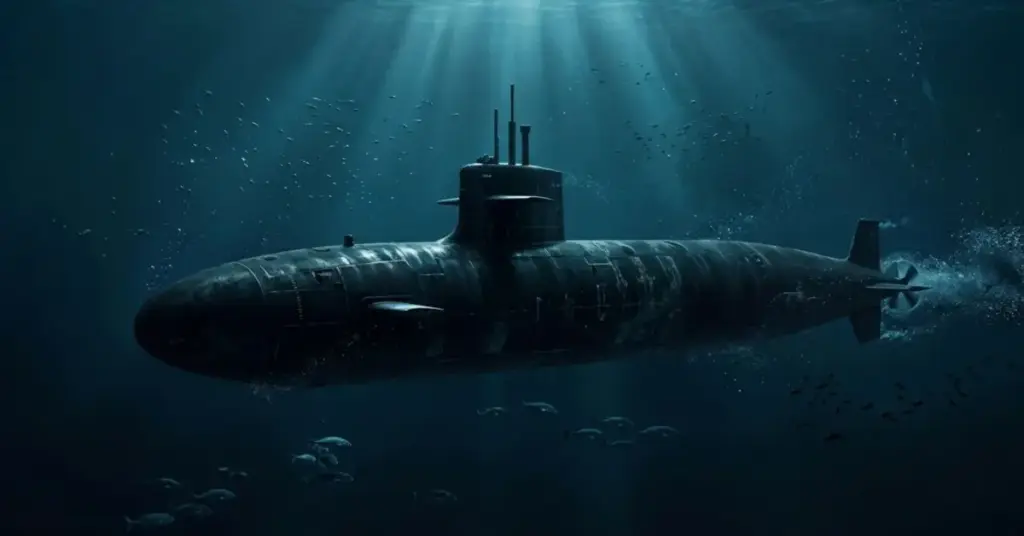
The limitations of the binary verdict become clear when we look at how the most complex, high-stakes searches in history have been conducted. In May 1968, the American nuclear submarine Scorpion vanished in the Atlantic Ocean, taking 99 lives with it. The U.S. government tasked Navy chief scientist John Craven with the seemingly impossible mission of locating the wreckage.
Craven did not treat the vast ocean as a binary "guilty or innocent" proposition. Instead, he treated it like a crying baby. He divided the ocean into a grid of numbered squares and consulted veteran submarine commanders, asking them to assign probabilities to each square based on their expertise, intuition, and tactical experience. He even allowed them to bet on their scenarios—sometimes with bottles of scotch—to quantify their confidence levels.
Every time the search ship swept a square and found nothing, it was not viewed as a failure or a "null result." Instead, the absence of the submarine provided valuable data. The probability of that specific square containing the wreck was lowered, which mathematically raised the probability for the remaining squares. The map was constantly being redrawn, and the search strategy evolved in real-time. By treating the search as a dynamic process of getting "less wrong" every day, the team successfully located the Scorpion in late October, 460 miles southwest of the Azores.
This same logic proved transformative for the search for Air France Flight 447, which disappeared between Rio and Paris in 2009. After two years of fruitless searching, a team of mathematicians applied the same iterative approach used by Craven. They treated every empty search pass as a clue rather than a dead end, constantly updating their probability maps. By integrating the previous failures into their new model, they successfully located the wreckage in just one week. These searchers understood that the goal was not to reach a verdict, but to refine their understanding of reality through constant, humble updates.
Just a Little Bit of Science
Statisticians have engaged in a long and sometimes bitter debate over whether science should function like a courtroom verdict or a dynamic search. While the intricacies of this argument are often buried in dense, technical jargon, the core disagreement is straightforward. The "search" perspective argues that knowledge is essentially a map representing our current confidence in our guesses. Old evidence remains on the map, and new evidence serves to shift our focus and refine our coordinates. In this model, a study that finds "nothing" is still a valuable data point that helps narrow the field.
Conversely, the "verdict" model creates a culture of winners and losers. An idea is either convicted or acquitted, leading to fields of study that spend decades relitigating established positions instead of expanding the frontiers of knowledge. This is particularly problematic in medicine and social policy. We are not biological clones; a treatment that provides relief to one neighbor may be ineffective for another, and what works for a person one year may be rendered obsolete by changing circumstances. A verdict about the "average" person—the primary output of the binary scientific model—cannot offer the personalized clarity that an evolving, individual-specific map can. When clinicians act with the same humility as a parent soothing a child or a searcher looking for a lost vessel, they make genuine progress.
Where This Lands: Navigating Modern Uncertainty
We currently live in an era defined by massive, shifting, and unfamiliar challenges—from the complexities of climate change to the rapid evolution of global technology and the fracturing of communities. In these arenas, nobody possesses the definitive manual. The impulse to wait for absolute proof before taking action is a recipe for stagnation; as the metaphorical water rises, we cannot afford to remain paralyzed by a demand for certainty that the world simply cannot provide. Pretending to be certain when we are not is akin to driving off a cliff with confidence.
The alternative is a humbler, more rigorous approach. We must be willing to make our best, most informed guesses, state them clearly, and act upon them while remaining open to the reality that our results will refine our next attempt. We should stop viewing the things that do not work as failures and start viewing them as essential clues that help us refine our map. We must pool our findings and embrace the messy reality of iterative learning.
This is the process that allows us to soothe an infant, find a lost submarine, and solve the most pressing problems of our time. In one square of the ocean—or one facet of society—at a time, we can find our way forward. We already possess the tools to navigate this uncertainty; we have been using them our entire lives. The only truly new step required is to stop apologizing for the process and start embracing it as our primary way of knowing.