

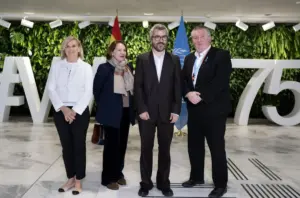




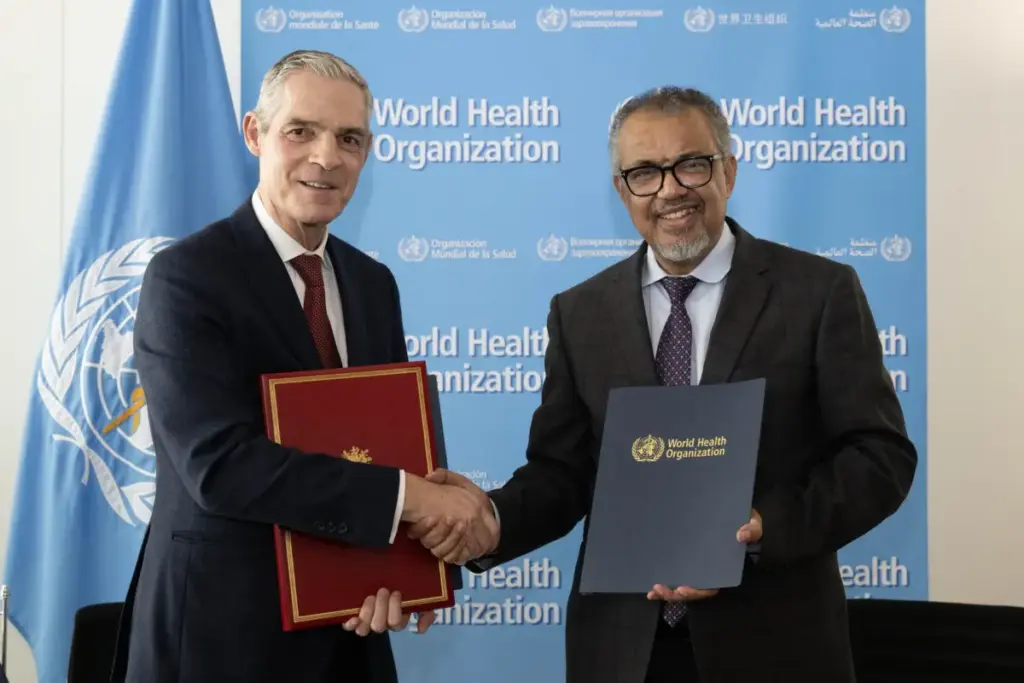
GENEVA — In a significant bolstering of international health security and multilateral cooperation, France has committed €24 million to the World Health Organization through a series of new funding agreements. The partnership was formalized during a high-level ceremony at the WHO headquarters in Geneva, where His Excellency Mr Jérôme Bonnafont, Permanent Representative of France to the United Nations in Geneva, met with WHO Director-General Dr Tedros Adhanom Ghebreyesus to sign seven distinct contribution agreements.
The substantial financial package, channeled through the French Ministry of Europe and Foreign Affairs, operates under the umbrella of the broader France–WHO Framework Agreement for the 2020–2025 period. This overarching accord serves as a vital strategic compass, aligning French development and foreign policy priorities directly with the global health objectives of the United Nations health agency. Furthermore, it supplies the necessary legal, administrative, and financial mechanisms required to operationalize and streamline collaboration between Paris and the Geneva-based organization.
A cornerstone of this latest funding tranche is a generous allocation of €4.5 million dedicated entirely to fully flexible voluntary funds. These resources are directed into the Core Voluntary Contributions Account (CVCA), an essential financing mechanism that allows the WHO to allocate funds quickly and efficiently where they are most urgently needed, unburdened by the strict earmarks that often accompany specialized grants. Flexible funding remains a top priority for the leadership of the United Nations health agency, as it empowers the organization to respond swiftly to unexpected health crises, bridge funding gaps, and maintain institutional stability.

Beyond the core flexible contributions, the €24 million package is strategically distributed across a wide array of specialized global health initiatives. France’s support targets some of the most complex and pressing health challenges confronting the international community today. Among the priority areas receiving vital backing are non-communicable diseases (NCDs), which account for the vast majority of deaths globally, innovative urban health labs designed to tackle health disparities in rapidly growing metropolitan areas, and the multidisciplinary "One Health" approach, which recognizes the interconnectedness of human, animal, and environmental health.
The agreements also reinforce the operational capacity of the WHO to manage acute global health emergencies. A portion of the French funding is earmarked for the WHO Contingency Fund for Emergencies (CFE), a rapid-financing tool that enables the organization to disburse funds within 24 hours of a disease outbreak or humanitarian health crisis. In addition to general emergency preparedness, the new funding explicitly supports targeted international responses in critical conflict and disaster zones. This includes ongoing health interventions in Gaza, robust responses to recurring cholera outbreaks in vulnerable regions, and vital mental health and psychosocial support initiatives in Ukraine, where the protracted conflict continues to devastate civilian infrastructure and psychological well-being.
Furthermore, France’s commitment extends to institutional infrastructure within Europe. The funding ensures the continued operational support of the WHO emergencies centre located in Lyon, France. This specialized facility plays a crucial, ongoing role in global health security by enhancing international preparedness and coordinating rapid responses to emerging epidemics and public health threats.
During the formal signing ceremony at WHO headquarters, Ambassador Jérôme Bonnafont emphasized the philosophical and strategic motivations underpinning his nation’s financial backing. He underscored that France remains deeply committed to supporting the World Health Organization in its tireless efforts to tackle critical global health challenges that transcend national borders. The French diplomat noted that these newly signed agreements are a direct reflection of shared institutional priorities, chief among them the promotion of global health equity, effective emergency response coordination, and the long-term strengthening of healthcare systems in resource-limited settings worldwide.

Dr Tedros Adhanom Ghebreyesus, Director-General of the WHO, expressed profound gratitude during the event, acknowledging the enduring nature of the bilateral relationship. He stated that the organization is immensely grateful to the French Government for its steadfast support, continued partnership, and visionary leadership in global health diplomacy. Dr Tedros highlighted that this substantial financial contribution will directly empower the agency to address key health threats ranging from chronic non-communicable diseases to high-stakes emergency responses, ultimately helping to save lives and protect the world’s most vulnerable populations from preventable suffering.
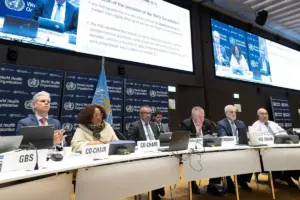
France has consistently positioned itself as a vocal and active advocate for a fully and flexibly financed multilateral health architecture. The European nation has provided consistent leadership and financial backing toward increasing assessed contributions to the organization, arguing that predictable baseline financing is essential for the WHO to maintain its independence and operational integrity. In addition to its direct contributions, France has demonstrated its commitment to sustainable resource mobilization by serving as one of the key co-hosts of the WHO’s inaugural Investment Round. This global mobilization effort is designed to secure predictable and flexible financial resources to power the organization’s core work throughout the Fourteenth General Programme of Work, covering the 2025–2028 strategic period—a landmark framework formally approved by the World Health Assembly earlier in the year.
The official signing ceremony in Geneva marks yet another significant milestone in the strong, longstanding, and productive partnership between the World Health Organization and France. By combining strategic policy alignment with substantial financial commitments, both parties have reinforced their joint dedication to fostering a healthier, safer, and more resilient global community in an era defined by complex and overlapping health emergencies.