







In classrooms, therapy clinics, and family living rooms across the country, educators, parents, and pediatric specialists are increasingly turning toward specialized social-emotional learning frameworks to help children navigate daily stressors. Among these tools, the "Size of the Problem" activity has emerged as a cornerstone strategy for developing executive functioning, emotional regulation, and metacognition in children. Developed to bridge the gap between emotional outbursts and logical reasoning, the concept provides a structured yet empathetic way for kids to understand the actual magnitude of the challenges they face and match them with proportional responses.
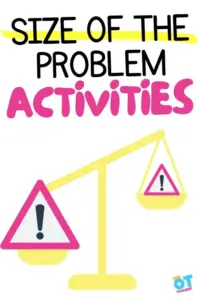
The strategy, widely utilized by occupational therapists and educators, operates on a simple premise: not every challenge requires the same level of emotion or reaction. By categorizing problems into distinct sizes—ranging from minor inconveniences to major life events—children learn to step back, evaluate a situation, and construct an appropriate game plan. Proponents of the method emphasize that while emotional regulation is crucial, the framework also validates children’s feelings, reinforcing the idea that it is entirely acceptable to experience frustration or big emotions, even over seemingly minor issues.
Understanding the "Size of the Problem" Framework
At its core, the Size of the Problem concept is a social-emotional learning tool designed to help children visualize the scale of their difficulties. Children who struggle with emotional regulation often experience a wide range of everyday frustrations with the same intensity as a major emergency. For instance, dropping a crayon during an art class or misplacing a television remote can trigger a reaction that feels disproportionate to adults, yet very real to the child.

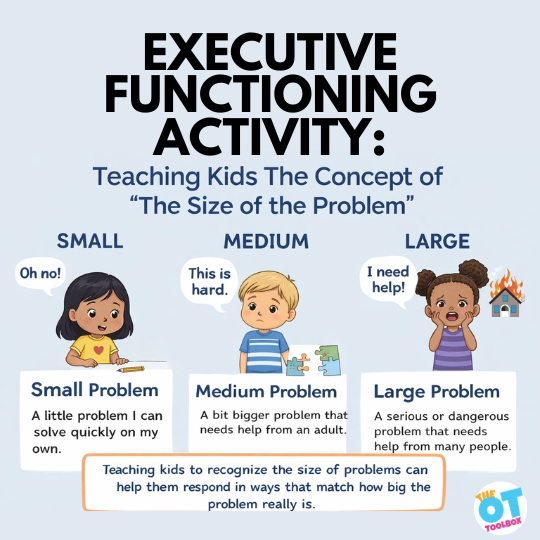
Conversely, significant life changes, family emergencies, or safety concerns require a vastly different level of support and coping mechanisms. Teaching children to differentiate between these scenarios fosters perspective-taking, self-awareness, and critical problem-solving skills. Because executive function develops gradually over a long period, identifying a problem, finding a regulation strategy, and implementing it requires consistent, repeated practice across various environments.
Implementing the Concept Across Different Settings
The versatility of the Size of the Problem activity makes it equally applicable in the home, the classroom, or a clinical therapy setting. In everyday home environments, minor disruptions routinely test a family’s patience. Whether it is a missing bathing suit ahead of a school swim class, an unexpected run to the store because a key meal ingredient is missing, or a family running late for the school bus, daily life is inherently unpredictable.
Parents often act as co-regulators during these moments, guiding children through mood modulation and affect management. For example, a missing item that prevents a child from participating in an activity carries immediate consequences and therefore qualifies as a medium or large problem depending on the context. By discussing these scenarios openly, parents can transform everyday inconveniences into teachable moments, helping children develop resilience and the ability to "go with the flow" when plans change.
Similarly, educational settings frequently utilize these concepts within calm-down corners, emotions check-ins, and feelings-sorting activities. Academic challenges—such as a missing school assignment that impacts a grade—or social disputes during recess provide natural opportunities for students to practice responsibility, time management, and conflict resolution. When teachers and school counselors integrate emotional check-ins into the daily routine, students gain a common language to discuss their feelings and assess the severity of their circumstances.
Building Emotional Vocabulary and Sized Reactions
A critical component of teaching the Size of the Problem framework involves expanding a child’s emotional vocabulary. Rather than relying on broad terms like "mad" or "upset," children are encouraged to use more descriptive words—such as frustrated, disappointed, anxious, or overwhelmed—to articulate their inner states. This precision allows young learners to communicate their needs more effectively and select coping strategies that match the intensity of their feelings.
Educational and therapeutic resources often utilize visual supports, task cards, and sorting activities to help children grasp these abstract concepts in a concrete way. By sorting different scenarios into small, medium, or large categories, students learn to recognize that a small problem calls for a small reaction and an independent, quick solution, whereas a large problem requires adult intervention and more intensive coping tools.
Children’s literature also serves as an effective medium for reinforcing these skills. By reading stories that highlight characters facing various dilemmas, educators and parents can guide children to pay attention to how characters identify their problems and what actions they take in response. This narrative approach helps bridge the gap between theoretical lessons and real-world application.
The Professional Perspective on Child Development
From an occupational therapy perspective, the Size of the Problem curriculum extends far beyond basic behavioral management. Colleen Beck, an occupational therapist with decades of experience in school-based, pediatric, and developmental settings, notes that the approach taps directly into executive functioning, emotional regulation, perspective-taking, and self-monitoring skills.
When children learn to accurately assess the size of an obstacle and select an appropriate response, they build the foundational capacities required for successful school participation, positive peer relationships, and long-term resilience. Rather than dismissing a child’s intense reaction to a minor issue, skilled practitioners and caregivers use the framework to validate those initial feelings while guiding the child toward constructive problem-solving. Through consistent practice and supportive instruction, children gain the functional tools needed to navigate life’s inevitable challenges with confidence and emotional balance.