







In the complex, fast-paced ecosystem of modern medicine, the roles of various healthcare professionals are often categorized by high-stakes procedures, diagnostic testing, and clinical pharmacology. Yet, as the industry continues to evolve toward a model of patient-centered care, a persistent question remains for many practitioners: how do we effectively articulate the unique, often intangible value of Occupational Therapy (OT)? While OTs are integral members of multidisciplinary teams, the profession frequently faces a challenge in communicating exactly what it brings to the table—a struggle that can sometimes lead to an undervaluation of the distinct, transformative impact OTs have on a patient’s daily existence.
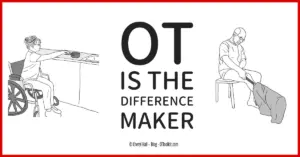
The frustration is not rooted in a lack of efficacy, but rather in a historical difficulty in framing the "OT difference" in a way that resonates across the healthcare spectrum. To shift this narrative, perhaps it is time to redefine the role of the Occupational Therapist not just as a rehabilitator, but as the primary "difference maker" on the healthcare team. By examining concrete, real-world examples where OTs intervene in the granular details of a patient’s life, we can illustrate how these professionals meet individuals exactly where they are in their health journey, turning clinical goals into meaningful improvements in the quality of their lives.
Over the course of a career, certain patient experiences inevitably stand out. These are the moments where the presence of an OT was not merely supplemental, but pivotal—instances where the intervention provided was unique to the specialized training and perspective of the therapist, offering solutions that no other member of the clinical team would have thought to propose.
Terminal Cancer and the Power of Play
One such experience involved a ten-year-old patient named Paul. Diagnosed with terminal cancer and confined to a wheelchair, Paul had become increasingly withdrawn. The crushing weight of his diagnosis had turned his days into a cycle of medical necessity, and despite the best efforts of his medical team, the emotional toll was evident. Every one-hour OT session would begin and end in the same state: Paul was quiet, defeated, and overwhelmed by the reality of his illness. The clinical interventions were sound, but they were failing to address the human being beneath the patient.
One day, in a departure from standard therapeutic exercises, I decided to introduce a simple grabber tool into our session. Paul’s mother, who was in the nearby kitchen washing dishes, stepped out of the room momentarily. Seizing the opportunity, I used the grabber to retrieve a dish towel and handed it to Paul, whispering a simple, conspiratorial instruction: "Hide it under the table."
When his mother returned and began searching for the missing towel, the transformation in Paul was instantaneous. His eyes lit up, and as his mother started opening drawers in search of the misplaced item, Paul broke into genuine, uninhibited laughter, waving the towel in the air. For that brief moment, the cancer did not exist. The grabber remained with Paul for the rest of his life. He used it to engage in playful mischief with his parents and siblings, reclaiming a sense of childhood agency and joy that had been eclipsed by his condition. When his parents reached out after his passing two weeks later, they did not speak of the clinical milestones; they thanked me for the laughter and the moments of normalcy. This intervention, while seemingly small, served as a profound reminder that for an OT, the "occupation" of being a ten-year-old boy is just as critical as the medical treatment of the disease itself.
Restoring Dignity Through Custom Innovation
The value of Occupational Therapy is often found in the intersection of clinical necessity and the preservation of human dignity. This was starkly illustrated in the case of "Jack," a patient suffering from severe, uncontrolled diabetes. Following a life-altering surgery, Jack was left with only his thumbs and half of his dominant index finger.
During a session focused on adjusting strategies for his Activities of Daily Living (ADLs), Jack expressed a deep sense of embarrassment. He had been working through a list of challenges, but he was hesitant to bring up one final, deeply personal task. When I gently encouraged him to speak his mind, he confessed: "The most recent surgery took my nose-picking finger."
While some might view this as a trivial complaint in the context of major surgery, an OT recognizes that every functional deficit—regardless of how it is perceived by others—affects a patient’s autonomy and self-image. I immediately assessed the sensation, skin integrity, and circulation of his residual finger. After consulting with his nursing and medical team to ensure safety, I utilized splinting material and Velcro to construct a custom device. Through a series of adjustments, we successfully enabled Jack to regain control over this specific task. By validating his concern and applying clinical ingenuity to solve a "small" problem, we restored a piece of his independence that had been lost to trauma.
Breaking the Invisible Barriers of the Home
Perhaps the most common misconception about healthcare is that it stops at the clinic door. In reality, the home environment is where the most significant battles for independence are fought. Consider "Dorothy," a 75-year-old patient suffering from severe rheumatoid arthritis. When I arrived for her home assessment, she called out from inside that the door was unlocked, rather than opening it to greet me.
Upon my evaluation, I discovered that for the ten years she had lived in her apartment, she had never been able to open her own front door. She had spent a decade relying on neighbors to let her in, and she kept the door unlocked to allow for visitors. This was a prisoner’s existence within her own home, caused by a simple mechanical barrier. Upon inspection, I found the magnetic seal of the door was extraordinarily strong, creating a vacuum that her arthritic hands could not overcome.
By using simple masking tape to cover half of the seal’s surface, I reduced the friction enough for Dorothy to open the door by herself for the first time in a decade. I took the extra step of contacting the apartment manager and the local fire station to ensure that the door remained compliant with fire safety codes. The solution was low-cost and high-impact, yet it fundamentally changed Dorothy’s quality of life. None of these needs—the joy of a ten-year-old, the dignity of a diabetic patient, or the independence of an elderly woman—would have been addressed by the traditional medical team. They were addressed because an OT was looking at the world through the lens of human occupation.
These stories serve as a blueprint for the profession. They demonstrate that the OT difference is not about replacing other disciplines, but about filling the gaps that others may not even see. The next time a healthcare team requires a reminder of the value of Occupational Therapy, do not rely on abstract definitions. Share the stories of the lives changed, the doors opened, and the moments of humanity restored. That is the true impact of the profession.