






Long before a single word is spoken, human interaction is already well underway. Walking into a room or sitting down across from someone at a meeting table involves a rapid, almost instantaneous calculation. You might see a man with a closely shaved head, a woman with silver-gray locks, a Black woman wearing her hair in a natural texture, or someone with cascading, long blond hair. Before either person opens their mouth to introduce themselves, an impression has likely already been formed.
Human beings are intensely visual creatures, and hair stands out as one of the most prominent, modifiable, and culturally loaded elements of our physical appearance. We frequently use it as a shortcut to make sweeping inferences that extend far beyond simple hairstyle choices. Psychological research consistently demonstrates that hair can heavily influence how observers judge age and physical attractiveness. Beyond mere aesthetics, however, hair also quietly steers our snap judgments regarding dominance, competence, overall professionalism, perceived health, and underlying personality traits.
A revealing study published this year sought to untangle this phenomenon by visually separating hair from the face to determine how much each distinct feature contributes to initial impressions. In research conducted by Swanson and colleagues, participants were shown photographs of forty different individuals presented in three distinct formats: the whole person’s head, the face with the hair digitally hidden, and the hair with the face completely obscured. Participants were then asked to evaluate whether the subjects appeared powerful or warm.

The findings underscored just how much weight we place on hair when evaluating social power. Ratings derived purely from a person’s hair strongly predicted how powerful the whole person appeared, even after the researchers statistically accounted for judgments driven by the face alone. Conversely, hair contributed significantly less to impressions of warmth, such as whether an individual seemed kind, approachable, or cooperative. While this particular study did not set out to pinpoint which specific hairstyles project the greatest sense of power, the results highlight the profound communicative power of our locks.
Earlier research had already uncovered a similar dynamic regarding shaved heads. In a 2013 study by Albert Mannes, men with shaved heads were consistently perceived as more dominant than men sporting full heads of hair. In one of the experiments, researchers digitally removed the hair from photographs of the same men. When presented without hair, the altered versions were judged not only as more dominant but also as taller and physically stronger.
Thus, it appears that hair plays a vital role in shaping our perceptions of status and physical presence long before we gather any empirical evidence regarding how a person actually behaves in the real world.
Hair and Professionalism
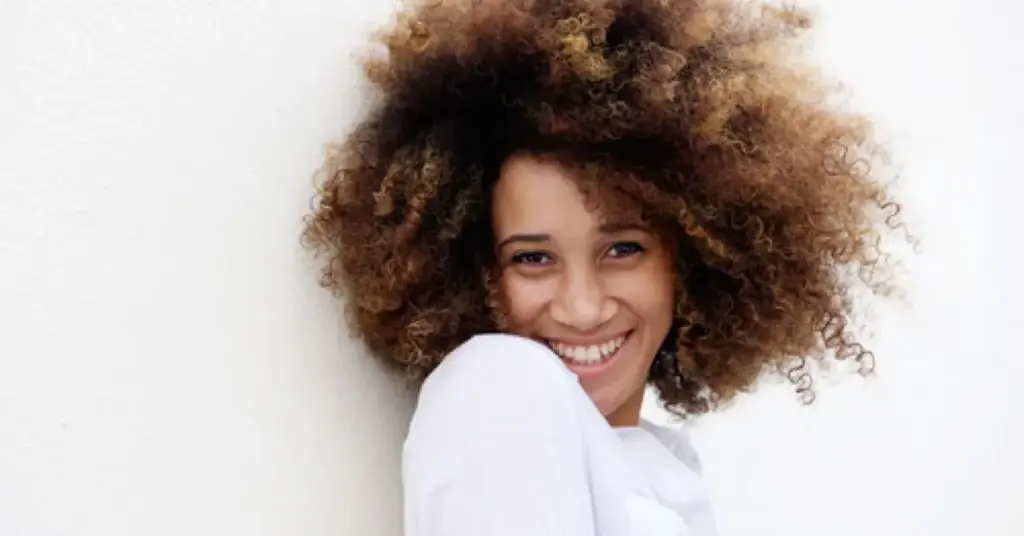
The psychological stakes rise significantly when these split-second visual judgments bleed into high-stakes environments like job recruitment and professional evaluations. A striking 2021 study by Courtney Z. Koval and Ashleigh S. Rosette investigated how Black and White women were evaluated as job candidates when wearing either natural hairstyles or straightened hair. Across four distinct studies, the researchers discovered that Black women wearing natural hairstyles were judged as significantly less professional and less competent than Black women with straightened hair. Furthermore, they were less likely to be recommended for an interview by evaluators.
This bias proved even more pronounced in industries characterized by relatively conservative appearance norms. In these scenarios, hair was doing far more than simply influencing baseline judgments of physical attractiveness. Evaluators were actively using the appearance of a candidate’s hair to gauge whether they looked as though they truly belonged in a professional corporate role.
This distinction is critical because societal standards of a "professional appearance" are frequently framed as neutral, objective guidelines. In practice, however, they often reflect deeply ingrained, culturally specific expectations about what competent, successful people are supposed to look like, systematically penalizing those who do not conform to eurocentric norms.
How Gray Hair Is Perceived
Hair also provides an immediate, highly visible cue regarding a person’s biological age, triggering a cascade of age-related assumptions. In recent research published by K. M. Nutt and colleagues, researchers digitally altered photographs so that the exact same faces appeared with either gray hair or non-gray hair. The results indicated that both men and women were judged as significantly older and less physically attractive when their hair appeared gray.
Interestingly, some of these judgments shifted depending on the demographic of the observer. Male participants rated individuals with gray hair as noticeably less trustworthy, whereas female participants did not exhibit this specific bias. At the same time, gray hair did not significantly alter judgments concerning social status or perceived aggression in this study.
This complex pattern demonstrates that gray hair alters certain social impressions while leaving others remarkably stable. Hair does not simply generate one monolithic positive or negative reaction; rather, different physical characteristics trigger entirely distinct sets of cognitive assumptions.
Hair Color and Personality
Beyond texture and age-related changes, hair color alone can heavily sway judgments that have no obvious or logical connection to the strands on one’s head. For example, in a 2011 study conducted by Viren Swami and Stuart Barrett, researchers examined men’s behavioral and cognitive responses to the same woman presented with different hair colors. In a real-world nightclub setting, men approached the woman more frequently when she was styled as a blond. However, when a separate group of men evaluated static photographs of the same woman, the brunette version was rated as more attractive, intelligent, approachable, and competent. Meanwhile, the blond version was rated as more needy.
Similarly, research by Douglas Matz and V. Lawrence Hinsz demonstrated that a woman’s hair color and length directly influenced observer judgments regarding her age, health, attractiveness, relationship potential, and even perceived parenting capabilities. In their findings, lighter hair shades were broadly associated with greater youth, health, and general attractiveness.
Could Some Hair Inferences Be Right?
Not every inference we draw from a person’s appearance is entirely wrong. People choose their hairstyles, colors, and maintenance routines for deliberate reasons, and those choices can genuinely reflect personal preferences, identity, or underlying facets of personality.
In a study of 308 young women, researchers found that participants with short hair scored slightly higher on measures of fun-seeking. Meanwhile, women who regularly dyed their hair tended to score higher on traits such as extraversion, openness to experience, and emotional stability. However, the overall statistical relationships between specific hairstyles and personality traits were weak, and a person’s hairstyle explained very little of the actual variation in their personality.
Broader psychological research into first impressions suggests that observers can occasionally make above-chance personality judgments based purely on appearance. A notable study by Laura Naumann and colleagues found that observers viewing full-body photographs could judge certain traits, such as extraversion, with modest accuracy. This accuracy stems partly from the fact that appearance incorporates intentional cues chosen by the individual—such as clothing, accessories, and grooming—alongside expressive cues like posture and facial expression.
Therefore, a carefully chosen hairstyle may occasionally reveal something authentic about the person who wears it. The fundamental danger lies in over-interpreting what we are seeing. Hair provides a fleeting clue, but it remains a remarkably small sample of evidence from which to deduce an entire personality.
Furthermore, many aspects of human appearance are entirely beyond individual control. Factors such as ethnicity, natural hair texture, gender, and the natural progression of age heavily dictate the appearance of our hair, and these biological realities have virtually nothing to do with a person’s character or inner personality.
From Hair to Person
Despite these limitations, hair matters deeply in social interactions because it is highly visible, easily modified, and frequently chosen with intention. A sudden haircut, a radical color change, a distinct texture, or the decision to let one’s hair transition to gray can instantly alter the impression we project before a single word is spoken.
This is precisely what makes hair inferences so fascinating to psychologists. We perceive a genuine physical cue and spontaneously construct a much larger, more detailed mental picture of the person standing before us. Sometimes, that mental picture is partially accurate. At other times, it merely reflects cultural stereotypes and rigid societal expectations.
The next time you catch yourself forming an immediate impression of a stranger, it may be worth pausing to consider how much of that judgment originated from the actual person, and how much was simply projected by their hair.