







In classrooms and professional development circles, a quiet shift is taking place regarding how educators approach teaching, assessment, and daily school life. Over the past few weeks, three distinct individuals deeply embedded in the world of education have brought the concept of wonder back into sharp focus. Among them is Angela Stockman, an educator rethinking her approach to educational assessment and facilitation after engaging with the literature on the subject. Writing on her Substack, Stockman recently explored the profound shift that occurs when educators track wonder rather than just curiosity.
Stockman contemplated how prioritizing wonder might transform documentation practices, slowing down the educational process just enough to keep minds open. She noted that tracking wonder gives curiosity a tangible foundation, treats bewilderment as a legitimate and productive place to stand, and generates the evidence that hope requires. Furthermore, it brings colleagues together in a way that allows them to admire one another openly and deepen the admirable qualities within themselves. For Stockman and others, this approach provides a meaningful framework that widens the aperture around what it truly means to be a teacher or a professional learning facilitator.
This sentiment is echoed across other corners of the academic landscape. Another professional is currently pursuing a Doctorate of Education with a specialized research focus entirely on wonder, while simultaneously working with a university center dedicated to providing educators with robust professional development. Meanwhile, a third individual serves on a local board of education and a teaching and learning committee, observing firsthand as school leaders across her state begin to reconsider their core priorities and traditional methods of assessing student learning. These converging inquiries naturally prompt broader questions about the state of modern education and the internal experiences of the educators driving it.

These recent developments serve as a timely update to ongoing conversations about creativity and critical thinking in schools. Years ago, education advocates and psychologists began examining how rigid systems inadvertently stifle curiosity. The central question remains remarkably relevant today: What would happen if we placed wonder closer to the center of education, and what would occur if we began this transformation with the educators themselves? Experience suggests that this approach is entirely viable. Even the most seemingly jaded educators and educational leaders have been observed reigniting their capacity for wonder, a cognitive state that tends to be remarkably contagious.
What Happens When Students Wonder?
To understand the true impact of this pedagogical shift, it is helpful to look first at students and the deliberate design of learning environments. With intentional planning, educators and school leaders can successfully cultivate an ecosystem where natural wonderers thrive.
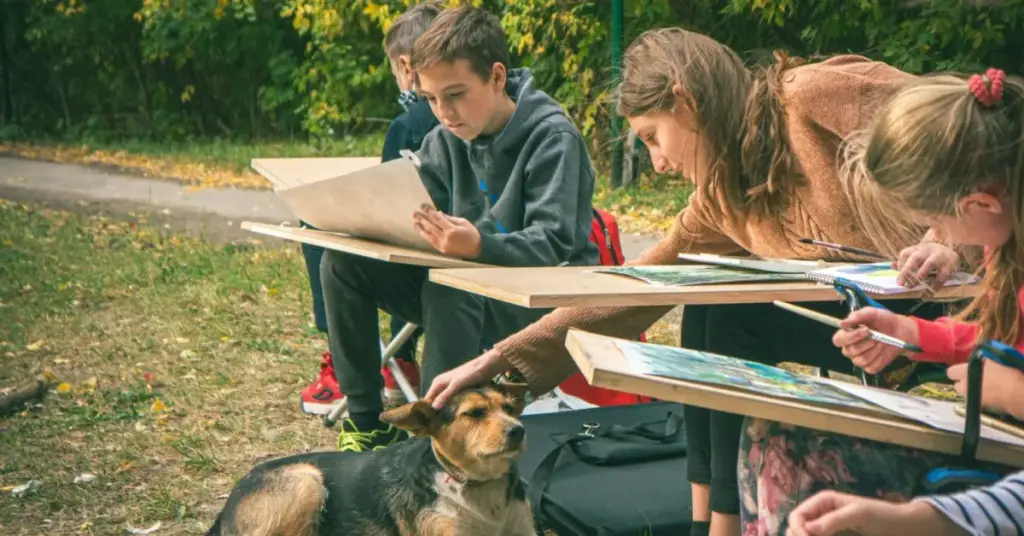
Recent qualitative insights from a March 2026 phenomenological study offer encouraging results regarding wonder-infused learning environments. Led by researchers Andrew Gilbert and Steph N. Dean of Clemson University, the study examined an eight-week project implemented with students in grades three through five. Situated within an outdoor learning laboratory and centered primarily on science, the project granted students considerable freedom to pursue topics and phenomena that genuinely fascinated them. Teachers established various outdoor stations across related fields of study, allowing students to maintain wonder journals where they recorded observations, formulated questions, and investigated self-selected scientific phenomena. The project culminated in a celebratory Wonder Fair.
Throughout the process, students discovered that wonder functions as an intellectual adventure with immediate, real-world relevance. As one student articulated, the experience helps open the mind, prepares individuals for the complexities of the outside world, and assists in figuring out answers independently. With careful guidance from teachers, the children learned to bridge the gap between initial expressions of awe and the formation of testable, scientific questions. Wonder for its own sake transformed into an integral and meaningful component of the daily learning experience.
The researchers also documented notable instances of what they termed "joyful struggle." Naturally, students encountered difficulties when attempting to formulate hypotheses and reach consensus with collaborating peers. However, the inherently joyful context of wonder rendered these academic struggles far more light-hearted and manageable. Educators frequently note that a culture of joyful struggle is immensely valuable, given that perseverance through difficulty is an inevitable part of any meaningful intellectual endeavor. Ultimately, the propagation of wonder appears to be a vital and relevant educational outcome in its own right.
But What About the Teachers?
A closer examination of the Clemson study reveals that the educators themselves were deeply involved in the active process of wondering alongside their students. Researchers identified this dynamic as "shared vulnerability." Teachers actively shared their own genuine wonders with the students, thereby encouraging the children to reciprocate. One participating teacher reflected on how frequently she had walked through the woods in the past without truly observing her surroundings. Steph N. Dean remains particularly dedicated to helping science teachers view themselves as a hybrid of scientist and educator—individuals who do not possess all the prefabricated answers, but who routinely share authentic questions with their classrooms.
Educational scholars Wolbert and Schinkel, in their research on what they term "wonder-full education," argue that a teacher’s personal capacity to wonder is fundamentally essential to cultivating that same capacity in students. They emphasize that such teachers do not treat wonder as merely a mechanical instructional delivery tool for a lesson plan. Instead, these educators inhabit both contemplative wonder—wondering at the world—and inquisitive wonder, which involves wondering about specific phenomena and aligns closely with curiosity-driven frameworks.
Their research also highlights the crucial element of vulnerability. Because wonder inherently reminds individuals of the vast expanse of what they do not yet know, it can expose personal uncertainty. Teachers, who are traditionally expected by society and institutions to hold all the answers, must cultivate the willingness to admit when they do not know something. Observations suggest that this genuine openness creates a safe psychological space where students feel equally free to explore their own wonderings. In this model, teacher and student become fellow questers on a shared intellectual journey.
Other academic inquiries point toward remarkably similar conclusions. A 2017 qualitative study conducted by Gilbert and Byers at George Mason University, which focused on preservice elementary teachers, demonstrated that wonder-based pedagogy successfully helped participants fundamentally reconsider their relationship with science while envisioning entirely new possibilities for instructional practice.
Furthermore, experts emphasize that wonder-centered pedagogy should not be confined exclusively to early childhood or elementary education. For years, advocates have argued that wonder is far from being merely "kids’ stuff"; rather, it is a radical and necessary pursuit for adults as well. Workshops conducted with undergraduate students at Western Connecticut State University and doctoral candidates at Boston College reveal just how intensely adults crave formal permission to wonder openly. Participants frequently experience a palpable sense of relief upon realizing that they are permitted to practice wonder and seamlessly integrate it back into their rigorous academic and professional lives.
This raises critical questions about the current professional landscape: How many working educators are truly given the time and space to rediscover the intrinsic passions that first drew them to the field of learning? And what transformative effects might ripple through their classrooms when they finally do?
Cultivating a Culture of Wonder
Scholars like Wolbert and Schinkel point to the necessity of establishing a comprehensive, schoolwide ethos of wonder. Building such an environment requires looking beyond immediate lesson plans and standardized testing metrics. It begins fundamentally with the adults who design, manage, and inhabit the learning ecosystem.
Reintroducing wonder into modern education requires examining what still inspires educators, what recently caught them by surprise, and where they are granted the professional autonomy to experiment and question. As ongoing research and classroom observations continue to demonstrate, when educators are encouraged to embrace their own curiosity and shared vulnerabilities, the resulting classroom culture opens up entirely new horizons for deep, meaningful learning.