







Endowed with the voice of an angel and a natural physicality that she has adroitly applied to comedic timing for decades, Dolly Parton remains a cultural titan whose legacy is as profound as it is permanent. While societal scrutiny often falls upon women who do not have children, Parton has managed to transcend such limited narratives. She is not criticized for her lack of offspring; rather, she is heralded as a global beacon of balance, generosity, and irrepressible good humor. Her life serves as a living testament to the idea that a legacy is not defined by the biological lineage one leaves behind, but by the tangible impact one has on the collective human experience.
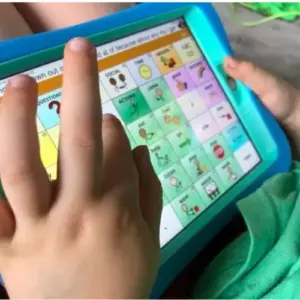
With no children of her own, Parton has channeled her maternal energy and vast resources into the Imagination Library, a project that currently benefits over three million youth aged five and younger across the globe. Each month, these children receive high-quality books at no cost, planting the seeds for future literacy and a lifelong love of reading. Reflecting on the philosophy behind this massive undertaking, Parton has noted, "The seeds of dreams are often found in books, and the seeds you help plant in your community can grow across the world." By prioritizing universal access to education, she has effectively expanded the definition of family to include the next generation of global citizens.
Giving is often a quiet, internal process, woven into the very fabric of an individual’s character rather than performed for public applause. Like Parton, many people who are without children find themselves in the position of having to equivocate when grilled by acquaintances about their family status. Part of the reason many childless or childfree individuals do not often share their stories is that these narratives involve the complex, often evolving reality of living outside the mainstream of traditional parenthood. It is essential to recognize that being a non-parent is simply an element of one’s being—a life path rather than a statement of one’s inherent value or lack thereof.
The crucial role of the childless and childfree in modern philanthropy cannot be understated. Whether they are supporting members of their extended family tree or contributing to various charitable causes, many people without children dedicate significant time and treasure to support those in need. They are making a mark on the world that is far from insignificant, often operating in spheres of influence that are vital to the health of non-profit organizations and social programs.
The data supports the notion that this demographic is a powerful, yet often overlooked, force in charitable giving. According to a long-term study conducted by Russell James, who served as a Professor of Charitable Financial Planning at Texas Tech University from 1992 to 2012, there is a marked difference in estate planning between parents and non-parents. The research indicated that 50 percent of childless decedents left money to philanthropic organizations, a figure that stood in stark contrast to the 17.1 percent of those with children who did the same. This disparity suggests that those without the immediate financial obligations of raising a family are uniquely positioned to direct their resources toward systemic social change.
Despite this clear propensity for generosity, childless and childfree adults often lack a centralized mechanism to combine their giving in a way that creates lasting, scalable change. Many have speculated that if such a structure existed, this demographic could pool its collective power to address some of the most pressing issues of the era, such as balancing the disparities in the intergenerational transfer of wealth, combating the accelerating effects of climate change, or ensuring food security for the hungry. However, routes for the unification of this demographic remain frustratingly scarce in the current philanthropic landscape.
Before the onset of the COVID-19 pandemic, one community foundation made a concerted effort to engage this specific donor base. The organizers planned an event specifically for women donors who do not have children, and the turnout was overwhelming. The event was packed, and participants expressed a clear desire for future gatherings tailored to their unique interests and philanthropic goals. Although the organization initially agreed to support this momentum, years have passed, and another event has yet to come to fruition. While the specific reasons for this lack of follow-through remain opaque, the initial success proved that there is a significant, untapped appetite for community among this donor group.
I can personally guarantee that as a result of that first gathering, several new donor-advised funds were established, and numerous professional liaisons and genuine friendships were instigated. I personally maintain a small donor-advised fund that is designated, upon my eventual demise, to support early childhood literacy initiatives. This structure allows my resources to continue the work I value long after I am gone, providing a sense of continuity that is often associated with traditional parenting.
After I transitioned away from my full-time professional life, I donated years of service to local primary grades, providing direct support to children who struggled with the fundamental skills of reading and writing. Recalling the choruses of their greetings each time I walked into the classroom still nourishes me to this day; the warmth of that experience is mirrored by the collection of drawings they put in a memory book for me when I moved away. These moments of human connection are the dividends of a life lived with intention, serving as a reminder that the impact of one’s life is not measured by the presence of biological heirs, but by the lives one touches along the way.
Those of us who are still star-struck by Parton’s fame may fail to see the deeper, more structural power of her role in making the world a better place. She is not just a musician or a philanthropist; she is a model for how we can all better navigate our relationships with one another. She offers a blueprint for how to be a thriving, contributing member of a community, regardless of one’s family status. When we look at the breadth of her contributions, it is clear that she has answered the most important question of all: what more could one want as their life’s legacy than the knowledge that they left the world more literate, more kind, and more connected than they found it?