




The core ideas underpinning ancient Buddhist and Daoist spiritual traditions bear a striking resemblance to the commonalities found across human-scale indigenous cultures worldwide. Observers of these traditions note that a compassionate framework of love—understood as vulnerable, mutual knowing—is entirely compatible with a panpsychic relational philosophy. At a time when modern social and institutional structures feel increasingly atomized, thinkers are pointing to a fundamental human truth: everyone wants their lived experience to be taken seriously. As embodied spirits, humans are compelled to make sense of the world, yet they can only do so in good company.
Life
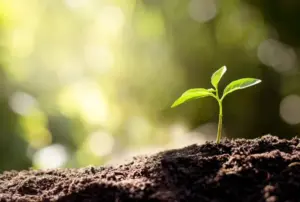
"Life creates conditions conducive to life," observed Janine Benyus. This simple definition hints at the fundamental reality that the dynamic process of life consists of continuous feedback loops. Life is entirely relational, sacred, cyclical, fleeting, compostible, nested, regenerative, and forever mysterious to all who participate in it.
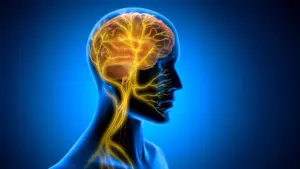
When examining the spatial and temporal scales relevant to biological and ecological systems, the smallest feedback loops emerge between molecules, resulting in the astonishing complexity found in cell biology and molecular genetics. These loops scale up to the bioregional, terrestrial, and marine ecosystems that constitute Gaia. Popular anthropocentric conceptions of consciousness generally restrict the phenomenon to animals equipped with brains, while excluding the myriad feedback loops occurring within living systems at both micro and macro levels.


Powered-up, or positive, feedback loops are those in which information piles up disproportionately within certain living cells or beings over time. However, such phenomena remain strictly temporary relative to the lifespans of the organisms involved. Human bodies grow to a specific scale and remain intact for a lifetime, during which internal molecular feedback loops are maintained in a balanced, de-powered state, fueled by external energy and producing building blocks ready to be reassembled into new life. Similarly, healthy social feedback loops among humans mature into enduring relationships, maintaining balance through shared experiences and contributing to local ecologies of care.
Spirits
Conceptualizing the universe entirely in terms of dynamic feedback and learning loops leads directly to a panpsychic philosophy in which consciousness is omnipresent across all scales—a view that bridges modern ecological thought with Eastern traditions like Buddhism and Daoism. This perspective invites non-anthropocentric viewpoints, challenges the cultural biases inherent in industrialized notions of intelligence and success, and highlights the cognitive and emotional limits of the human scale.
Historical texts place Buddhism—also known as Buddha Dharma—as an Indian philosophical tradition originating in the sixth or fifth century BCE through the teachings of the historical Buddha. Emphasizing a Middle Way between asceticism and sensual indulgence, the tradition focuses centrally on the minimization of suffering, or dukkha. This core objective corresponds closely with the active desire of neurodivergent individuals to minimize cognitive dissonance, while simultaneously addressing the societal strain caused by cultures that normalize prolonged cognitive dissonance.

Similarly, Daoism emphasizes harmony with the Dao, an enigmatic process of transformation underlying reality. Daoist virtues such as effortless action, naturalness, simplicity, compassion, frugality, and humility offer a timeless critique of anthropocentric empire-building. Foundational texts like the Zhuangzi employ humor to subvert such efforts, echoing the egalitarian practices and operating principles found in ancient hunter-gatherer societies.
Love
The vitality of life emerges directly from mutual trust, shared commitments, and mutual understanding embedded within relationships. In contrast, relationships forged with abstract, super-human scale institutions are inherently devoid of genuine shared experience. When a culture compels individuals to invest trust in such opaque structures, human capacity for authentic relational bonds diminishes, stripping everyday existence of vitality.
Recognizing these dynamics allows for a sober reassessment of institutional "collapse"—not as an unmitigated catastrophe, but as the inevitable expiration of an invalid social license. Indigenous societies that resisted the myth of homo economicus offer vital lessons in alternative ways of being. By viewing relationships as continuous, multi-modal, de-powered dialogues within ecologies of care, analysts are increasingly reframing evolution around collaborative niche construction rather than cutthroat competition, echoing principles articulated by thinkers like Peter Kropotkin over a century ago.

Sensitivity Profiles
Every human possesses a unique sensitivity profile shaped by neurological baseline dispositions and lived experiences within specific ecological contexts. Hypersensitive neurodivergent individuals, in particular, often navigate trauma resulting from systemic marginalization and pathologization in a hypernormative industrial world. Research indicates that a vast majority of neurodivergent adults frequently feel overwhelmed, misunderstood, and unsafe, with overall wellbeing directly tied to the alignment between their sensitivities and their surrounding ecologies of care.
Official diagnostic criteria for conditions like autism frequently overlap with symptoms of complex trauma, making it difficult to separate innate neurological baselines from survival responses. Critics of the modern medical model argue that simplistic, decontextualized diagnostic labels fail to capture the richness of individual experience, often resulting in harm among marginalized populations.
Unresolved cognitive dissonance manifests as physical, mental, and spiritual distress. While some individuals tolerate dissonance over extended periods, hypersensitive individuals are often acutely conscious of it, driving them to seek resolution. The prevailing psychological diagnostic manuals frequently establish a narrow bandwidth of culturally acceptable sensitivity profiles while pathologizing those that fall outside standard parameters.

Culture Co-Evolution
Major evolutionary milestones throughout the history of Gaia share inherently co-evolutionary characteristics, exemplified by the emergence of multi-celled organisms and the complementary roles of abstract symbol systems and semantics. Semi-permeable cellular membranes have served as a road-tested model for co-evolutionary processes for billions of years.
Rejecting energy-intensive competition, human-scale cultural co-evolution relies on conscious collaborative niche construction. Egalitarian hunter-gatherer societies have practiced these principles for hundreds of years, prioritizing values rooted in omni-directional learning and open-space collaboration. As modern societies confront the challenges of de-escalating conflicts, researchers suggest looking toward these enduring indigenous practices—along with modern digital collaboration tools—to design resilient frameworks for the future.
The Human Spirit Within Gaia
Humans evolved to make sense of the world at human scales. Transparent digital technological guardrails, designed as open-source heritage for future generations, could extend the reliability of human collaborative niche construction without centralizing power in the hands of authoritarian figures. Radical egalitarianism forms the architectural base of human adaptive intelligence, distinguishing humans from other primates through unique capacities for language and culture.

Within WEIRD (Western, Educated, Industrialized, Rich, Democratic) societies, individuals frequently become detached from these evolutionary roots, surrounded by what cultural critics term the "Spectacle." In the absence of trust-based ecologies of care, institutionalized corporate structures often serve as default anchor points. However, as cultural metamorphosis unfolds, ecological reality reasserts itself as the ultimate authority.
Becoming Aware of Cultural Bias
Critically examining human understanding requires separating cultural outputs from empirical investigations of Gaia. Academic disciplines across the humanities, mathematics, and engineering operate under unexamined cultural assumptions. While mathematics rigorously demands explicit assumptions, industrialized scientific and economic disciplines frequently rely on convenient frameworks that normalize exploitation and extraction.
The modern economic religion has institutionalized an obsession with maximizing quantifiable utility and individual "net worth" during prime working years, often viewing populations outside this bracket as economic burdens. This stratification suppresses intergenerational dialogue and fosters competitive silos that disrupt traditional patterns of community care.

Reviving Trust in Humanity
Atomized modern social environments have eroded human-scale cultural organisms, shaking faith in humanity and ecological systems alike. The competitive demands of homo economicus enforce a culture of forced independence, punishing vulnerability and fueling an epidemic of self-hate, shame, and suppressed guilt.
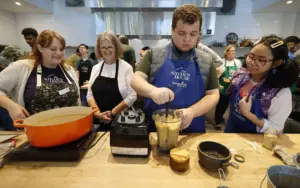
To break free from these toxic patterns, communities are increasingly turning toward cooperative models. Recognized globally through initiatives like the UN International Year of Cooperatives, cooperative frameworks demonstrate how human-scale ecologies of care can effectively address systemic challenges. By embracing Buddhist and Daoist values of compassion, humility, and naturalness, emerging networks are working to rebuild trust, honor neurodivergent perspectives, and foster life-affirming alternatives to industrial extraction.
The path forward requires relinquishing the myth of endless growth and recognizing that human flourishing depends on authentic, trusted relationships anchored in the living world. As human-scale ecologies of care continue to emerge organically, they offer a viable roadmap for navigating the transitions ahead.