


In an era defined by a soaring demand for peer support and reliable emotional support, the limits of modern mental health infrastructure are routinely pushed past their breaking point. This strain is visible across mental health statistics, escalating burnout rates, and the quantitative and qualitative findings of AutCollab Research. Driven by the common reality of autistic emotional exhaustion, a lack of adequate peer support, and the pervasive trust deficits fostered by modern economic systems, researchers and advocates are calling for a radical re-examination of how human relationships are built, maintained, and repaired.
Autistic culture represents a world of infinite diversity far beyond the neuronormative imagination. Every autistic relationship is entirely unique, yet many individuals within the community carry deep trauma. Navigating this landscape requires appropriate tools to invest in deeply understanding one another. Cultural metamorphosis demands a complete reframing of how society understands cultural adaptivity, viewing it instead through the lens of co-creating sustainable ecologies of care.
The modern world suffers from a shortage of basic relationship-building, maintenance, and repair skills, which have been systematically eroded by hyper-competitive economic frameworks. To relearn these essential capacities, communities are looking toward concepts like the Autistic Relationship Manual (ARM)—a framework rooted in compassion and mutual aid that can only be authentically provided by autistic peers.
Cultural Metamorphosis and Niche Construction
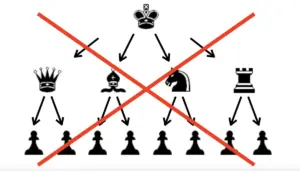
Cultural metamorphosis functions as a radical form of collaborative niche construction. It requires society to reframe everything it understands about the cultural adaptivity available at a human scale. Dominant economic and social systems have pushed life-affirming human cultures beyond the sustainable limits of the anthropocentric bell curve. Consequently, the mainstream cultural zone has become paralyzed by hypernormative institutional inertia and sanctified bureaucracy.

True cultural healing requires a profound shift in trust away from established institutions and toward mutual aid and community co-creation at a human scale, principles frequently championed by indigenous scholars such as Yuria Celidwen. Celidwen emphasizes the immense commitment and community effort required to create spaces of trust, noting that dismantling harmful societal narratives leaves individuals vulnerable, yet is essential for long-term ecological and social well-being.
This vital shift in trust is already taking place outside of traditional institutions, driven largely by self-selected and self-organizing groups operating on the intersectional margins of modern society. Within the context of cultural metamorphosis, autistic individuals act much like imaginal cells within human-scale cultural organisms. Numbering in the hundreds of millions globally, and spanning every continent and bioregion, neurodivergent populations frequently spearhead concerns regarding social justice and challenge toxic in-group competitive behaviors. By assisting one another, they co-create unique relationships, households, and human-scale cultural organisms that operate outside standard societal expectations.
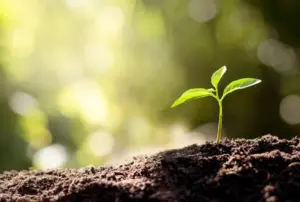
Real change inherently demands courage, as it shakes the very foundations of how people perceive the world. Unlike centralized mechanisms of control, grassroots movements continue to manifest as diverse, small-scale shoots that drive deep, systemic transformation from the bottom up. In healthy egalitarian ecologies, autistic individuals serve as the natural agents of a well-functioning cultural immune system.
Redefining Human and Animal Foundations
The heightened baseline sensitivity profiles of autistic individuals mean they often possess a reduced capacity for maintaining cognitive dissonance. Unconstrained by rigid cultural gender norms, they frequently demonstrate a deep capacity to relate to both human and non-human living beings. Their sensory profiles naturally limit their ability to think hierarchically and engage in purely transactional social exchanges. Within hypernormative cultures, explaining the immersion in healthy autistic culture or the formation of sacred lifetime relationships remains a challenge, as mainstream society struggles to comprehend forms of mutual support that transcend conventional boundaries.

Furthermore, within the hyper-normative modern social world, it remains necessary to emphasize that autistic individuals are fully human. Humans share an evolutionary capacity for developing complex cultures and languages, allowing for flexible collaboration based on shared intentions and an understanding of ecological context. Breaking verbal and written commitments inflicts physical, mental, and spiritual distress, highlighting how human evolutionary heritage is inextricably tied to becoming cultural organisms. Recognizing this heritage underscores the principle that every relationship and every living being is sacred.
Acknowledging that humans are biological animals also grounds modern discourse in humility. Like all animals, humans engage in diverse sexual and social behaviors, which are further complicated by cultural imagination and language. Western Educated Industrialized Rich and Democratic (WEIRD) cultures have never held a monopoly on cultural gender identities or sexual preferences. Attempting to impose these narrow norms globally constitutes a form of neocolonialism, mirroring the destructive impacts that super-human scale entities, such as modern nation-states and corporations, impose upon everyday life.
Relational Building Blocks and Health
Every human relationship is unique and sacred, defying cookie-cutter templates. However, foundational relational building blocks can help articulate the commitments, preferences, and needs that define a connection. The ability to extend deep trust depends entirely on the health of the surrounding ecology of care. When embedded within supportive autistic cultures, individuals can extend profound trust, though this gift remains vulnerable to exploitation in environments marked by internalized ableism.
Shared understanding, value priorities, interests, and complementary perspectives form the bedrock of enduring connections, far surpassing the superficial alignment often found in neuronormative social structures. Similarly, gender and sexual preferences within autistic relationships frequently bypass rigid binary constructs, offering expansive possibilities for personal expression and connection.

Relational health itself is defined as the absence of cognitive dissonance between participating parties. When modern society destroys collective deliberative capacities, individuals experience widespread incoherence and emotional strain. Resolving this dissonance requires transparent communication, a shared understanding of values, and genuine compassion to adapt preferences over time.
Effective energy management is equally critical to relational longevity. Human cognitive and emotional capacities are finite, operating within reservoirs that regulate dialogues, open-space communication, and environmental routines. Recognizing these limits helps prevent the chronic burnout and emotional exhaustion that characterize modern life.
Sacred and Therapeutic Relationships
Reaching maturity in relational navigation involves establishing lifetime friendships, economic partnerships, or romantic partnerships. These connections trace back to deep evolutionary roots, intentionally avoiding the artificial division between work and personal life that fuels modern alienation and the broader societal metacrisis.
Relationships that endure over extended periods rely heavily on mastery of repair and reconfiguration skills. Addressing cognitive dissonance promptly prevents emotional pain from escalating into chronic strain or leading to the dissolution of the relationship. Conversely, relationships bound entirely to transactional institutional frameworks often prove self-destructive.

For individuals still developing these foundational capacities, therapeutic friendships and partnerships offer a structured environment for learning through direct experience. By practicing radical transparency, open communication, and mutual peer support, participants learn to navigate difficult conversations and align their commitments without resorting to the exploitation characteristic of hyper-competitive workplaces.
Ultimately, building sustainable ecologies of care requires moving away from the transactional models of homo economicus and embracing autonomous, authentic, and human-scale connections. As these resilient grassroots networks continue to expand across the margins of modern society, they offer a viable blueprint for cultural healing, mutual aid, and enduring solidarity.