





In what marks a monumental milestone for international public health cooperation, the Government of Luxembourg and the World Health Organization (WHO) formally cemented a powerful new era of collaboration on December 20, 2024. The historic diplomatic and financial pact is designed to accelerate global progress toward the United Nations Sustainable Development Goals (SDGs) throughout the pivotal 2025–2028 funding cycle.
The centerpiece of this diplomatic achievement is a landmark Strategic Partnership Framework (SPF) agreed upon with Luxembourg’s Ministry of Development Cooperation and Humanitarian Affairs. Valued at €46.5 million, this agreement stands as the largest-ever financial partnership between the WHO and the Grand Duchy of Luxembourg. Complementing this massive development framework, the nations also launched their first-ever multiyear agreement with the Ministry of Health and Social Safety, totaling €1 million. This secondary pact represents Luxembourg’s inaugural voluntary contribution dedicated specifically to the WHO’s health initiatives, highlighting a broader, whole-of-government commitment to international health security.
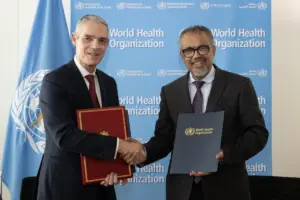
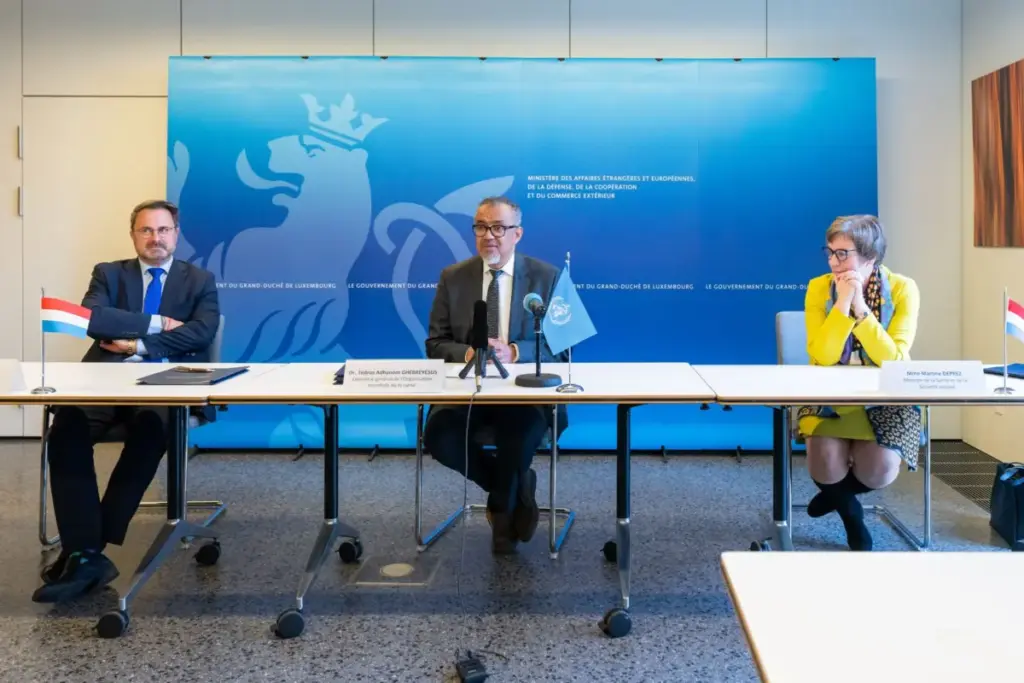
The high-level agreements were officially commemorated during a bilateral meeting featuring key leaders from both entities. Among them were Dr. Tedros Adhanom Ghebreyesus, WHO Director-General; Xavier Bettel, Luxembourg’s Deputy Prime Minister and Minister of Foreign and European Affairs, Cooperation and Foreign Trade; and Martine Deprez, Minister of Health and Social Safety.

Addressing the significance of the financial commitments during the discussions, Martine Deprez emphasized the targeted scope and immediate impact of the national contributions. From the present day through 2028, these vital funds will directly support and finance the core priority areas established within Luxembourg’s collaborative framework with the global health agency. Minister Deprez specifically highlighted that the funding will target vital sectors such as sanitary crisis preparedness and response capabilities, while simultaneously attacking persistent global health inequalities with a dedicated, special focus on gender equity.
A critical structural strength of the €46.5 million Strategic Partnership Framework lies in its financial flexibility. The package incorporates fully flexible and thematic funding streams, alongside highly targeted allocations designated for essential global health initiatives. These include the Universal Health Coverage Partnership, critical tropical disease research, and ongoing international efforts toward global polio eradication. Crucially, the inclusion of fully flexible funding empowers the WHO with the operational agility required to allocate resources swiftly and efficiently to areas experiencing the highest and most urgent global needs, bypassing bureaucratic delays during emerging health emergencies.
Reaffirming the country’s unwavering dedication to multilateral diplomacy, Xavier Bettel underscored the philosophical foundation driving the historic agreements. By signing these two robust partnership agreements, Bettel noted, Luxembourg has once again powerfully reaffirmed its enduring, long-term support for the WHO and its overarching global mission. He explained that this decisive action reflects a profound national commitment to championing global health and strengthening the framework of international multilateralism. Emphasizing a philosophy deeply rooted in modern public health strategy, Bettel added that Luxembourg chose to launch these unprecedented agreements with the WHO because the nation fundamentally believes that the best way to manage a crisis is to prevent it entirely.
To effectively support the realization of the WHO’s core strategic priorities, the newly established Strategic Partnership Framework includes vital backing for the organization’s foundational technical operations. This entails supporting the WHO’s core mandate to develop, deliver, and implement high-quality technical products, including the globally recognized clinical guidelines, norms, and regulatory standards upon which countless healthcare systems and national governments worldwide rely to ensure public safety and clinical efficacy.

The timing of the signing ceremony carried profound symbolic weight, taking place appropriately on the International Day of Solidarity. Speaking on the significance of the moment, WHO Director-General Dr. Tedros Adhanom Ghebreyesus remarked on the powerful symbolism embedded in the date. Dr. Tedros characterized the dual agreements not merely as a financial transaction, but as a robust and undeniable statement of solidarity by Luxembourg—extending its support not only to the operational mandate of the WHO, but directly to vulnerable people and communities across the entire world.
This historic diplomatic and financial pact ensures that the WHO and Luxembourg will seamlessly continue their long-standing historical strategic partnership. By joining forces, both entities are actively collaborating to fulfill a shared, enduring mission to promote health, provide essential care, and protect populations worldwide from emerging biological threats. The milestone agreements have already drawn widespread international praise, with leadership across the global health community—including public acknowledgments from Dr. Tedros via digital diplomatic channels—lauding Luxembourg for setting a gold standard in sustainable, flexible international health financing as the world looks ahead to the challenges and opportunities of the 2025–2028 strategic horizon.