







GENEVA / DILI — In a historic public health achievement, the World Health Organization (WHO) has officially certified Timor-Leste as a malaria-free country. The milestone marks the culmination of a dedicated, nation-wide campaign that began shortly after the young nation gained its independence in 2002, transforming a devastating public health burden into a triumph of resilience, political will, and community-driven healthcare.
With this announcement, Timor-Leste joins an exclusive global group, bringing the total number of countries and territories certified malaria-free by the WHO to 47 countries and 1 territory. Furthermore, Timor-Leste is now only the third nation in the WHO South-East Asia region to achieve this elite status, following the Maldives and Sri Lanka, which received their certifications in 2015 and 2016, respectively.
Under WHO guidelines, a country is granted certification of malaria elimination only after it proves, beyond reasonable doubt, that the chain of indigenous transmission has been successfully interrupted nationwide for at least the previous three consecutive years. For Timor-Leste, this zero-indigenous-case threshold has been firmly maintained since 2021.

Dr. Tedros Adhanom Ghebreyesus, WHO Director-General, offered high praise for the achievement, congratulating the people and government of Timor-Leste.
“Timor-Leste’s success proves that malaria can be stopped in its tracks when strong political will, smart interventions, sustained domestic and external investment and dedicated health workers unite,” Dr. Tedros said.
The announcement was met with profound emotion within the country, where malaria was once a relentless and pervasive threat. Dr. Élia António de Araújo dos Reis Amaral, Minister of Health for the Government of Timor-Leste, reflected on the arduous journey from peak infection numbers to complete eradication.
“We did it. Malaria has been one of our most relentless enemies – silent, persistent, and deadly. We lost too many lives to a disease that should be preventable,” Dr. Amaral stated. “But our health workers never gave up, our communities held strong, and our partners, like WHO, walked beside us. From 223,000 cases to zero – this elimination honours every life lost and every life now saved. We must safeguard this victory with continued vigilance and community action to prevent malaria’s re-entry.”
A Rapid Shift from High Burden Country to Malaria-Free
The trajectory of Timor-Leste’s malaria control program stands as a masterclass in focused public health intervention. Following its independence in 2002, the country faced staggering infection rates, peaking at more than 223,000 clinically diagnosed cases in 2006. Through a combination of strategic planning, aggressive testing, and widespread treatment campaigns, the nation drove those numbers down year by year until reaching zero indigenous cases in 2021.
This rapid turnaround was catalyzed in 2003 when the Ministry of Health took swift action to establish the National Malaria Programme. Designed specifically to plan, implement, and monitor malaria control efforts across the entire country, the initiative initially operated with just two full-time officers. Despite limited resources, these early leaders laid a robust foundation built on technical expertise, managerial capacity, and meticulous attention to detail.
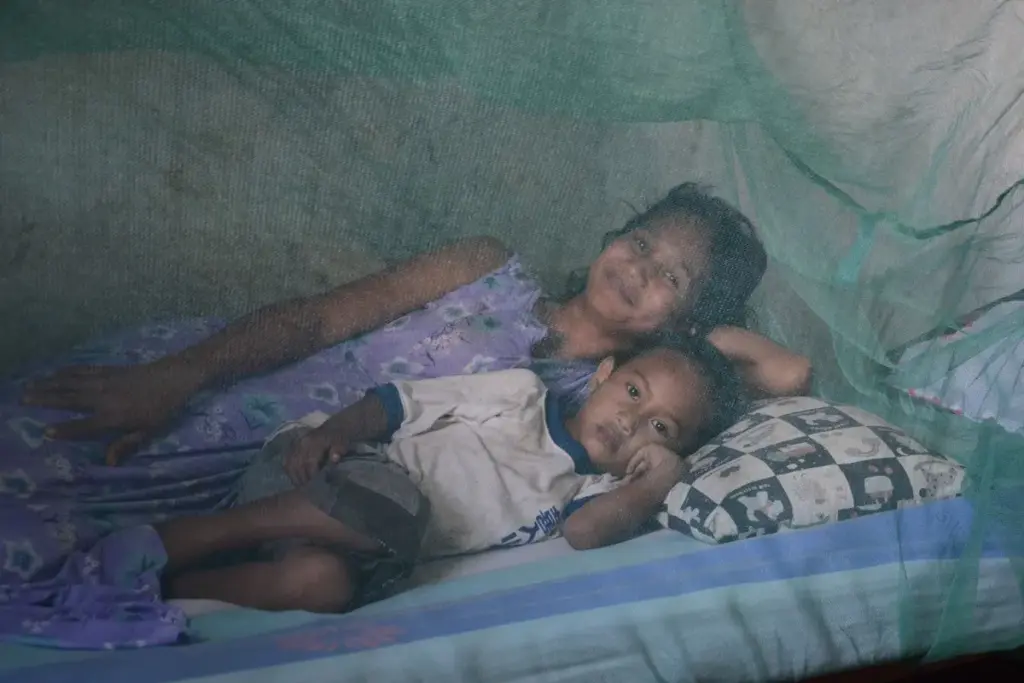
As the program matured over the next several years, Timor-Leste modernized its clinical approach. The nation introduced rapid diagnostic tests (RDTs) and artemisinin-based combination therapies (ACTs) into its National Malaria Treatment Guidelines, ensuring that patients could be diagnosed quickly and treated effectively. Concurrently, the government began distributing free long-lasting insecticide-treated nets (LLINs) to communities identified as being most at risk.
A major turning point arrived in 2009. Bolstered by substantial support from the Global Fund to Fight AIDS, Tuberculosis and Malaria, Timor-Leste significantly scaled up its vector control operations. This expansion included massive nationwide distributions of insecticide-treated nets alongside indoor residual spraying (IRS) campaigns. Additionally, diagnostic capabilities were expanded to the point of care across all local health posts through the widespread implementation of microscopy and rapid diagnostic tests.
Building Healthcare Infrastructure and Overcoming Workforce Challenges
Tackling a disease as pervasive as malaria required addressing systemic vulnerabilities, notably severe shortages of health workers and medical doctors. To overcome these barriers, Timor-Leste invested heavily in developing and expanding its unique three-tier health system.
The infrastructure is structured around national hospitals, reference hospitals, community health centers (CHCs), and local health posts. This deliberate architectural framework was designed to ensure that the vast majority of residents can access medical care within an hour’s walk from their homes. Furthermore, the government implemented a policy of free universal health care, guaranteeing that citizens receive essential medical services without out-of-pocket costs at the point of care. To reach remote populations, the country deployed monthly mobile clinics and comprehensive community outreach programs, bridging the geographic gap between rural citizens and vital health resources.
Collaboration has been a cornerstone of the nation’s success. Timor-Leste’s accomplishments underscore the powerful synergy possible when national leadership aligns with support from the WHO, local communities, non-governmental organizations, international donors, and diverse government sectors.
Technological modernization also played a crucial role in maintaining control over the disease. The implementation of a real-time, integrated case-based surveillance system allowed for rapid data collection and immediate public health responses. Meanwhile, highly trained health workers ensured the timely detection and screening of suspected malaria cases, maintaining strict vigilance at national borders to prevent the reintroduction of the parasite from abroad. These synchronized efforts ultimately paved the way for official WHO certification.
Dr. Arvind Mathur, WHO Representative to Timor-Leste, emphasized the grit and determination required to reach this historic milestone.
“Timor-Leste’s malaria-free certification is a defining national triumph – driven by bold leadership, tireless efforts of health workers, and the resolve of its people,” Dr. Mathur said. “As a young nation, Timor-Leste stayed focused – testing, treating, and investigating swiftly. Ending transmission and maintaining zero deaths takes more than science; it takes grit. This victory protects generations, present and future, and shows what a determined country can achieve.”