








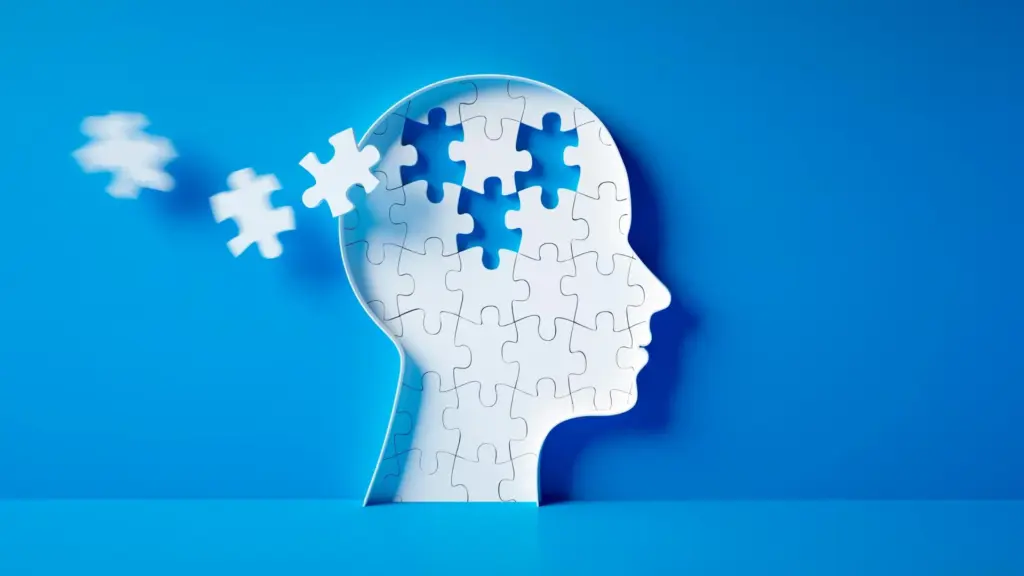
For generations, the narrative surrounding the aging human brain has been one of inevitable erosion. We are taught to view the passage of time through the lens of attrition: neurons fire less efficiently, recall becomes slower, and the razor-sharp precision of memory begins to dull. However, a growing body of research is challenging this pessimistic view, suggesting that what we perceive as cognitive decline may actually be a sophisticated biological shift toward a new stage of development.
Researchers at the University of Arizona are now proposing a revolutionary framework for understanding how the brain changes as we age. Their work, recently published in Perspectives on Psychological Science, introduces the "adaptive aging hypothesis." This theory suggests that the brain does not simply deteriorate as we grow older; instead, it optimizes its resources to prioritize the wisdom, pattern recognition, and vast stores of knowledge accumulated over a lifetime over the mere cataloging of new, granular details.
A Natural Evolution of Priorities
The researchers argue that the aging brain is not malfunctioning, but rather recalibrating its priorities. Drawing on insights from molecular biology and advanced brain imaging, the team suggests that the shift in cognitive performance is a natural progression of human life. As we transition from the rapid acquisition phase of youth to the knowledge-rich phase of later adulthood, the brain shifts its focus from "collecting" to "connecting."

"If we look at normative aging as a story of just decline, we are really missing the boat," says Fabian-Xosé Fernandez, an associate professor of cognition and neural systems at the University of Arizona and coauthor of the study. According to Fernandez, the aging brain is optimized for distinct, high-level functions that are vital to human social structure—most notably the synthesis of experience, the mentorship of younger generations, and the sharing of profound expertise.
This hypothesis posits that the brain is an evolutionary machine designed to meet the needs of the individual at specific life stages. In our youth, the brain is an expansive archive, desperate to soak up every detail of the world to build a foundational understanding of reality. By our later years, however, that archive is already full. The utility of hoarding more specific, context-heavy details diminishes, while the utility of extracting meaning and applying wisdom increases.
The Shift From Memory to Meaning
To understand this transition, the researchers point to two critical regions of the brain: the hippocampus and the frontal cortex. The hippocampus acts as the brain’s librarian, tasked with preserving specific episodic information—the "who, what, where, and when" of our daily experiences. The frontal cortex, conversely, is the brain’s chief executive officer; it is responsible for higher-order tasks such as pattern recognition, long-term planning, and the synthesis of "gist"—the underlying meaning or central message of an event.
According to the adaptive aging hypothesis, the brain’s operational balance shifts as we age. In healthy, aging adults, there is a measurable trend of reduced reliance on the hippocampus and a corresponding increase in the engagement of the frontal cortex. This is not necessarily a failure of memory, but a strategic reallocation of neural energy. By de-emphasizing the recording of every mundane detail, the brain frees up capacity to interpret new experiences through the filter of a lifetime of existing knowledge.
Fernandez notes that this phenomenon is not unique to humans, but is observed across various animal models, suggesting a deep-seated evolutionary driving force. "One could argue you are developing your entire life, and development occurs in lockstep with the needs of your brain," he explains. "When you’re younger, the hippocampus turns on because you don’t have a knowledge base or know how the world works. A kid absorbs information like a sponge because they are building an archive of information. In early life, the balance is tilted toward recollecting declarative memories with precision, detail, and context."
As an individual reaches later adulthood, the value of that "sponge" mechanism decreases. Instead, the brain excels at identifying relationships between events, discerning underlying themes, and applying lessons from the past to current dilemmas. This shift is the biological foundation for what society calls wisdom.
Why Evolution Favors the Elder
The adaptive aging hypothesis provides a compelling evolutionary explanation for why humans live long beyond their reproductive years. If the primary biological goal were simply to reproduce, the brain might not need to invest in the development of sophisticated, late-life cognitive traits. However, if the species benefits from the survival of the group, then the preservation and transmission of knowledge become paramount.
Older adults serve as the repositories of collective history, technical expertise, and social nuance. From this perspective, the brain’s pivot toward "meaning" over "detail" makes perfect sense. Mentorship, storytelling, and the guidance of younger generations require a bird’s-eye view of life, not an encyclopedic recall of minor events.
"Given those goals, it makes sense that you aren’t interested in nitty-gritty details," Fernandez says. "You are interested in safeguarding the vast knowledge you already have. Evolution may be saying that if you make it long enough, there’s a need to transmit this information, so we put into motion biological changes that enforce and protect your semantic and autobiographical memories."
By protecting these core narratives and semantic concepts, the brain ensures that the most vital information—the lessons learned through decades of trial and error—remains accessible. This suggests that what we often label as "forgetfulness" in older adults might be a secondary effect of the brain choosing to prioritize long-term, meaningful knowledge over short-term, transient data.
Distinguishing Aging From Pathology
A significant portion of the researchers’ work focuses on distinguishing this healthy, adaptive process from neurodegenerative conditions like Alzheimer’s disease. There has long been a misconception in clinical circles that Alzheimer’s is simply an accelerated or "extreme" version of normal cognitive aging. Fernandez and his colleagues argue that this is fundamentally incorrect.
"When I was in grad school, people thought about Alzheimer’s as a more intense version of cognitive aging, but that is just not the case," Fernandez asserts. "They are completely different."
In the process of healthy aging, the shift away from hippocampal dominance is a controlled, evolutionary adaptation that occurs typically between the fifth and seventh decades of life. In contrast, Alzheimer’s involves the accumulation of pathological proteins like amyloid and tau, which disrupt the brain’s delicate circuitry.
Crucially, the researchers point out that while healthy aging is associated with a de-emphasis of hippocampal activity, Alzheimer’s disease often presents with a paradoxical, unhealthy hyperactivity of the hippocampus. This dysfunction is not a shift in strategy; it is a breakdown of the system. This pathological state interferes with the brain’s ability to process personal experiences and access stored vocabulary, essentially severing the link between the individual and their life’s work. Understanding this distinction is vital, as it suggests that treatments for Alzheimer’s should target the removal of this disruption rather than trying to force the aging brain to return to a state of youthful, hyper-detailed recall.
Rethinking Successful Aging
The implications of the adaptive aging hypothesis extend well beyond the laboratory; they call for a societal shift in how we value older adults. If we continue to measure the success of an aging brain by its ability to perform on tests designed for younger, "sponge-like" brains, we will continue to misinterpret the unique capabilities of the elderly.
Fernandez argues that society’s fixation on detail-oriented performance may actually undermine the natural strengths of the aging brain. "For many individuals, the weight of how you process information should probably not be so hippocampal-centric by the sixth or seventh decade," he notes.
To truly support healthy aging, society might need to move away from metrics that prioritize short-term memory and instead focus on creating environments that foster social connection and intergenerational exchange. When older adults are engaged in mentorship and storytelling, they are utilizing the very systems—the frontal cortex and the store of semantic knowledge—that the adaptive aging hypothesis identifies as their primary strengths.
Ultimately, the hypothesis offers a more dignified and biologically accurate view of the human lifespan. It suggests that aging is not a process of slow, pathetic decline, but a transition to a different mode of existence. By recognizing and nurturing these hidden strengths, society can better unlock the potential of older generations. As Fernandez concludes, we currently "don’t do a good job of unlocking" the tremendous value held by those with decades of experience. By changing our perspective, we might find that the aging brain is not failing at all—it is simply doing what it was designed to do: turning a lifetime of information into the wisdom required to guide the future.