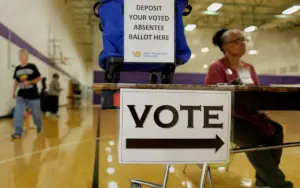






As Virginians head to the polls this November, they will be tasked with deciding the fate of a significant constitutional amendment that seeks to redefine the Commonwealth’s approach to voting rights. The ballot initiative is comprehensive in its scope, aiming to solidify the right to vote as a fundamental principle while simultaneously dismantling archaic language rooted in the state’s 1902 Constitution—a document widely recognized by historians and legislators alike as a vehicle for systemic voter suppression.
The ballot question presented to voters is structured in three distinct parts. First, it proposes an amendment to explicitly provide for the fundamental right to vote within the Commonwealth. Second, it seeks to revise voter qualifications regarding felony convictions, establishing that while an individual may be barred from voting during their period of incarceration, their right to vote would be automatically restored upon their release. Finally, the measure aims to modernize the existing, restrictive language regarding citizens with mental disabilities. Instead of a broad prohibition on voting for those deemed “mentally incompetent,” the new language would apply only to individuals who have been specifically adjudicated by a court as lacking the capacity to understand the act of voting.
While the automatic restoration of voting rights for formerly incarcerated citizens has captured significant public attention, advocates for the disability community argue that the third component of the amendment—which recalibrates how voting rights are treated in the context of guardianship—is a crucial step in correcting historical injustices. If the amendment is adopted, judges will be required to make a specific, evidence-based finding that an individual under guardianship lacks the capacity to comprehend the voting process before that individual can be disenfranchised. This shift moves away from a blanket assumption of incapacity, ensuring that a guardianship arrangement does not automatically serve as a barrier to the ballot box.

The path to this ballot initiative has been a long and arduous legislative process. In Virginia, amending the state constitution requires a resolution to pass the General Assembly in two consecutive years before it can be presented to the electorate for final approval. State Senator Mamie Locke, D-Hampton, who served as the chief patron of the resolution in the Senate, noted that this moment is the culmination of years of persistent effort to excise discriminatory provisions from the state’s governing document.
"The whole purpose and point behind working on this amendment is to get rid of something that was put into the 1902 constitution and remained in the constitution even after it was rewritten in the early 1970s as a way to suppress votes," Senator Locke explained.
According to Locke, the 1902 Constitution was explicitly designed to disenfranchise specific segments of the population. This included not only Black Virginians, who were systematically targeted by Jim Crow-era laws, but also those living in poverty and individuals with disabilities. Virginia remains the only state in the nation that permanently bars individuals with felony convictions from voting, unless the governor chooses to intervene on an individual basis. The proposed amendment is, in many ways, an attempt to reconcile these long-standing practices with modern democratic ideals.
Senator Locke reflected on the evolution of the bill, noting that early legislative discussions were often limited to narrow debates over felony disenfranchisement, focusing on whether to restore rights only to nonviolent offenders or all felons. However, in 2019, the scope of the discussion broadened significantly. Legislators undertook a comprehensive review of the 1902 Constitution and reached a consensus that the time had come to remove all vestiges of Jim Crow from the foundation of Virginia law.
One of the most egregious examples of this outdated framework, Locke pointed out, was a section that explicitly precluded "idiots, insane persons, and paupers" from registering to vote. Even though Virginia had previously attempted to modernize this language, the underlying spirit of exclusion remained. "Even though Virginia went through a process of changing the language from ‘idiots and insane persons’ and all of that, it still just changed the language to say that persons adjudicated to be mentally competent could not vote," Locke said. "We need to simply get rid of everything that came through that 1902 constitution, and you can’t pretty it up."
The urgency of this change is underscored by the fact that the General Assembly took action earlier this year to pass legislation that mirrors the intent of the amendment. Under current state code, individuals assigned a guardianship prior to July 1 of this year can already petition the court to have their right to vote restored. However, disability rights advocates argue that enshrining this protection in the state constitution is vital, as it provides a higher level of permanence and makes the right much harder for future legislatures to alter or strip away.
Tonya Milling, executive director of The Arc of Virginia, a statewide advocacy organization for people with developmental disabilities, emphasized that the amendment provides necessary clarity for both the courts and the public. "I think that’s really the good reason for this, is making sure that the question of guardianship is very clear, that it is not an automatic reason that you wouldn’t be able to vote," Milling said. "Unless a judge or court can show otherwise, then you’re able to keep the right to have your voice heard and counted."
This legislative effort also mirrors a broader, generational shift in societal attitudes toward the autonomy of people with disabilities. Colleen Miller, executive director of the disAbility Law Center of Virginia, noted that the legal system is finally beginning to move away from the paternalistic assumptions that dominated the 20th century. "Over some generations, there’s been a better understanding of decision-making by people with disabilities," Miller observed. "I would say several generations ago, the assumption was that if you have a disability that you’re therefore limited in all of your choices—just sort of a very paternalistic attitude about people with disabilities."
Miller and other advocates highlight the concept of "variable capacity" as a key area of public misunderstanding. There is a common misconception that a diagnosis or a need for assistance in one area of life—such as financial management or complex medical decision-making—automatically renders an individual incapable of participating in civic life. "The fact that you can’t make decisions about complicated medical treatments or maybe can’t make decisions about how to spend your money doesn’t mean you can’t make any decisions at all," Miller said. By focusing on the specific capacity to understand the act of voting, the amendment seeks to protect the agency of voters with disabilities, ensuring their rights are respected rather than dismissed due to outdated, blanket assessments of their lives.
Senator Locke views the amendment as a deeply intersectional issue, one that ties the struggles of different marginalized groups together under the shared goal of democratic inclusion. "I just think it’s important for people to understand that the 1902 constitution put folks with disabilities in the same category that they put Black people and poor people, all in an effort to suppress the vote," she said. "Our purpose here is to remove all vestiges of that, to ensure that anyone who has the ability to vote, the right to vote, can have that right restored in a manner that brings them dignity."
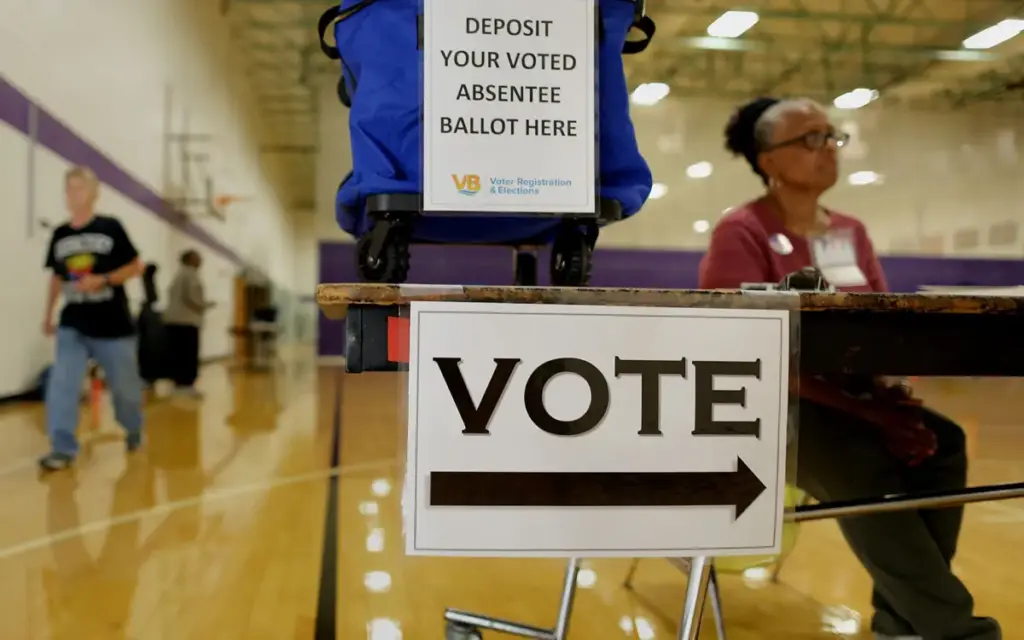
As the election on November 3 approaches, voters will be asked to weigh these arguments and decide if the time has come to finalize the transformation of the state’s governing document. For advocates, the amendment represents more than just a change in legal language; it is a fundamental shift toward recognizing the dignity of all citizens and ensuring that the right to vote is treated with the protection it deserves in a modern, inclusive democracy. Whether the electorate chooses to embrace this change will determine how Virginia reconciles its history with its future, and whether the barriers that have persisted for over a century will finally be dismantled.