








Last holiday season, in an effort to promote wellness, I gifted family and friends a set of high-end alarm clocks. These devices were marketed as the pinnacle of sleep hygiene, designed to make the transition from wakefulness to slumber as peaceful as possible. They promised to simulate the gentle rise of a sunrise, emit soothing nature sounds, and lull the user to sleep with guided bedtime stories. At the time, I viewed them as the perfect wellness gifts—a marriage of modern technology and physiological necessity. Today, however, I find myself questioning the utility of such devices.
These clocks require an app, a reliable Wi-Fi connection, and a recurring subscription to recreate experiences that humans have relied upon for thousands of years: the soft shift of morning light, the deepening of natural darkness, the rhythmic chirp of birds, the pitter-patter of rain, and the comforting cadence of a human voice. It raises a fundamental question about our current trajectory: in our quest for wellness, are we losing our ability to connect with the organic world, choosing instead to outsource our sensory experiences to the very technology that often keeps us awake?
The trend toward "curated wellness" is increasingly defining both the products we consume and the architectural spaces we inhabit. According to the 2026 Emerging Summer Trends Report from Houzz, the appetite for artificial wellness environments is surging. Searches for "wellness rooms" have risen by 164%, while interest in "calming" spaces has increased by 139%. Perhaps most tellingly, searches for "biophilic design"—an architectural approach that integrates natural elements into the built environment—have grown by 112%. When one browses the imagery associated with these modern wellness rooms, a distinct aesthetic pattern emerges: carefully curated natural light, a high density of indoor plants, warm wood accents, soft, tactile fabrics, and a palette of paint colors reminiscent of the outdoors, such as "forest green," "rain dance," "white dove," and "mushroom."

Endless Stimulation, Not Necessarily Restoration
This shift toward the indoor-natural aesthetic begs a broader question: in a culture defined by constant, high-frequency stimulation, are we becoming digitally overfed while remaining naturally undernourished?
Modern life subjects our senses to a relentless barrage of data. Our attention is a commodity, fought over by a thousand notifications, and our circadian rhythms are routinely disrupted by screens that glow long after the sun has set. Our homes are rarely truly quiet; televisions, traffic, background music, social media alerts, and the hum of high-tech appliances create a nearly constant soundtrack. Even our palates are artificial; processed foods are engineered to amplify levels of sweetness, saltiness, and flavor far beyond what is found in nature. Our eyes are tethered to a cycle of movement from phone to computer to television, rarely focusing on the infinite, shifting horizon.
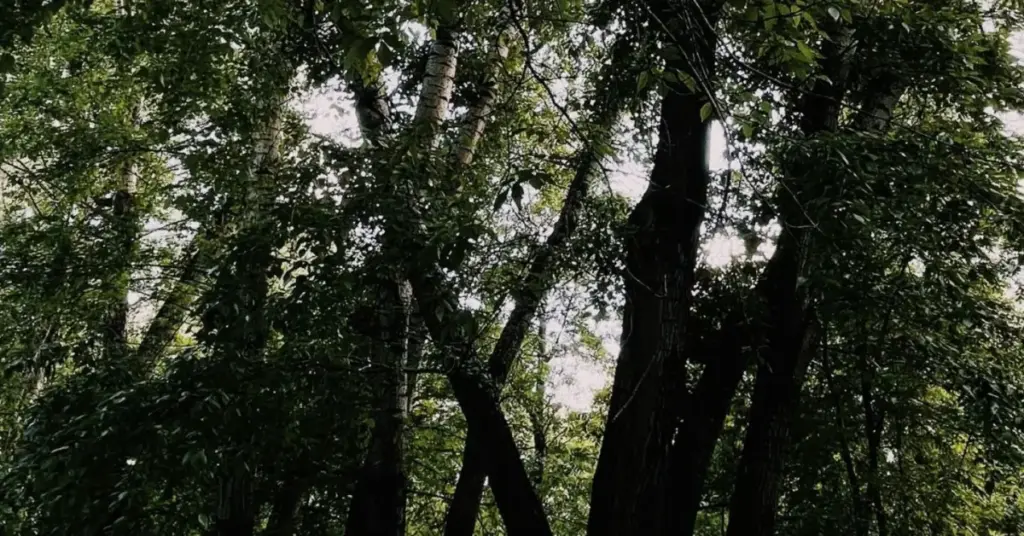
In contrast, the natural world stimulates our senses with a complexity that technology struggles to emulate. A breeze might move through a canopy of trees and then dissipate, leaving behind a moment of stillness. Leaves flutter, birds call in irregular intervals, and light and temperature shift fluidly throughout the day. We feel the variable pressure of wind, the cooling sensation of humidity, the refreshing touch of rain, and the warmth of the sun on our skin. We might touch the rough texture of bark, the shifting grains of sand, or the smooth surface of a stone. We smell the scent of damp soil, the sharp tang of rain, or the sweetness of mown grass. These are not static, programmed loops; they are complex, changing, and deeply multisensory experiences that our bodies are evolutionarily primed to interpret.
The health implications of our move toward artificial environments are beginning to come into focus. A 2026 meta-analysis covering 36 studies and 30 bird species found that artificial light at night is consistently associated with physiological changes, including reduced sleep, an increased metabolic rate, accelerated reproductive maturation, and significant changes in daily activity patterns (Diaz-Palma et al., 2026). While these disruptions did not always lead to immediate declines in survival or reproductive success, the findings suggest that even when organisms "adjust" to artificial stimuli, their innate biological behaviors are fundamentally altered.
Human research paints a similarly concerning picture. A study involving 86,772 adults found that greater nighttime light exposure was strongly associated with an increased likelihood of clinical depression, anxiety, PTSD, and bipolar disorder (Burns et al., 2023). Conversely, an earlier study of over 400,000 adults indicated that time spent outdoors in natural daylight was associated with higher levels of happiness, improved mood, and a reduction in sleep difficulties (Burns et al., 2021). While these studies are observational, they contribute to a growing body of evidence suggesting that the quality of our light environment is not merely a design preference, but a health imperative.
Can We Replicate Nature?
My perspective on this issue is informed by my time working in hospital environments. I vividly recall the, at times, envious feeling I had toward the smokers; they were the only ones who possessed a socially accepted mandate to step outside every few hours. They could momentarily escape the harsh hum of fluorescent lights, the sterile geometry of hospital hallways, and the relentless demands of clinical work to feel the breeze, witness the sky, and stand near actual greenery.
The healthcare industry has recently attempted to address this void. A colleague recently described a hospital initiative to create "Recharge Rooms" for staff, designed to offer a sanctuary from the high-stress environment of their shifts. Research into these spaces reveals a 2025 study of 18 hospitals that converted underused areas into these specialized zones. These rooms featured projected natural landscapes, high-quality imitation plants, essential oil diffusers, low-level ambient lighting, and recordings of nature sounds (Cooke et al., 2025). Healthcare workers using these rooms reported feeling less stressed and more hopeful (Cooke et al., 2025). While the study lacked the rigor of a randomized controlled trial and cannot establish direct causation, the findings are compelling.
However, the existence of these rooms raises a philosophical and physiological dilemma: how does the simulation of nature indoors compare to the act of being physically present in the outdoors? In a 2020 experiment, researchers compared the restorative effects of spending six minutes in an actual forest versus spending six minutes watching a video of the same forest through a 360-degree virtual reality headset (Browning et al., 2020). While participants reported that both experiences were more restorative than sitting in a standard indoor room, a critical difference emerged: positive mood increased significantly after the outdoor experience, whereas it remained largely unchanged after the virtual simulation (Browning et al., 2020).
A more recent meta-analysis of 16 studies reinforced this sentiment, finding that while nature exposure generally improves mental restoration and mood, real-world nature exposure provided a statistically significant benefit that artificial and virtual simulations failed to match (Malibary et al., 2026). While the number of studies on simulated nature remains limited, the evidence suggests that technology may not yet be able to capture the "active ingredients" of the natural world.
What Are You Feeding Your Senses?
It is clear that most of us lack the luxury of dedicated wellness rooms or immediate access to a forest. Our lives are often anchored to urban centers and indoor workplaces. Yet, we can begin to shift our perspective by noticing the sensory environments we inhabit and making incremental changes to introduce organic elements.
We might start by identifying where natural light enters our living or working spaces. Can we adjust our seating to provide a view of the sky or a patch of greenery? Can we open a window to allow for a change in temperature or to hear the unamplified sounds of the neighborhood? Do we have access to silence, or at least to the absence of manufactured noise? Can we introduce live plants that require actual care, or make a concerted effort to step outside for even a few minutes during the day?
For years, society has focused intently on what we feed our bodies and, more recently, our minds. The current "wellness room boom" might be a subconscious reaction to a sensory deficit, inviting us to look closer at what we are feeding our senses. As we navigate the future of design and health, we should ask ourselves whether we are merely substituting the natural world with tech-based replicas, or if we can find ways to reclaim the organic sources of nourishment that our biology still craves. True restoration may not be found in an app, but in the simple, uncurated act of stepping out into the light.