









For millions of people worldwide, the APOE4 gene variant represents a significant shadow hanging over their long-term cognitive health. As the strongest known genetic risk factor for Alzheimer’s disease, APOE4 has long been a primary focus of neurological research. However, the exact mechanisms by which this genetic signature orchestrates the decline of brain function—and specifically, when that process begins—have remained elusive. Now, groundbreaking new research from the Gladstone Institutes suggests that APOE4 may begin its detrimental work decades before memory loss or cognitive impairment ever manifest.
The study, published in the journal Nature Aging, provides a detailed molecular map of how APOE4 alters brain activity. More importantly, the researchers have identified a potential therapeutic target that could, in theory, reverse these early-stage changes, offering a glimmer of hope for preventative interventions.
A Major Genetic Risk Factor for Alzheimer’s
To understand the scale of the challenge, one must consider the prevalence of the APOE gene. It exists in three common forms, but the APOE4 variant stands apart due to its potent link to Alzheimer’s pathology. Statistics indicate that roughly one in four individuals carries at least one copy of the APOE4 variant. Furthermore, it is estimated that this genetic profile is present in 60 to 75 percent of all individuals diagnosed with Alzheimer’s disease.
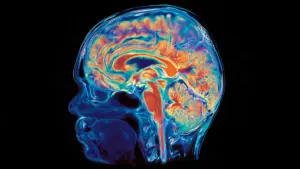
Despite these figures, scientists have struggled to pinpoint why the gene is so destructive. Previous studies had observed signs of unusual hyperactivity in the brains of APOE4 carriers well before they reached middle age, and this early-onset hyperactivity was consistently correlated with cognitive decline in later years. The core mystery, however, was the "how" and "why": How does APOE4 trigger these cellular shifts, and what is the biological link between this early brain activity and the eventual onset of dementia?
APOE4 Makes Memory Circuits Hyperactive Early
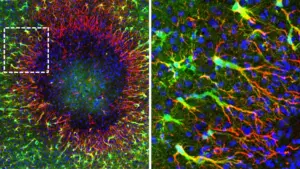
To investigate these questions, researchers at the Gladstone Institutes turned to mouse models, using them to map the progression of brain function across the lifespan. By analyzing electrical recordings of brain activity and inspecting individual neurons, the team uncovered a troubling pattern. In young mice carrying the APOE4 variant, there was excessive neuronal activity specifically within two regions of the hippocampus—the area of the brain fundamental to memory formation and spatial navigation.
"We found that the extent of hyperactivity in young mice predicted how poorly they performed on spatial learning and memory tests later in life," explains Dr. Dennis Tabuena, a scientist co-mentored by Dr. Misha Zilberter and Dr. Yadong Huang, and the lead author of the study.
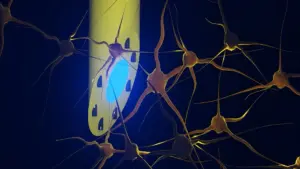
The researchers noted that these exact hippocampal regions are the same areas shown to be hyperactive in human APOE4 carriers. When comparing these animals to mice carrying the APOE3 variant—a version of the gene associated with a lower risk of Alzheimer’s—the differences were stark. The neurons in the APOE4 mice were physically smaller, and because of their reduced size, they were more susceptible to stimulation, making them prone to firing excessively. While the hippocampal neurons of APOE3 mice did eventually exhibit increased excitability, this did not occur until the animals reached old age.
"This suggests APOE4 accelerates a process that resembles normal aging, and could explain why people with the gene variant are more likely to develop Alzheimer’s disease earlier in life," says Dr. Yadong Huang, associate director of the Gladstone Institute of Neurological Disease and a senior author of the study.
The Effect Comes From APOE4 Inside Neurons
For years, the scientific consensus had largely focused on astrocytes—the star-shaped cells in the brain that provide metabolic support to neurons. Because astrocytes are the primary producers of the APOE protein in a healthy brain, it was widely assumed that they were the main drivers of APOE4-related dysfunction. However, the Gladstone team’s findings force a major shift in that perspective.
Through a series of experiments, the researchers discovered that the hippocampal hyperactivity associated with APOE4 was not driven by the protein produced in the surrounding astrocytes, but rather by the APOE4 produced within the neurons themselves.
"When we deleted the APOE4 gene from astrocytes, nothing changed," says Dr. Misha Zilberter, principal staff research scientist at Gladstone and a senior author of the study. "But when we deleted it from neurons, the cells became larger and started functioning normally again."
This discovery represents a fundamental shift in the field. It clarifies that the internal expression of the APOE4 protein within the neuron is the primary culprit behind the structural and functional deficits that lead to memory impairment.
Nell2 Emerges as a Possible Treatment Target
With the primary mechanism identified, the research team set out to find the molecular culprit—the specific protein or process that causes APOE4 neurons to shrink and become hyper-excitable. By conducting a comprehensive analysis of gene activity across different cell types in the hippocampus, the researchers identified a protein called Nell2.
The analysis revealed that Nell2 levels were significantly higher in neurons carrying the APOE4 variant. To test if this elevation was causing the neuronal dysfunction, the team employed CRISPRi—a sophisticated gene-editing technique that can lower the expression of a specific gene without permanently altering the underlying DNA.
When the researchers used CRISPRi to reduce Nell2 production in the hippocampal neurons of adult APOE4 mice, the results were striking. The neurons reverted to their normal size, and their firing behavior returned to a more balanced, healthy state. This suggests that the elevation of Nell2 is a direct consequence of APOE4 and is responsible for the neuronal hyperactivity that precedes memory loss.
While Nell2 has not been previously studied in the context of APOE4, researchers have observed elevated levels of the protein in the brains of human Alzheimer’s patients, where higher concentrations correlate with worse cognitive outcomes.
"What’s exciting about Nell2 is that we were able to reverse the disease manifestations in adult mice by lowering its level," Dr. Huang notes. "That tells us the damage is not irreversible, and that there may be a window for intervention even after disease processes have been triggered."
Implications for Future Alzheimer’s Therapy
The implications of this research are significant. By demonstrating that APOE4-related cellular damage is, at least in part, reversible in adult models, the study provides a concrete target for drug development. If a therapeutic agent can be designed to safely lower Nell2 levels or block its effects in human patients, it could potentially delay or prevent the cognitive decline associated with the APOE4 gene.
"To the best of our knowledge, this is the first study that has directly examined what APOE4 does to the function of neurons at different ages," says Dr. Zilberter. "We found fundamental changes in brain circuits occurring in young mice that still had normal learning and memory, and importantly, that those changes predicted the development of cognitive deficits at older ages."
Dr. Huang emphasizes the broader impact of these findings for the medical community. "This study is a big breakthrough for the field of Alzheimer’s research," he says. "It opens the door to a better understanding of how APOE4 alters the function of neurons at a young age to increase risk of cognitive decline, and to the development of therapies that could block the detrimental effects of APOE4 early on."
As researchers continue to decode the complex interactions within the aging brain, the identification of the APOE4-Nell2 pathway provides a new roadmap for potential interventions. While human clinical trials remain a future goal, the ability to address the root molecular causes of neuronal dysfunction in adult models provides a new sense of optimism in the fight against a disease that has long proven resistant to conventional treatments. The research was supported by a robust network of funding, including the National Institute on Aging, the National Institute of Neurological Disorders and Stroke, and the National Center for Research Resources, underscoring the high priority placed on these findings within the scientific community.