


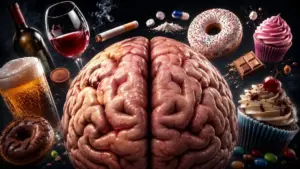



For most of us, the mere thought of a sizzling burger or a cold pint of beer on a summer afternoon triggers a vivid, almost visceral mental image. This reaction is more than just a fleeting desire; it is a powerful, evolved mechanism that drives behavior. This fundamental link between thinking and doing serves a clear evolutionary function—it motivates us to seek out the essential fuel and resources required for survival.
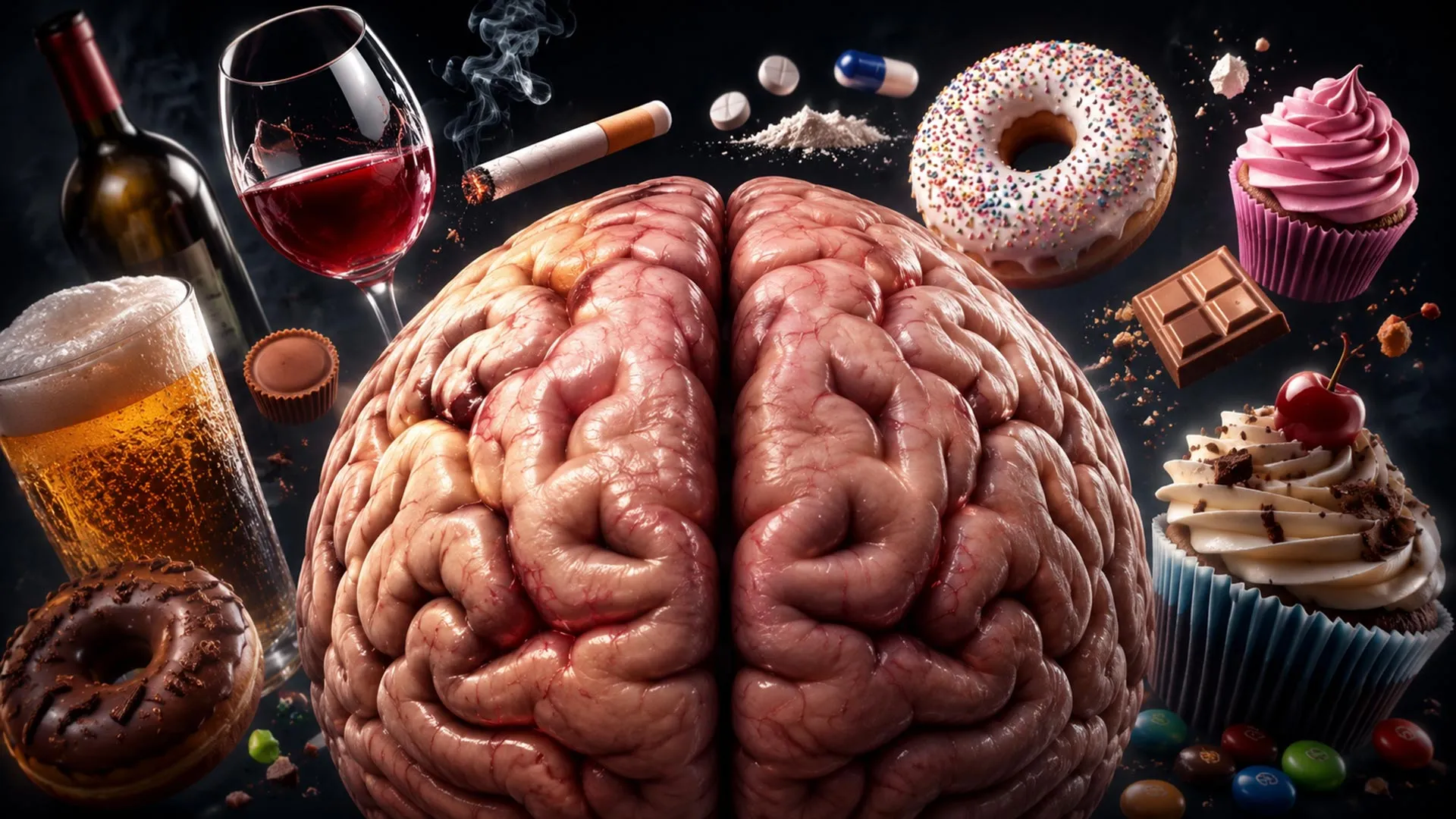
However, in our modern environment of readily available, highly palatable, and often addictive stimuli, this ancient internal feedback loop can malfunction. For many, a preoccupation with these rewarding stimuli spirals into complex disorders of substance overuse, ranging from compulsive overeating that leads to clinical obesity to severe alcohol dependence. Understanding the intricate biological bridge between the initial mental craving and the eventual act of consumption has been one of the most elusive challenges in neuroscience for decades. Now, an unexpected breakthrough, emerging from the unlikely arena of weight-loss medication, may have finally provided researchers with the lever needed to decode how our brains process—and control—these powerful drives.
The catalyst for this scientific shift is the rise of a new class of pharmaceutical agents known as GLP-1 receptor agonists. Drugs such as Ozempic and Wegovy, which mimic the glucagon-like peptide-1 (GLP-1) hormone, were originally engineered to treat type 2 diabetes by stimulating insulin release, slowing gastric emptying, and signaling to the brain that the body is full. While these medications proved remarkably effective at regulating blood sugar, they produced a secondary, potent side effect: dramatic, sustained weight loss. In some clinical observations, the results were so significant that they rivaled the outcomes typically associated with bariatric surgery.

Yet, as these drugs have gained widespread usage, a less publicized but equally profound effect has emerged from clinical data. Human studies have begun to confirm that GLP-1 agonists appear to significantly reduce the urge for alcohol consumption. Furthermore, a growing body of preclinical animal research suggests that these same drugs dampen the drive to seek out a variety of other addictive substances, including cocaine, amphetamines, opiates, and nicotine. This broad-spectrum impact is forcing neuroscientists to rethink the brain’s reward system entirely, suggesting that these medications might offer a revolutionary new path toward treating not just obesity, but a wide range of addictions.
How the Brain Regulates Reward Stimuli
To understand why a diabetes drug would have such a profound impact on addiction, researchers have had to re-examine the brain’s “reward circuitry.” For decades, the focus of addiction science has been squarely on regions that produce the neurotransmitter dopamine, specifically the ventral tegmental area (VTA) and the nucleus accumbens (NAc).
These areas have been the subject of intensive research for half a century, serving as the primary candidates for explaining how the brain experiences pleasure and motivation. However, there is a technical problem with attributing the effects of GLP-1 drugs to these specific areas: they lack a significant density of receptors for GLP-1. If these medications are indeed curbing cravings, they must be acting through a different, perhaps "upstream," neural mechanism.
To solve this, scientists are looking toward the lateral septum, a structure nestled within the brain that has been historically associated with emotional regulation. The lateral septum has a long and storied history in behavioral research. In 1953, pioneering US researchers Joseph Brady and Walle Nauta coined the term "septal rage" after observing that laboratory animals with damage to the lateral septum exhibited heightened levels of aggression. Conversely, their work showed that direct stimulation of this same region effectively reduced aggressive behavior, positioning the lateral septum as a critical gatekeeper of emotional temperament.
Much more recent work has refined this view, placing the lateral septum at the center of a complex neural connectivity network. While earlier theories suggested that a simple link between the lateral septum and the hypothalamus was responsible for the phenomenon of septal rage, modern neuroimaging and mapping suggest the region is far more versatile, acting as a hub that links with numerous other brain areas to facilitate a variety of higher-order functions.
The Brain’s Reward Control Center
The lateral septum is unique because it receives a significant portion of its primary input from the hippocampus. The hippocampus is perhaps best known as the command center for long-term episodic memories. The importance of this region was immortalized by the case of Henry Molaison, known as "patient HM," who underwent surgery for epilepsy that resulted in severe hippocampal damage. Unable to form new memories, HM lived in a "permanent present tense," forever cut off from his own past.
Beyond memory, the hippocampus is home to "place cells"—specialized neurons that fire in correspondence to a person’s mental representation of their location in space and, as more recent research indicates, their perception of time. This "where and when am I" information is continuously forwarded to the lateral septum.
Critically, new research has revealed that the lateral septum also contains place cells, but with a vital twist: these cells respond strongly to rewards. In essence, the lateral septum acts as a biological processor that integrates the "where and when" data from the hippocampus with a "what is good" valuation. It effectively adds the context of desire to the context of location.
Even more importantly, the lateral septum shares this synthesized information with the dopamine-producing regions we traditionally associate with reward. Neuroscientists are now beginning to view the lateral septum as the brain region that allows us to "think about" rewards—representing our conscious perception of them—before communicating that data to the deeper machinery of the brain’s reward system that produces the dopamine necessary to make us feel satisfied.
There is one final, compelling reason to suspect the lateral septum as the mechanism behind the anti-consumption effect of GLP-1 agonists: it is absolutely loaded with GLP-1 receptors.
Emerging research is now pointing to this density as the key. Recent studies have demonstrated that the activation of GLP-1 directly within the lateral septum can significantly reduce food consumption in mice. Earlier this year, a separate study yielded the same finding regarding alcohol consumption. My own laboratory has contributed to this body of evidence, showing that GLP-1 drugs appear to reduce a specific type of activity within the lateral septum, potentially preventing it from communicating as effectively with other brain regions involved in the cycle of craving and seeking.
These findings are currently reshaping our fundamental understanding of how the brain processes rewards. By shifting the focus away from the dopamine-rich end-points of the reward system and toward the "upstream" processing hub of the lateral septum, researchers have identified a potential new home for the origins of human cravings. As we continue to map these neural connections, the possibility of treating the root cause of addiction—rather than just its symptoms—appears closer than it has ever been.