







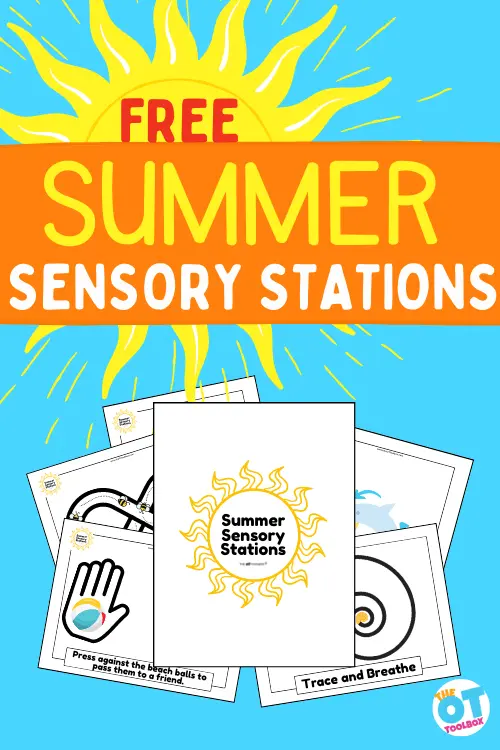
Therapy professionals, educators, and parents looking for effective ways to manage children’s energy and attention during the warmer months have a new resource at their disposal. The release of the all-new Summer Sensory Stations set offers a structured, movement-based approach to self-regulation that can be easily implemented in classrooms, therapy clinics, summer camps, and home environments.
Developed as a printable sensory path activity, the new resource responds to strong feedback from previous seasonal releases. Designed to be printed, laminated or placed inside protective page protector sleeves, and hung along hallways or walls, the stations provide purposeful movement opportunities without requiring expensive or specialized equipment. As summer routines shift and children face long stretches away from traditional school environments, structured sensory input becomes a vital tool for supporting attention, body awareness, emotional regulation, and motor planning.
The summer months offer countless opportunities to incorporate physical activity into a child’s daily routine. However, transitions and altered schedules can often lead to dysregulation. A printable sensory path serves as an accessible intervention, allowing children to jump, stomp, crawl, balance, and move purposefully from station to station. By breaking movement down into manageable, structured stops, the resource helps reset the nervous system, making it an ideal strategy for quick brain breaks or preparation for seated learning and therapy tasks.
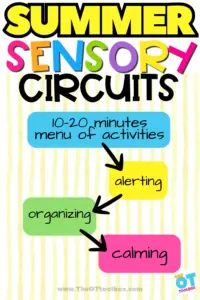
Unlike random physical activity breaks, a well-designed sensory path strategically integrates multiple sensory systems. The summer-themed packet incorporates elements of deep breathing, mindfulness, proprioception, vestibular input, eye-hand coordination, crossing the midline, and whole-body movement. These targeted activities help children organize their bodies and minds, paving the way for improved focus during academic or daily living tasks.
How to Use Sensory Stations
Creating sensory stations provides a practical framework for distributing physical activity throughout the day. Rather than expecting children to sit through long, uninterrupted periods or engage in unstructured play that may lead to overexcitement, sensory stations encourage short, purposeful bursts of movement. These brief interventions help modulate arousal levels, calming or alerting the nervous system as needed.
The flexibility of these stations makes them suitable for diverse settings, including indoor classrooms, outdoor camp spaces, clinical therapy rooms, and home living areas. By utilizing visual cues, printable paths guide children smoothly through a sequence of movements that naturally support executive functioning and motor planning. Because the activities combine visual, vestibular, proprioceptive, and tactile systems, they offer a comprehensive sensory diet component that can be easily customized to meet individual or group needs.
Free Printable Sensory Activities
The newly released summer packet includes a series of dedicated pages, each representing a unique stop along the sensory journey. The first activity features a bee infinity loop, designed to foster mindfulness, deep breathing, crossing the midline, and eye-hand coordination. As children trace the path of the summer bees along the loop, they engage in visual attention and concentration exercises that encourage them to be more present and self-aware.
This station offers multiple ways to scale the difficulty based on developmental needs. Some children may stand on an uneven surface, such as a gymnastics mat, slant board, or balance pod, to challenge their balance and visual skills. Others may complete the tracing while kneeling or lunging, adapting the physical challenge while utilizing a wall-mounted or lowered printable sheet.
The second station invites users to "leap like a dolphin," delivering a powerful dose of vestibular input, motor planning, and proprioceptive heavy work. Proprioceptive feedback from the joints and muscles helps wake up the body, providing essential information about body position, weight, pressure, stretch, and movement in space. This dynamic leaping action can be performed from standing, kneeling, or floor positions, directly integrating the summer theme into heavy-work regulation strategies.
Upper body strength and stability are targeted at the third station through a beach ball wall push-up. This exercise engages the shoulder girdle, elbows, wrists, and the arches of the hands, while simultaneously building core stability. Therapists and educators can modify the activity by lowering the placement on the wall to encourage a lunge position, or by implementing the push-ups from a seated position to challenge seated balance. This adaptability ensures meaningful participation for various physical abilities, including wheelchair users.
The fourth station introduces a seashell trace and breathe printable, utilizing spiral path deep breathing exercises. Users follow a circular path from a crab to a seashell while inhaling, and repeat the motion to exhale. This visual structure guides full lung expansion and contraction, serving as a powerful interoceptive and proprioceptive tool for mindfulness and emotional self-regulation.
The final page of the packet features summer sand squats, combining a squat exercise with a visual prompt for balance and coordination. Left intentionally open-ended, this station can be adapted by asking children to pick up an object from the floor to increase balance challenges or by encouraging them to maintain visual focus on a specific point to enhance visual attention.
Occupational Therapy Benefits and Availability
From an occupational therapy perspective, structured sensory paths address foundational skills necessary for academic and daily success. Regular engagement with these movement stations can significantly improve bilateral coordination, dynamic balance, motor planning, spatial awareness, and self-regulation. By activating multiple sensory systems simultaneously, the activities help children organize their nervous systems before engaging in seated academics, handwriting, reading, or other focused tasks.
The summer sensory stations are available digitally, allowing educators, therapists, and parents to access the PDF resources through online platforms and membership portals. Created by experienced pediatric occupational therapy professionals, the materials aim to provide practical, low-preparation tools that inspire children to thrive across diverse environments.