









A transformative approach to treating post-traumatic stress disorder (PTSD) has received official FDA clearance, marking a significant milestone for millions of individuals who have found little relief through conventional medical interventions. The breakthrough technology, developed by California-based Wave Neuroscience in close collaboration with researchers at the Texas A&M Health Institute of Biosciences and Technology, represents a paradigm shift in psychiatric care. By utilizing sophisticated brain activity measurements to guide targeted magnetic stimulation, this new system offers a highly personalized alternative for a condition that has historically proven difficult to manage.
The clinical data supporting this development is compelling. According to Wave Neuroscience, patients participating in the clinical trials experienced a 52% reduction in PTSD symptoms, with a remarkable 68% achieving clinical remission. While the comprehensive findings are currently being prepared for formal public release, the medical community is already expressing optimism that this technology could substantially broaden the horizon of treatment options for the millions of Americans suffering from the debilitating effects of trauma.
The urgency for such innovation is underscored by the sobering statistics regarding mental health in the United States. PTSD is a pervasive public health crisis, often stemming from traumatic experiences such as military combat, violent crime, natural disasters, or severe accidents. An estimated 6% of the American population will contend with PTSD at some point in their lifetime, with the prevalence being notably higher among women and military veterans. The impact on the veteran community is particularly stark; approximately 7% of veterans receive a PTSD diagnosis annually, and the tragic toll of the disorder is reflected in the fact that roughly 17.5 veterans die by suicide each day in the United States.

The Limitations of Conventional PTSD Care
Since PTSD was formally recognized as a distinct clinical diagnosis in 1980, the standard of care has remained largely static, revolving around a combination of psychotherapy and pharmacological intervention, primarily through selective serotonin reuptake inhibitors (SSRIs) like sertraline and fluoxetine. While these methods have provided a baseline of support for many, they are frequently insufficient. A significant portion of the patient population remains treatment-resistant, continuing to suffer from the hallmark symptoms of PTSD even after adhering to prescribed medication and therapy regimens.
A comprehensive 2020 review of PTSD medications highlighted the frustratingly modest results of current pharmaceutical approaches. Patients in these studies reported symptom improvements ranging from only 6.8 to 10.1 points on standard assessment scales, and, more concerningly, remission rates peaked at just 10.9%.
The preliminary outcomes reported by Wave Neuroscience offer a stark contrast to these figures. Dr. Erik Won, the company’s chief medical officer, emphasized the magnitude of these results compared to the historical benchmarks of medication efficacy. "In comparison to that study, our FDA trial reported a 52% reduction in symptoms, so more than a four-fold increase in efficacy," Dr. Won stated. "And more importantly, we saw 68% remission in our clinical trial. So, it’s really a quantum change, an inflection point in what we can offer to patients. From a clinical care perspective, that’s really meaningful." While researchers acknowledge that these findings stem from different studies and should not be interpreted as a direct head-to-head comparison, the data signals a potential breakthrough in psychiatric outcomes.
Precision Medicine Through Magnetic e-Resonance Therapy
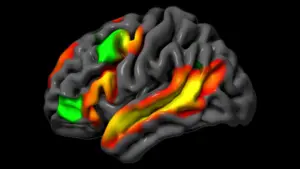
The newly cleared system, known as Magnetic e-Resonance Therapy (MeRT), functions by bridging the gap between diagnostic imaging and therapeutic intervention. The process begins with an electroencephalogram (EEG) to record the patient’s unique electrical brain signals. This diagnostic baseline allows the system to guide a highly tailored treatment plan using transcranial magnetic stimulation (TMS).
During a TMS session, a coil is positioned against the scalp to deliver precise magnetic pulses designed to stimulate neural activity. While the underlying technology of TMS has been previously utilized for conditions such as treatment-resistant depression, the innovation of MeRT lies in its AI-assisted algorithm. This technology customizes stimulation protocols based on the individual patient’s brain activity, moving away from the "one-size-fits-all" approach that has defined traditional psychiatric treatment.
"Transcranial magnetic stimulation, or TMS, was previously FDA cleared for treatment-resistant depression," Dr. Won explained. "By adding an augmented AI-derived multivariate algorithm, we were able to personalize protocols that received FDA clearance for post-traumatic stress disorder, which should open up market access to about 13 million people who may be struggling with PTSD."
Dr. Kenneth S. Ramos, a physician-scientist at Texas A&M Health with a distinguished background in precision medicine, played a pivotal role in guiding this research. Dr. Ramos has spent his career advocating for medical interventions that account for the biological nuances of the individual, arguing that the assumption of universal response to standardized treatment is a significant barrier to effective care. "Most clinical interventions for the treatment of PTSD do not work very well," Dr. Ramos noted. "So, this is a huge area where identifying interventions that could hopefully add quality of life to the people impacted by this disorder would be tremendously impactful."
Moving Beyond Standardized Protocols
The philosophy behind MeRT is rooted in the reality that even minor biological differences between individuals can have profound consequences for how they respond to medical treatment. While humans share approximately 99.9% of their genetic makeup, that remaining 0.1% accounts for critical variations that influence neurobiology and treatment efficacy.
Dr. Ramos often uses a metaphor to explain the shift from conventional TMS to MeRT: if traditional TMS is akin to covering a leaking roof with a tarp to manage the damage, MeRT is designed to identify and replace the specific damaged shingles causing the leak. By tailoring stimulation to the specific, measurable brain activity of the patient, the team has been able to achieve more substantial and lasting reductions in symptom severity. The broader objective is to transition psychiatry away from generalized protocols toward interventions driven by objective, quantifiable biological data.
Accelerating the Regulatory Path
The path to FDA clearance was notably efficient, aided by the FDA’s Breakthrough Device designation, which the MeRT system received in 2024. Dr. Rick Silva, executive director of clinical trials at the Texas A&M Health Institute of Biosciences and Technology, explained that this program is designed to facilitate the movement of promising, life-saving technologies through the regulatory process without compromising the rigorous standards required for patient safety.
"It does not eliminate scientific or medical requirements," Dr. Silva said, noting that the designation helps streamline communication and remove administrative bottlenecks. The speed of the project was particularly noteworthy given that it was initiated during the height of the COVID-19 pandemic. While medical device development often takes upwards of a decade to reach the market, the team behind MeRT successfully navigated the process in just over two years. Dr. Silva credited this accomplishment to the intense dedication of the Wave Neuroscience team and the collaborative spirit of the academic-industry partnership. "Patients are why I do what I do," Dr. Silva added. "When you get to a point where something is going to benefit patients, it’s very professionally gratifying."
A New Horizon for Non-Medication Treatment
For clinicians, the FDA clearance of MeRT provides a vital new tool that operates independently of the pharmaceutical route. Dr. Israel Liberzon, a distinguished professor of psychiatry and behavioral sciences at the Texas A&M Naresh K. Vashisht College of Medicine and the study’s lead psychiatrist, highlighted the significance of having a non-medication option.
"Right now, the FDA has approved only two medications for PTSD," Dr. Liberzon observed. "This is the first time that in addition to the medication, we have a non-medication option." Dr. Liberzon also noted the practical challenges associated with traditional psychotherapy, which demands high levels of active patient participation and can often be highly anxiety-provoking, leading to high dropout rates. MeRT, by contrast, offers an alternative for those who find standard therapies difficult to complete or who suffer from the side effects of SSRIs.
During the clinical trial, participants underwent five treatment sessions each week for a period of five to six weeks. Encouragingly, the improvements observed by researchers appeared to persist well after the treatment sessions concluded, suggesting the potential for sustained relief.
As the medical community looks forward, Dr. Leslie S. Prichep, chief scientific officer at Wave Neuroscience, views this clearance as a foundational step toward a future where psychiatric treatment decisions are dictated by objective brain function metrics. "The FDA clearance of the MeRT System reflects decades of scientific research using electrophysiological biomarkers in identifying abnormal brain activity profiles and guiding personalized intervention strategies," she said.
The leadership at Wave Neuroscience hopes that this technology will not only provide physical relief but also contribute to a broader shift in how society perceives mental health. By using objective imagery and measurable biological data to explain a patient’s condition, the company aims to reduce the stigma often associated with psychiatric disorders. As the next phase begins, Wave Neuroscience and Texas A&M Health are working to ensure that this therapy becomes accessible and affordable to those in need, aiming to turn the vision of population-scale, personalized medicine into a reality. For Dr. Ramos and his team at Texas A&M, the project represents a deep commitment to the veteran community and a meaningful step toward alleviating one of the most challenging health issues of the modern era.