






For generations, the conventional wisdom among philosophers, linguists, and cognitive scientists has held that language is the primary vehicle of human thought. We often describe our internal monologues as the literal mechanism by which we solve problems, organize our days, and navigate complex social hierarchies. We lean on words to articulate our logic, justify our decisions, and communicate the steps of our reasoning to others. However, groundbreaking new research from the Massachusetts Institute of Technology suggests that the link between language and logic is far more tenuous than we once believed.
According to a study conducted by cognitive neuroscientists at MIT’s McGovern Institute for Brain Research, language is not a prerequisite for logical reasoning. The findings, recently published in the journal PNAS, indicate that the human brain possesses the capacity to solve complex logical problems even when its language-processing faculties are severely compromised. Furthermore, advanced neuroimaging has revealed that the regions of the brain dedicated to language are not recruited when an individual engages in logical thought, suggesting that the two processes function as independent systems.
Are Language and Thought Really Connected?
The debate over whether language is essential for thought is as old as the study of the mind itself. For millennia, thinkers have argued that because abstract thought shares structural properties with language—such as the ability to break complex ideas into smaller components or "atoms" of logic and organize them into hierarchical rules—they must be one and the same.

Hope Kean, a postdoc and former K. Lisa Yang Integrative Computational Neuroscience (ICoN) Center graduate fellow in the lab of MIT associate professor Evelina Fedorenko, acknowledges the intuitive appeal of this connection. "Abstract thinking has properties that look a lot like language," Kean explains. "You can decompose a thought into subcomponents, like little atoms of logical propositions, and you can combine them in a hierarchical manner to make more complex structured rules, very akin to language."
Despite these structural similarities, Kean and Fedorenko, who is also a McGovern Institute investigator, hypothesized that the brain might draw a sharp distinction between the communication of reasoning and the act of reasoning itself. While humans heavily rely on language to discuss potential solutions or explain conclusions to others, the internal, underlying process of logical deduction may operate on a completely different neural architecture.
"There are aspects of thinking that seem to go beyond some of the limitations of language," Kean notes. Logical reasoning often demands a level of precision that everyday conversation lacks. Furthermore, language is inherently linear—a sequential delivery of words—whereas the process of reaching a logical conclusion often requires a non-linear integration of multiple pieces of information simultaneously.
Testing Logical Reasoning Without Language
Investigating this hypothesis presented a significant methodological hurdle. In standard cognitive research, scientists rely on verbal instructions to explain tasks and on verbal feedback to gauge participant performance. To bypass this, Fedorenko’s team collaborated with Dr. Rosemary Varley, a neuroscientist at University College London renowned for her work with patients suffering from acquired language disorders.
The research team focused on two individuals who had suffered strokes resulting in severe damage to the brain’s language-processing areas. Both participants exhibited profound difficulties in both producing and comprehending speech—a condition known as aphasia. To assess their logical reasoning without leaning on linguistic ability, the researchers devised a series of non-verbal logic games centered on visual patterns and numerical relationships.
In one specific task, participants were presented with two lists of numbers and were tasked with identifying the hidden rule that transformed the first list into the second. The rules varied in complexity, ranging from reversing the order of digits to eliminating numerical values that exceeded a certain threshold. Once the participant identified the rule, they were required to apply it to new, unseen examples. In another set of puzzles, participants were asked to analyze geometric patterns and select the correct visual element to complete a matrix.
The results were striking. As the difficulty of the puzzles increased, the participants with severe language impairments performed just as effectively as a neurotypical control group. Perhaps most tellingly, these individuals were able to successfully communicate the rules they had discovered, even when they could not articulate them in words, by using gestures or sketches. "It really upends a theory that says that symbolic rule induction is not possible without linguistic capacities," Kean says.
Brain Scans Reveal a Divide Between Logic and Language
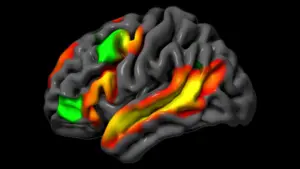
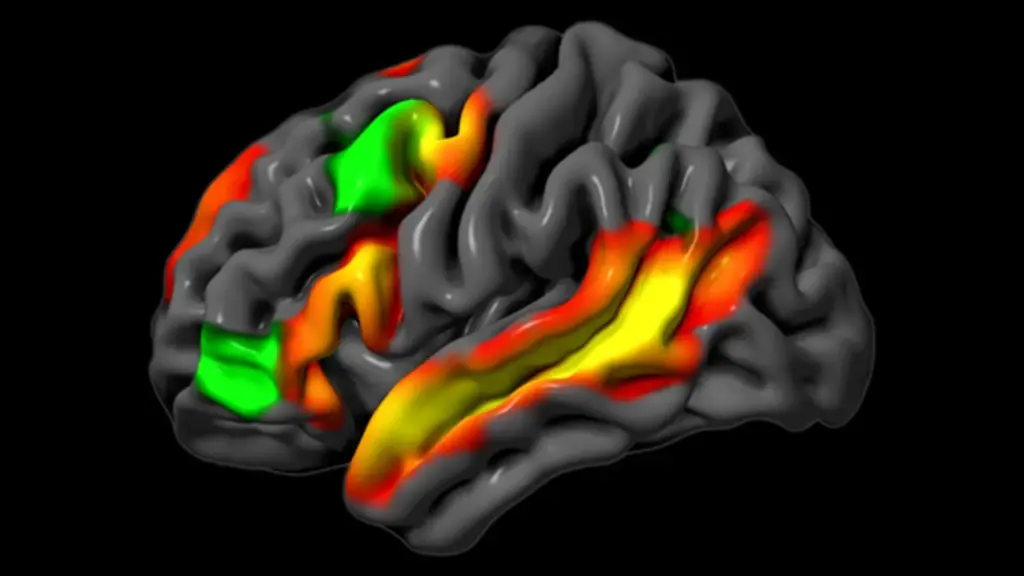
To further solidify these findings, the team utilized MRI scans to observe the brains of healthy adults during the completion of various tasks. The goal was to map the neural activity associated with logic and compare it against the activity in the brain’s established language-processing regions and the "multiple demand network"—a distributed system known for supporting complex problem-solving.
Participants performed tasks involving syllogistic reasoning—a classic form of deduction that utilizes "if-then" structures, such as: "If the ball is red, then it is big. The ball is red. Is the ball big?" The researchers carefully calibrated the difficulty of these puzzles to observe which brain regions intensified their activity as the cognitive burden grew. They also compared the neural activity required to discover a hidden rule against the activity required to apply a rule that had already been provided.
The MRI data revealed a distinct, observable separation between the brain’s language and logic systems. The language centers of the brain remained dormant during both inductive reasoning—identifying hidden rules—and deductive reasoning—assessing the validity of logical conclusions.
The role of the multiple demand network was more nuanced than the researchers initially expected. While it showed significant activation during inductive reasoning, it did not appear to be involved in deductive reasoning. This unexpected finding has opened a new avenue of inquiry for Kean, who continues to investigate why this particular network remains quiet during certain logical processes. For Fedorenko and Kean, these results provide robust evidence that language and logic are distinct cognitive systems, reinforcing earlier work from their lab suggesting that other core forms of thought, such as object categorization and social reasoning, are similarly independent of linguistic capacity.
What the Findings Mean for Aphasia
The implications of this research are significant for the clinical and public understanding of aphasia. For those working in the field of language disorders, it has long been understood that a loss of language does not equate to a loss of intelligence or cognitive capability. Aphasic individuals often retain the ability to engage in high-level cognitive activities, such as playing chess, solving complex puzzles, or managing financial affairs. However, in the broader public eye, difficulty in communication is frequently and incorrectly conflated with a lack of cognitive competence.
"This research adds to a growing body of work establishing that even severely aphasic individuals can preserve their ability for abstract logical thought—a defining feature of our species," Fedorenko says. "We should continue to educate the public that linguistic difficulties—in aphasia, but also in those with developmental language conditions, such as stuttering, or those who do not speak English natively—are not indicative of how smart or capable someone is."
A Possible Lesson for Artificial Intelligence
The study also provides a timely perspective on the evolution of artificial intelligence. Large language models (LLMs) like ChatGPT and Claude are trained exclusively on massive datasets of text and produce text as their primary output. Despite this, they often convincingly simulate complex logical reasoning, leading many to wonder if they are "thinking" in a human-like way.
The human brain, as demonstrated by this study, does not utilize language as its engine for logical thought. The fact that humans and LLMs reach similar logical conclusions via vastly different pathways suggests that current AI development could benefit from exploring non-linguistic methods of processing. Understanding how the human brain performs reasoning without language remains a profound scientific frontier. For Kean and her colleagues at the McGovern Institute, the "geography of thought" is far larger than the words we use to describe it, and they remain eager to map the territories that lie beyond the reach of language.