



By Jorn Bettin
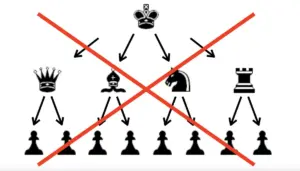
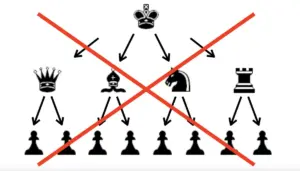
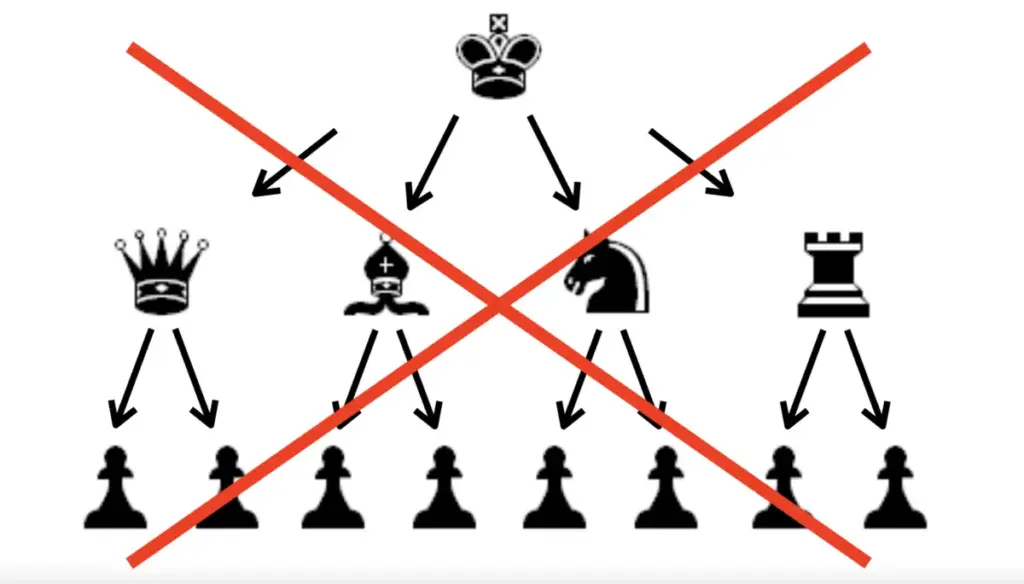
Many autistic individuals experience profound difficulties in conceptualizing the world through hierarchical structures. Rooted in human evolutionary history, this cognitive orientation reflects innate collaborative cultural capabilities paired with a significantly reduced capacity for maintaining ongoing cognitive dissonance. These traits frequently fall outside the conventional bell curve of hypernormativity, shaping a distinct worldview that challenges standard societal expectations of power and compliance.
When autistic people encounter social expectations tied to hierarchically organized systems of power, they often struggle to comprehend why such structures are accepted as standard practice. They remain acutely aware of the pain and potential harm caused by exerting social power over others, as well as the distress and cognitive dissonance that occur when external authorities impose arbitrary demands incompatible with individual sensitivity profiles.
Within the cultural framework of internalized ableism, this autistic reluctance to exert social power is frequently misinterpreted as a social deficit—specifically, an inability to shoulder leadership responsibilities. Conversely, the refusal to submit to arbitrary social power is often dismissed as non-compliance, disagreeableness, or a direct disruption of the established social order.
Consequently, autistic individuals face contradictory dismissals depending on the specific social context. In some environments, they are marginalized as weak or incompetent leaders, while in others, they are penalized for appearing aloof, arrogant, insensitive, or inappropriately competitive. In many instances, both assessments are entirely misguided.
A more accurate framework views autistic people as a vital component of the cultural immune system of the human species. In the contemporary world, they are uniquely positioned to reimagine healthier collective ways of being and to help foster human-scale, egalitarian cultural organisms.
The Dominance of Homo Economicus
The modern world is heavily dominated by what can be described as the state religion of Homo Economicus, wherein the majority of the population experiences social hierarchies as an immutable law of nature. This perspective is frequently justified by culturally biased evidence derived from disciplines such as economics, evolutionary biology, and Western psychology. This paradigm is an outgrowth of historical roots found in anthropocentric interpretations of monotheistic Abrahamic traditions, which gained immense prominence throughout colonial and neocolonial history.
Within this environment, hypersensitive autistic children are often traumatized from a very young age. Exposed early to the pressures of Homo Economicus by well-intentioned parents and educators before they can develop a substantial understanding of the living world, they face conditions that critics argue are deeply dehumanizing. When this early exposure combines with rigid power dynamics within patriarchal or otherwise abusive family systems, children are placed at high risk of developing harmful trauma-coping mechanisms.

Given their unusual baseline sensitivity profiles and limited capacity for maintaining cognitive dissonance, traumatized autistic children are more prone to developing a profound distrust of humanity, sometimes reaching a point where they struggle to extend deep trust even to immediate family members. This extreme isolation can result in coping mechanisms parallel to those seen in non-autistic trauma survivors, including bullying or attempts to exert control over family systems, thereby perpetuating intergenerational trauma.
However, autistic individuals are neither more nor less likely to perpetuate trauma than anyone else. When they do, their controlling behaviors differ primarily in their transparent nature, and their desire for social control is typically confined to the immediate family sphere rather than the broader social arena. More frequently, their refusal to participate in wider societal power games makes them the targets of bullying and institutional abuse.
While early trauma can severely impair the ability to form intimate relationships, the advent of the internet has altered this landscape by enabling autistic individuals worldwide to connect and share experiences. These digital spaces have allowed many who felt alienated from conventional culture to build lifelong relationships rooted in compatible sensitivity profiles. Unfortunately, these positive developments have occasionally been compromised by profit-oriented commercial social media platforms, which promote polarizing dynamics and encourage unmanageably vast networks of superficial connections.
The Rise of Autistic Culture
In response to these systemic pressures, autistic communities have increasingly gravitated toward genuine, human-scale online spaces dedicated to cosmolocal community co-creation, peer support, and egalitarian relationship-building on autistic terms, far beyond the influence of the dominant Homo Economicus culture.
The autistic difficulty with hierarchical thinking translates functionally into an ability to think and live entirely relationally. This is evident in the growing interest in human-scale models like Ecologies of Care and the worldwide expansion of NeurodiVenture worker cooperatives. Within hypernormative cultures, explaining the immersion in healthy autistic culture or the formation of lifelong sacred bonds between autistic individuals remains challenging. Mainstream society often fails to comprehend how autistic people care for and support one another in ways that extend far beyond the neuronormative imagination.
As the concept of the "NeurodiVerse"—referring to human-scale cultures created by neurodiversity—continues to evolve, mutual aid networks increasingly mirror ecological models of care. The traditional proverb that it takes a village to raise a child finds a parallel in the autistic realization that feeling truly loved and alive requires a human-scale autistic family. Because most autistic individuals are not born into such environments, they must actively co-create these families within their own spaces and times, echoing indigenous traditions where unique children are recognized and mentored to fulfill specific communal roles.
Understanding Cultural Organisms as Sets of Relationships
Within autistic culture, a human-scale cultural organism is understood as a set of relationships that acknowledges human cognitive and emotional limits, embracing the philosophy that small is beautiful. Beyond this intimate scale, cultural institutions often represent anthropocentric hubris, particularly when anchored by permanent hierarchies of social power.
Healthy cultural organisms thrive on interdependencies and complementary relationships without permanent social power differentials. In such environments, no single relationship is prioritized over another, and robust backups exist for any relationship critical to group survival. Human identity itself is understood as a product of relationships; when individuals are entirely isolated, the world shrinks to a relationship with the self.

True individual wellbeing is a direct derivative of the health of all human and non-human relationships a person maintains. Relational and communal health at a human scale ultimately outweighs isolated metrics of success.
Examining the Modern Social World
The modern social world can often be understood most clearly from the margins, as conventional sense-making mechanisms have grown increasingly confused. When a culture dismantles collective deliberation at a human scale, individuals experience life as incoherent while subconsciously striving for personal coherence. When that internal process fails, societal structures appear to stop making sense altogether.
Observers point to several interconnected systems driving this stagnation: the legal engineering behind the power of capital, government machinery that backs capital with enforcement, and the cultural diseases that emerge when human scale is ignored. Critics argue that modern governments operate less as democratic representatives of the citizenry and more as preservation mechanisms for capital, managing public narratives to protect entrenched economic interests.
This dynamic forms an iron law of social design: everything is permitted to change, provided that the established structures of social power remain intact or strengthened. This dystopian hypernormative pattern is frequently observed within large corporations and government bureaucracies alike.
Toward Metamorphosis and Human-Scale Adaptivity
As established, super-scale institutions decay and prove increasingly unreliable, individuals and small groups naturally begin to withdraw their reliance on these systems. Rather than attempting to reform large-scale cultural cancers, emerging initiatives are focusing on the cultivation of new, human-scale ways of living.
Drawing a parallel to biological metamorphosis, theorists suggest that dying institutions may eventually give way to life-affirming organisms through a natural process of societal restructuring. As communities worldwide experience the strains of polycrisis, the need for education in subsistence-level life skills and localized resilience becomes increasingly urgent. This shift invites a rebalancing of global inequities, fostering neurodivergent and intersectional solidarity that transcends traditional colonial and neocolonial paradigms.
Ultimately, navigating an uncertain collective future requires returning to the cultural adaptivity inherent at a human scale. By shifting trust away from failing institutions and toward mutual aid, self-organizing groups are documenting practical knowledge, engaging in omnidirectional learning, and working toward a more life-affirming, relational society.