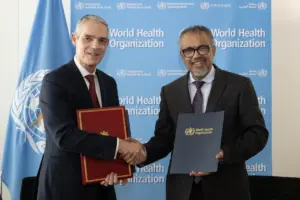








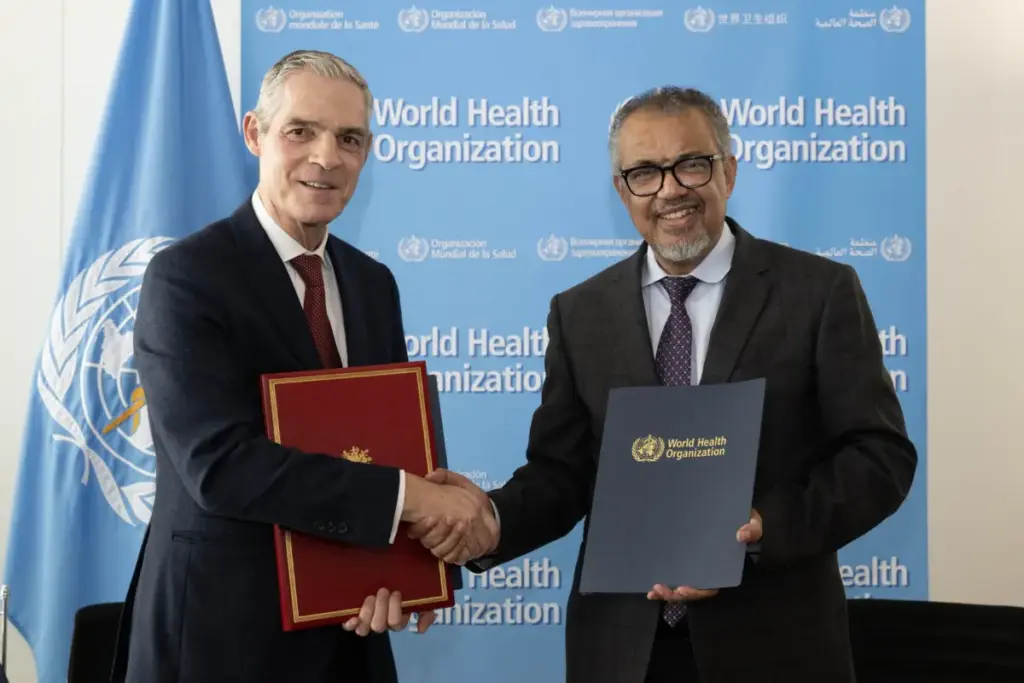
GENEVA — In a significant boost to international public health initiatives, France has committed €24 million to the World Health Organization (WHO) through a series of seven newly signed contribution agreements. The formal signing ceremony took place on the afternoon of October 17, 2024, at the WHO headquarters in Geneva, bringing together senior leadership from both the French government and the United Nations health agency.
His Excellency Mr Jérôme Bonnafont, Permanent Representative of France to the United Nations in Geneva, met with WHO Director-General Dr Tedros Adhanom Ghebreyesus to execute the funding agreements, which are channeled through the French Ministry of Europe and Foreign Affairs. This substantial financial injection is structured under the overarching France–WHO Framework Agreement for the period spanning 2020 to 2025. This bilateral framework serves as a vital strategic instrument, ensuring that French financial assistance remains closely aligned with the core priorities of the WHO while providing the necessary legal, administrative, and financial mechanisms required to operationalize collaborative public health projects around the globe.
A standout feature of this latest funding package is a generous allocation of €4.5 million dedicated entirely to fully flexible voluntary funds. These resources are directed into the WHO’s Core Voluntary Contributions Account (CVCA), an essential funding mechanism that allows the organization to allocate money rapidly where it is needed most, bridge critical funding gaps, and respond to unforeseen global health emergencies without bureaucratic delays.

Beyond the flexible core contributions, the €24 million package is strategically distributed to bolster several key areas of the WHO’s mandate, directly addressing some of the most complex and pressing health challenges facing the international community today. The funds will support specialized initiatives tackling non-communicable diseases (NCDs), innovative urban health labs, and the multidisciplinary "One Health" approach, which recognizes the interconnectedness of human, animal, and environmental health. Furthermore, a portion of the funding will reinforce the WHO Contingency Fund for Emergencies (CFE), enabling immediate operational responses when acute health crises strike.
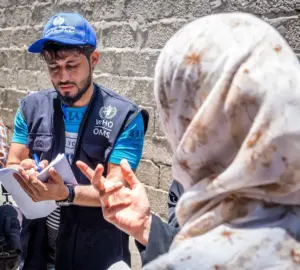
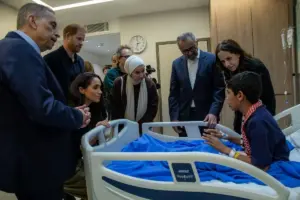
The funding also targets specific, high-stakes humanitarian and disease-response operations worldwide. This includes critical support for the WHO’s ongoing emergency response efforts in Gaza, specialized interventions to combat and contain dangerous cholera outbreaks in affected regions, and vital mental health support programs tailored for populations impacted by the war in Ukraine.
In addition to these programmatic areas, France’s renewed financial commitment ensures the continued operation of the WHO emergencies centre located in Lyon, France. This specialized facility plays an indispensable role in global health security, serving as a strategic hub for epidemic preparedness, logistics, and rapid operational response to emerging infectious disease threats.
Speaking at the headquarters during the signing ceremony, Ambassador Jérôme Bonnafont emphasized the enduring partnership between his nation and the global health body, highlighting the philosophical and operational alignment of their missions. France remains deeply committed to supporting the World Health Organization in its tireless efforts to tackle critical global health challenges, Ambassador Bonnafont noted. He underscored that these new agreements are a direct reflection of shared international priorities, specifically promoting health equity, mounting agile responses to public health emergencies, and systematically strengthening healthcare systems worldwide so they can withstand future shocks.

Dr Tedros Adhanom Ghebreyesus, Director-General of the WHO, expressed profound gratitude to the French government for its unwavering solidarity and leadership on the global stage. The WHO chief stated that the organization is immensely grateful to the French Government for its steadfast support, continued partnership, and visionary leadership in global health. He added that this timely contribution will directly empower the agency to address pivotal health threats ranging from the rising burden of non-communicable diseases to rapid emergency response operations, ultimately helping to save lives and protect the world’s most vulnerable populations from preventable suffering.
France has consistently positioned itself as a staunch advocate for a fully and flexibly financed multilateral health architecture. Beyond these specific contribution agreements, Paris has provided notable leadership and advocacy aimed at increasing assessed contributions to the organization, ensuring that the WHO possesses a more stable, predictable baseline of funding. Moreover, France is serving as one of the key co-hosts for the WHO’s inaugural Investment Round. This major resource mobilization initiative is designed to secure sustainable, predictable, and flexible resources to drive the organization’s core work under the Fourteenth General Programme of Work for 2025 to 2028, a landmark strategy that was officially approved by the World Health Assembly in 2024.
The successful conclusion of Thursday’s signing ceremony marks yet another significant milestone in the robust and longstanding partnership between the WHO and France. As the international community continues to navigate complex epidemiological landscapes, geopolitical tensions, and climate-induced health vulnerabilities, this renewed financial and strategic collaboration reinforces a shared, unwavering commitment to fostering a healthier, safer, and more resilient world for all communities.