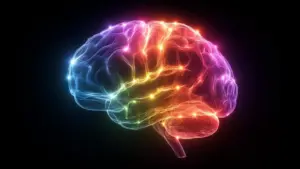







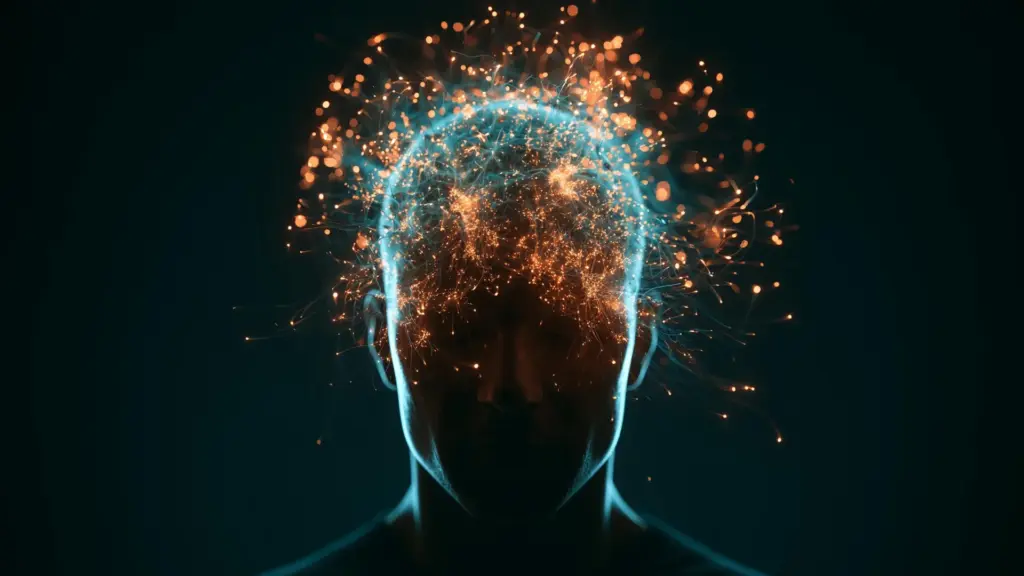
Even when a patient is fully submerged in the state of medically induced general anesthesia—a condition characterized by a total lack of subjective experience—the human brain remains remarkably busy. New research from Baylor College of Medicine suggests that beneath the silence of unconsciousness, the brain is far from dormant. It continues to process complex auditory information, recognize patterns, and even anticipate the structure of incoming language, challenging long-held assumptions about the relationship between consciousness and cognitive function.
The findings, recently published in the journal Nature, offer a profound glimpse into the hidden activities of the brain. By monitoring neural activity during surgery, researchers have discovered that the hippocampus—a brain structure central to learning and memory—retains a sophisticated level of responsiveness even when a person is completely unaware of their surroundings. This discovery not only shifts our understanding of the unconscious state but could also pave the way for revolutionary advancements in neuro-technologies designed to assist patients recovering from severe neurological injuries.
A Window Into the Unconscious Mind
For decades, general anesthesia has been viewed largely as a "shut-off switch" for the brain’s higher-order cognitive functions. While we know that basic physiological processes continue, the assumption has generally been that the intricate dance of language processing and predictive thought requires the presence of conscious awareness. Dr. Sameer Sheth, professor and Cullen Foundation Endowed chair of neurosurgery and a McNair Scholar at Baylor, believes this perspective is too narrow.
"Our findings show that the brain is far more active and capable during unconsciousness than previously thought," Dr. Sheth noted. "Even when patients are fully anesthetized, their brains continue to analyze the world around them."
To test this hypothesis, Dr. Sheth and his colleagues, including neurosurgeons at Baylor St. Luke’s Medical Center, turned to patients undergoing necessary epilepsy surgery. These procedures provided a rare, high-stakes opportunity to look directly into the brain. Because the surgery involved accessing the temporal lobe, researchers were able to monitor the hippocampus, the critical hub responsible for organizing information and forging new memories.
The team utilized "Neuropixels" probes—state-of-the-art recording devices that allow for the simultaneous monitoring of electrical signals from hundreds of individual neurons. By using these high-density probes, the researchers could observe how specific clusters of nerve cells responded to external stimuli in real-time. This level of detail had previously been unattainable in such studies, providing a granular look at neural activity that confirmed the brain is not merely idling while the patient is under anesthesia.
Neural Plasticity and the Architecture of Prediction
The research team began their investigation by playing a series of repeating, monotonous tones to the anesthetized patients. Occasionally, they inserted a sound that differed from the established pattern. Despite the lack of consciousness, the hippocampal neurons responded with distinct shifts in activity upon hearing the unexpected sounds.
Most remarkably, as the experiment continued, the brain cells became increasingly adept at distinguishing the unusual tones from the repeating ones. This demonstrates a form of neural plasticity—the brain’s inherent ability to rewire its responses based on experience—occurring entirely without the patient’s knowledge. It appears that the fundamental machinery of learning remains "switched on," even when the conscious self is absent.
Encouraged by these results, the researchers escalated the complexity of the stimuli. They played short, narrative stories to the anesthetized patients while continuing to record activity from the hippocampus. What they found was a level of language processing that defied traditional expectations. The neural data revealed distinct patterns of activity that correlated with specific categories of language, such as nouns, verbs, and adjectives. The hippocampus was not simply recording the presence of sound; it was categorizing the structural components of language.
Even more intriguing was the discovery that the neural signals contained information that could be used to predict upcoming words in a sentence. The brain, it seems, is inherently wired for "predictive coding." Instead of functioning as a passive receiver of information, the brain constantly utilizes patterns and past experiences to form expectations about what will happen next.
"The brain appears to anticipate what comes next in a story, even without conscious awareness," explained Dr. Sheth, who also serves as Director of The Gordon and Mary Cain Pediatric Neurology Research Foundation Laboratories.
This process—where the brain uses previously heard words to anticipate likely continuations—is typically associated with an awake, attentive state. Observing this in an anesthetized patient suggests that these high-level neural processes can function as an independent, underlying infrastructure that does not strictly rely on the "light" of consciousness being switched on. Dr. Benjamin Hayden, a professor of neurosurgery at Baylor, emphasized the significance of this, stating, "This kind of predictive coding is something we associate with being awake and attentive, yet it’s happening here in an unconscious state."
Rethinking the Nature of Consciousness
The implications of this study reach into the very definition of consciousness. If complex language processing and predictive modeling can occur without subjective awareness, what then does consciousness actually contribute?
The current research suggests that while consciousness is necessary for the subjective experience of "hearing" or "thinking," it may not be a prerequisite for the initial, complex processing of sensory information. One emerging theory is that consciousness depends not on the activity of isolated brain regions, but on the coordination and integration of information across a vast, interconnected network of brain areas. In this view, the hippocampus might continue its analytical work in isolation, even when the broader, long-range communication pathways required for conscious experience are temporarily interrupted by anesthetic agents.
Furthermore, the study draws an unexpected parallel between human neurobiology and modern artificial intelligence. Large language models, the engines behind contemporary AI chatbots, function by using massive datasets to predict the next word in a sequence. While the biological mechanisms of the human brain and the mathematical architecture of AI are fundamentally different, both systems demonstrate that the ability to predict future information based on past patterns is a core component of "intelligence." By studying these similarities, scientists hope to bridge the gap between our understanding of natural and artificial cognition.
Future Applications and Clinical Frontiers
The potential for this research to translate into clinical practice is significant, particularly in the realm of brain-computer interfaces (BCIs). BCIs aim to bridge the gap between brain activity and external devices, offering hope to those who have lost the ability to communicate due to stroke, traumatic brain injury, or neurodegenerative conditions.
If scientists can reliably map how the brain processes language—even in states of reduced consciousness—they may be able to develop speech prosthetics that interpret these signals directly. Dr. Vigi Katlowitz, the study’s first author and a neurosurgery resident at Baylor, highlighted the transformative potential of this work: "Can we use these signals to deploy and run a speech prosthetic for some of the parts of the brain that are damaged by stroke or injury? These are questions that we can now consider in relation to this part of the brain."
Despite the excitement surrounding these findings, the research team remains cautious. The study was conducted under a specific type of general anesthesia, and it remains to be seen whether these findings hold true across different anesthetic protocols or in other states of reduced awareness, such as sleep or coma. Furthermore, the focus on the hippocampus leaves open the question of how other brain regions respond and interact in the absence of consciousness.
As the scientific community continues to digest these results, it is clear that the "unconscious" brain is far from a void. It is a dynamic, predictive, and highly active system that persists in its work long after the conscious mind has drifted away. As Dr. Sheth concludes, "This work pushes us to rethink what it means to be conscious. The brain is doing much more behind the scenes than we fully understand."