









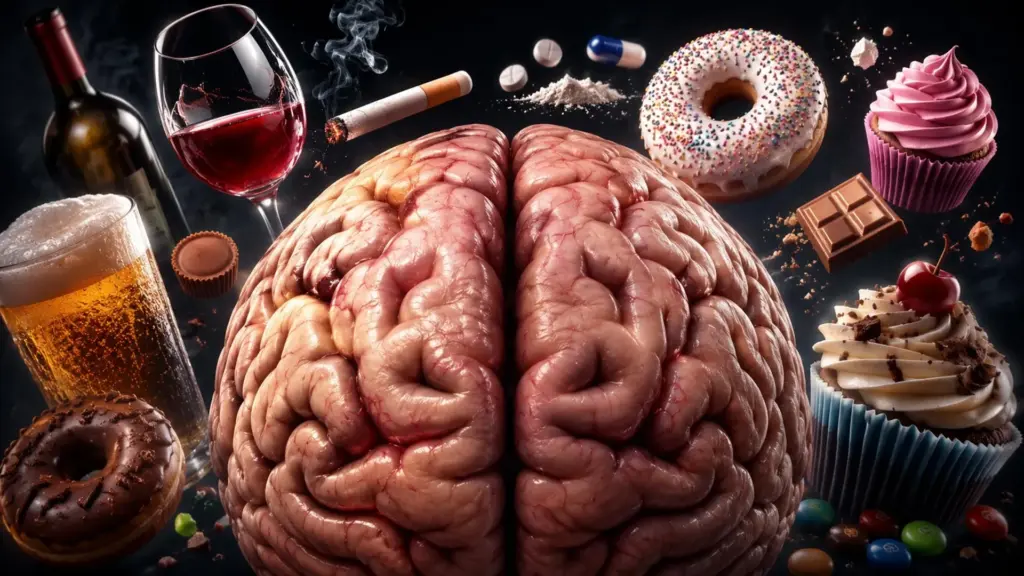
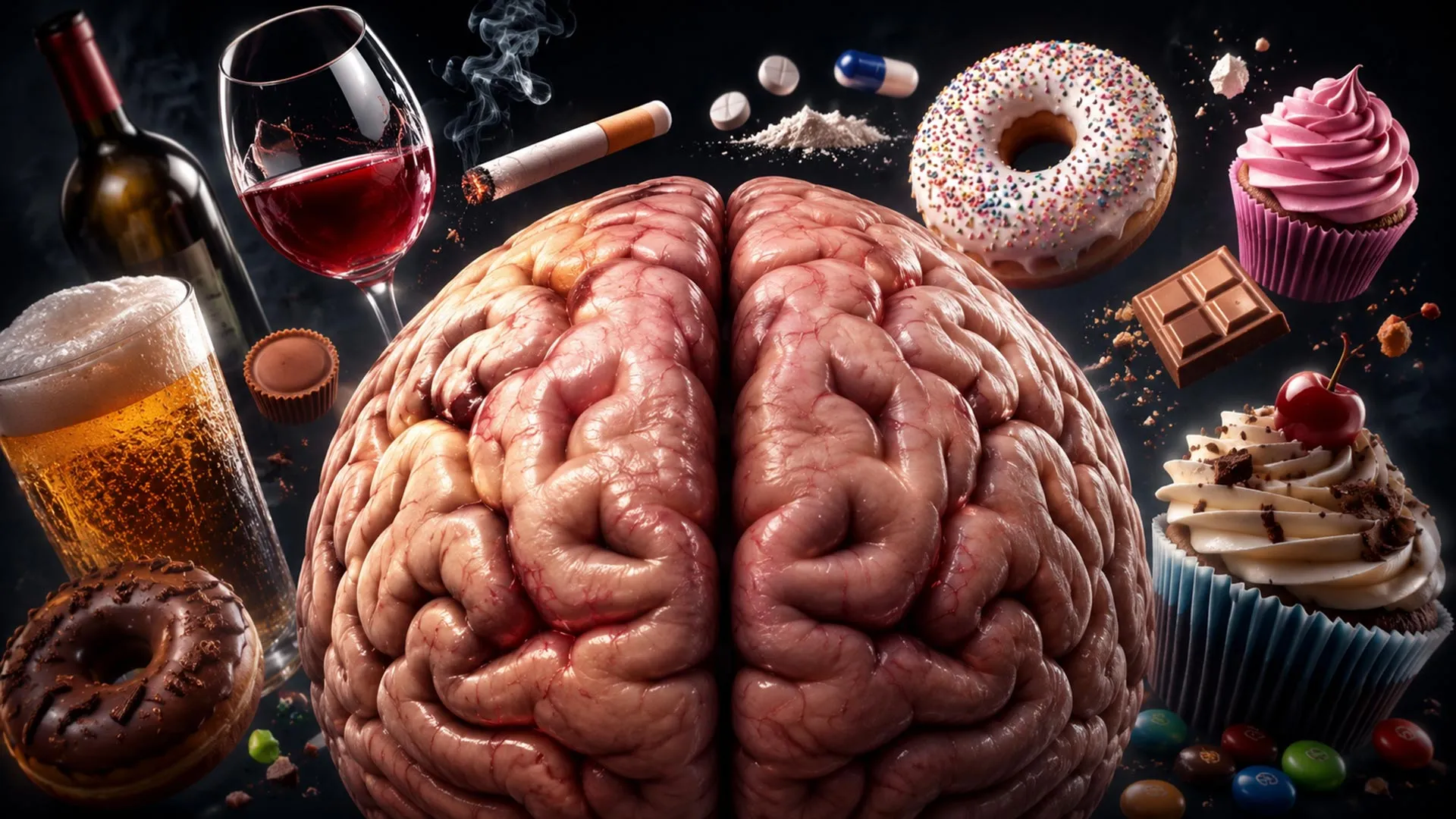
For the average person, the mere thought of a savory, flame-grilled burger or the crisp, refreshing taste of a cold pint of beer can trigger a vivid, almost sensory mental image. This isn’t just a fleeting fancy; it is a powerful driver of behavior. This intrinsic link between thinking and doing serves a vital biological function, acting as an evolutionary mechanism to motivate us to pursue the necessities of life. By visualizing a reward, the brain primes the body to seek it out, ensuring we secure the energy and resources required for survival.
However, for millions of people, this sophisticated biological process can malfunction. When the brain’s preoccupation with these rewarding stimuli becomes maladaptive, it can lead to severe disorders of substance overuse. This spectrum of dysregulation includes everything from overeating to the point of obesity to chronic alcohol abuse and drug dependency. While the link between vivid mental imagery and the compulsion to consume has been documented in research dating back to the 1970s, the underlying neurobiological mechanisms have remained frustratingly elusive to scientists for decades.
Now, a revolutionary class of weight-loss medications may have provided the missing piece of the puzzle. The rise of drugs like Ozempic and Wegovy, which have transformed the landscape of obesity treatment, is inadvertently offering neuroscientists a unique "lever" to understand the mechanics of craving and consumption.

The Rise of GLP-1 Agonists
The drugs currently dominating headlines, known as GLP-1 receptor agonists, were originally engineered to treat type 2 diabetes by mimicking the GLP-1 hormone. In a healthy physiological state, this hormone stimulates insulin release, slows down the rate of digestion, and signals to the brain that the body has reached a state of fullness. By helping patients manage their blood sugar levels, these medications proved to be a milestone in metabolic health.
However, clinical trials soon revealed a dramatic side effect: patients were experiencing significant, sustained weight loss, with some outcomes rivaling those achieved through invasive bariatric surgery. While this weight loss became the primary public-facing narrative, researchers began to notice another, perhaps more profound, trend. Evidence is mounting that these drugs do more than just suppress appetite—they seem to dampen the underlying drive for reward-seeking behavior itself.
Human studies have increasingly shown that GLP-1 agonists lead to a measurable reduction in alcohol consumption among users. Furthermore, preclinical animal studies have suggested that these drugs may also reduce the self-administration of a wide array of addictive substances, including cocaine, amphetamines, opiates, and nicotine. These findings are forcing a shift in how we perceive the brain’s reward system, suggesting that the clinical utility of these drugs could extend far beyond metabolic health and into the realm of treating addiction and dependency.
How the Brain Regulates Reward Stimuli
To understand why these drugs are having such a widespread effect, we must first look at the "reward circuitry" of the brain. For decades, neuroscientific research has focused heavily on regions that produce dopamine, specifically the ventral tegmental area (VTA) and the nucleus accumbens (NAc). These areas are widely accepted as the engines of the brain’s reward system, responsible for the chemical "hit" of pleasure that reinforces behavior.
For a long time, these regions were the obvious candidates for where GLP-1 drugs might be exerting their influence. However, closer inspection has revealed a surprising problem: the VTA and the NAc lack a significant density of GLP-1 receptors. If these drugs are indeed curbing cravings, they are likely not doing so by acting directly on the dopamine centers themselves. Consequently, researchers have been forced to look elsewhere—or rather, "upstream"—to find the true mechanism of action.
This search has led neuroscientists to a structure known as the lateral septum. Historically, the lateral septum has been associated with emotional regulation, but its reputation has undergone a dramatic evolution over the last seventy years. In 1953, pioneering behavioral researchers Joseph Brady and Walle Nauta coined the term "septal rage" after observing that animals with damage to the lateral septum exhibited heightened aggression. Conversely, they found that direct electrical stimulation of this region could effectively dampen aggressive outbursts.
Modern neuroimaging and connectivity studies have reframed the lateral septum not as an isolated center for rage, but as a critical hub in a massive neural network. While its connection to the hypothalamus is likely the source of the "septal rage" phenomenon, its reach is far wider, linking with numerous regions to coordinate a variety of complex functions.
The Brain’s Reward Control Center
The lateral septum operates by inheriting a significant portion of its input from the hippocampus. The hippocampus is perhaps best known for its role in memory, particularly the formation of long-term episodic memories. The importance of this region was cemented by the famous case of Henry Molaison, or "patient HM," whose hippocampal damage left him unable to form new memories, effectively trapping him in a permanent present tense.
Beyond memory, the hippocampus is home to "place cells"—specialized neurons that fire in response to a person’s mental representation of their position in space and, as more recent research has confirmed, their position in time. This "where and when am I" data is processed and then forwarded to the lateral septum.
Critically, recent research has discovered that the lateral septum also contains its own unique population of place cells, but these cells behave differently: they respond strongly to rewards. In effect, the lateral septum performs a sophisticated integration, overlaying the "what is good in this place" signal onto the hippocampal "where and when am I" information.
Once this integration occurs, the lateral septum shares this processed information with the dopamine-producing regions of the brain. Neuroscientists are now beginning to view the lateral septum as the brain’s "reward perception" center. It is the area that allows us to consciously perceive and contemplate a reward, providing the necessary context before the brain’s reward circuitry releases the dopamine that makes us feel good about that object or experience.
Crucially, the lateral septum is densely packed with GLP-1 receptors. This discovery makes it the primary candidate for the mechanism behind the anti-consumption effects of GLP-1 agonists. Emerging evidence is beginning to solidify this theory. Experiments have demonstrated that direct activation of GLP-1 in the lateral septum reduces food consumption in mice, and further studies have mirrored this effect regarding alcohol consumption.
My own laboratory’s research this year has provided additional insight, showing that GLP-1 drugs can modulate a specific type of activity in the lateral septum. This modulation appears to prevent the lateral septum from communicating as effectively with other, downstream brain regions involved in the reward loop.
These findings are not merely academic; they are reshaping our understanding of how the brain processes desire. By identifying the lateral septum as a potential "home of cravings," we are gaining a clearer picture of how these medications disrupt the chain reaction that leads to addictive behaviors. While there is still much to learn, the spotlight is now firmly on this once-overlooked region, offering new hope for treatments that could address the biological roots of addiction and help patients reclaim control over their impulses.