









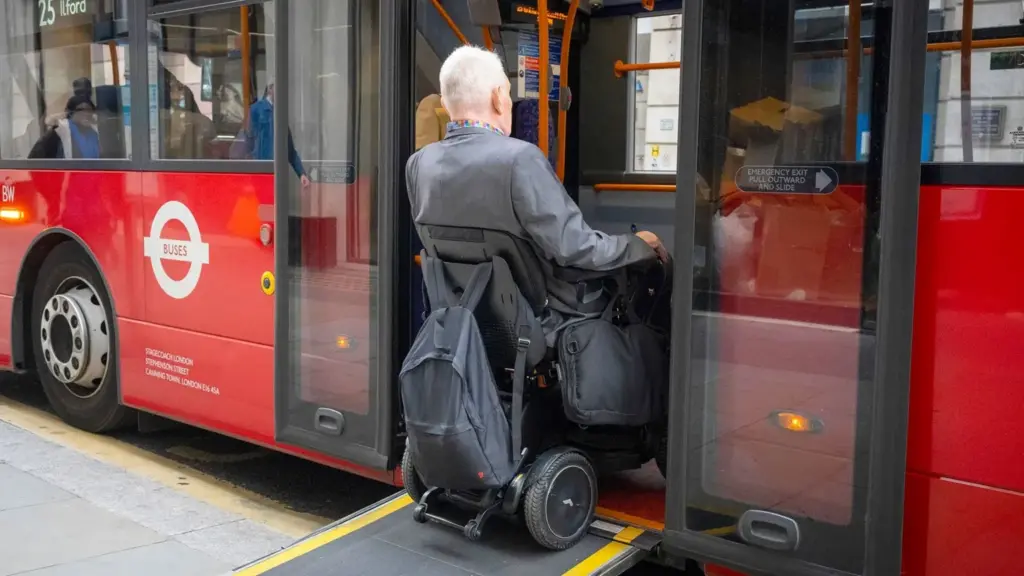
Starting April 1, disabled people across England will be able to travel by bus for free at any time of day, marking a monumental shift in national transportation policy. Previously, free bus passes were strictly restricted to off-peak hours on weekdays, specifically valid only between 09:30 and 23:00. These legacy limitations created profound barriers for pass holders attempting to commute to standard morning jobs, secure early shifts, or attend late-night cultural, social, and professional events. The removal of these time constraints will directly benefit an estimated one million people nationwide, effectively transforming the national bus network into a true full-time lifeline for disabled citizens seeking greater independence and integration into society.
The landmark policy follows a highly successful regional trial within Greater Manchester’s integrated public transport framework, known as the “Bee Network.” Furthermore, the nationwide reform responds directly to years of dedicated campaigning by prominent disability rights organizations, including Scope and Transport for All. Advocates have widely celebrated the government’s move, praising it for dismantling an unfair and frustrating “postcode lottery” system where the validity of a concessionary pass often depended entirely on localized municipal rules and regional boundaries. However, while disability organizations have lauded the extension of travel hours, they continue to emphasize that this policy represents only one crucial step forward, noting that eligibility requirements across various local authorities still require broader national standardization to ensure truly equitable access.
To ensure the program can be implemented and maintained permanently, the £60 million scheme is being jointly funded through the Department for Transport and the Department for Work and Pensions. Government officials have framed the sweeping reform as an essential workforce participation and cost-of-living initiative. This investment integrates seamlessly with existing transit measures designed to ease financial pressures on the public, such as the nationwide £2 single-fare cap. Moreover, the policy successfully brings England into alignment with similar 24/7 concessionary transit programs that have already been operating successfully for years in Scotland and Wales, closing a notable geographic gap in accessibility across Great Britain.
Global Takeaways: How Other Countries Can Make Accessible Commuting Possible
Making daily commuting accessible and affordable for disabled citizens requires a comprehensive combination of thoughtful policy design, advanced digital systems, and targeted public investment. As nations around the world look for effective models to improve urban and rural mobility, the British policy shift offers a clear window into how systemic transit reforms can be structured at a national level.
Why Was the UK Able to Do It?
The ability of the United Kingdom to enact this sweeping nationwide policy stems from a combination of centralized government funding, active advocacy from national disability organizations, and regional pilot programs that demonstrated feasibility. By pooling financial resources through the Department for Transport and the Department for Work and Pensions, the central government absorbed the economic burden that local authorities previously struggled to manage independently. This centralized approach ensured that policy changes could be applied uniformly rather than relying on fragmented local budgets. Additionally, years of persistent pressure from organizations such as Scope and Transport for All kept the issue at the forefront of the political agenda, ensuring that accessibility remained a priority during broader economic planning.
Does It Depend on Existing Infrastructure?
Yes, heavily. Free transit passes only truly work if the public transport network is physically and technologically accessible to begin with. Without foundational investments in accessible infrastructure, removing time restrictions on paper or digital passes loses much of its practical value. Accessible commuting depends extensively on physical features such as low-floor buses with functional wheelchair ramps, audible and visual next-stop announcements, and well-maintained boarding environments at bus stops. Furthermore, technological integration—such as smartcard systems, real-time tracking apps, and standardized digital validation equipment—plays a vital role in ensuring that concessionary travel operates smoothly across different regions without creating friction for drivers or passengers. Without these physical and digital pillars firmly in place, policy reforms risk leaving behind passengers who encounter physical barriers before they even step onto a vehicle.
What Is Needed to Make Commuting Affordable for People with Disabilities?
Achieving true affordability and accessibility in public transportation requires a multi-layered framework that goes beyond simply issuing free passes. First and foremost, governments must establish sustainable, long-term funding models that permanently subsidize concessionary travel, shielding programs from the vulnerabilities of local municipal budget cuts. Second, policy frameworks must eliminate regional discrepancies to ensure that a commuter’s rights and benefits do not change simply because they cross a municipal boundary. Third, transit authorities must engage in continuous consultation with disability rights organizations to identify operational bottlenecks, fare integration issues, and accessibility gaps. Finally, public transport systems must be paired with broader economic support measures, such as employment incentives and cost-of-living assistance, ensuring that affordable mobility translates directly into sustainable economic independence and societal participation for disabled citizens across the country.