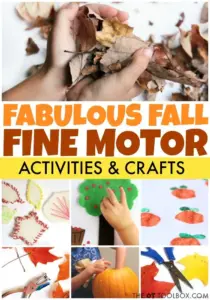








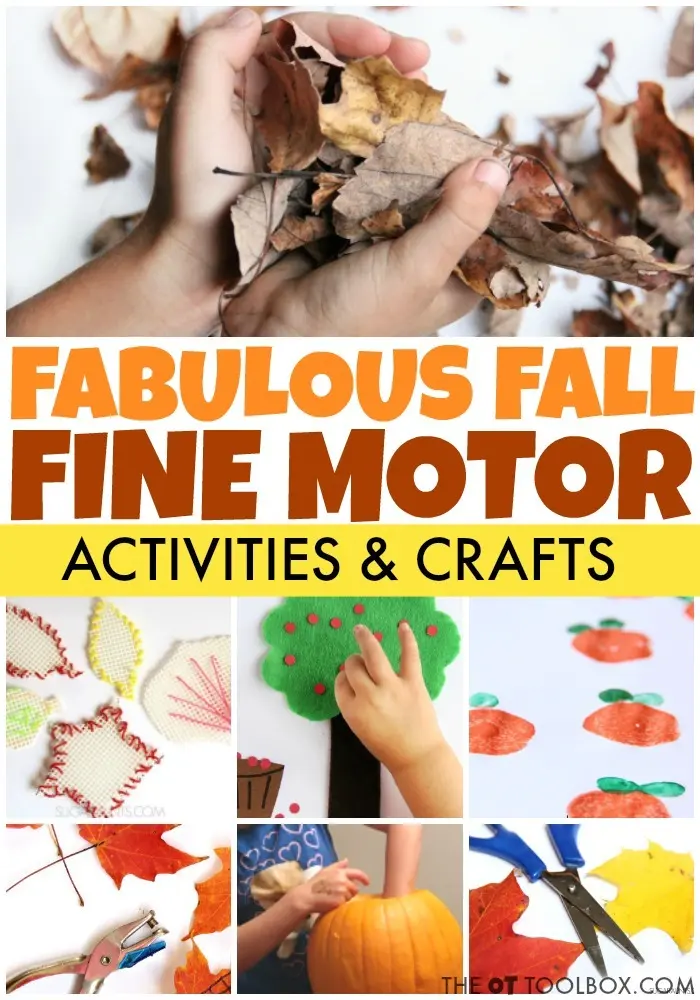
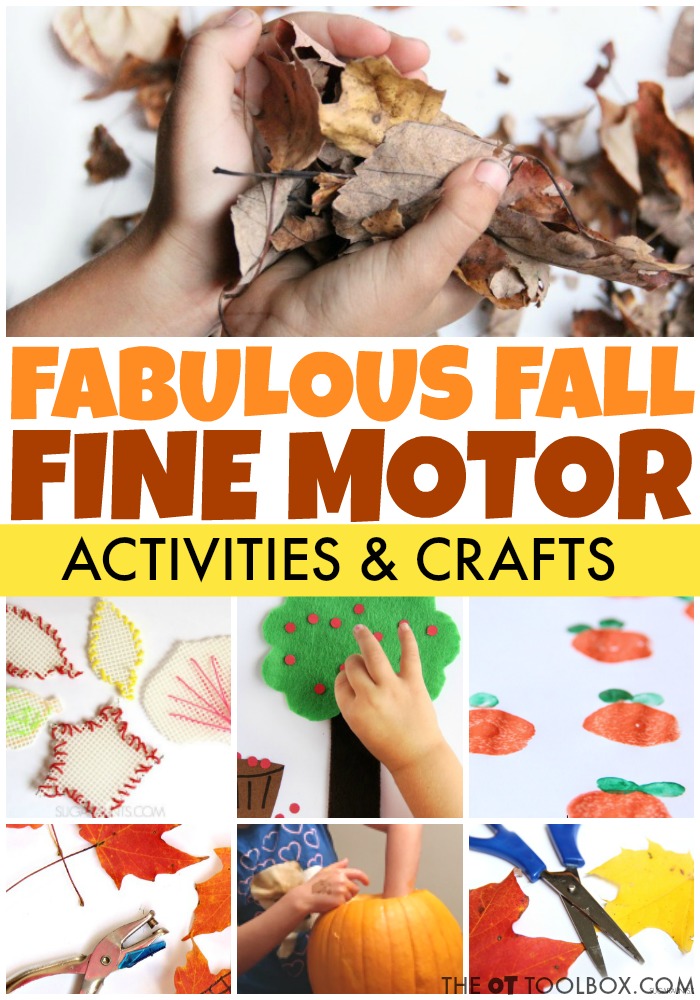
As the crisp autumn air settles in and the vibrant hues of changing leaves paint the landscape, educators, occupational therapists, and parents are increasingly turning to seasonal motifs to support childhood development. From apples and pumpkins to acorns and falling leaves, autumn-themed materials are proving to be powerful tools for addressing complex fine motor needs in children, moving far beyond simple holiday crafts to target specific functional capacities.
Rather than choosing seasonal activities purely for aesthetic or festive value, pediatric specialists are utilizing autumn elements to systematically address core developmental areas, including hand strength, finger dexterity, scissor proficiency, visual-motor integration, and handwriting mechanics. Many of these hands-on activities are designed to target multiple developmental domains simultaneously, allowing practitioners to adapt tasks to meet the diverse needs of individual children across various age groups.
The shift toward seasonal developmental strategies comes at a time when professionals are continually seeking engaging, low-prep ways to maintain children’s attention while building foundational physical skills. Experts note that fine motor challenges often stem from underlying difficulties in manual dexterity, hand strength, or visual-motor coordination, which can impact a child’s ability to perform everyday tasks such as managing clothing fasteners, opening containers, or holding writing utensils.
Fall Hand Strength Activities
Hand strength forms the foundation of effective fine motor control, yet many children experience weakness in the intrinsic and extrinsic muscles of the hands. Autumn-themed interventions offer targeted resistance to help build this necessary strength without feeling like clinical work.
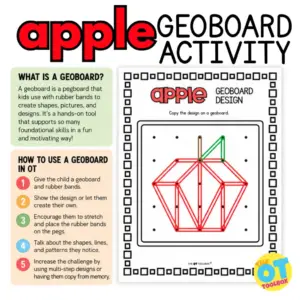
One popular approach utilized in therapeutic settings is the apple geoboard, where children stretch rubber bands across pegs to recreate specific fruit designs. This physical manipulation provides critical resistance to the fingers and hands while demanding precision and controlled release, simultaneously supporting bilateral coordination, visual-motor skills, and motor planning. Practitioners can easily adjust the difficulty of these tasks by substituting thicker, more resistant bands or by simplifying visual templates for children who find the spatial demands challenging.
Similarly, traditional play dough exercises are being adapted with autumn elements, such as hiding miniature leaves, seasonal erasers, or colored beads within the soft dough. The tactile sensory challenge, combined with proprioceptive feedback, encourages rolling, squeezing, pinching, and pressing. These actions naturally exercise the small muscles of the hands, supporting arch development, wrist stability, and the establishment of a functional pincer or tripod grasp.
Hole-punching activities featuring apple or leaf outlines provide another effective avenue for building sustained hand force. Operating a standard hole punch requires significant grip strength, while the requirement to position the tool precisely along an illustrated border integrates crucial visual-motor components.
Fall Dexterity Activities
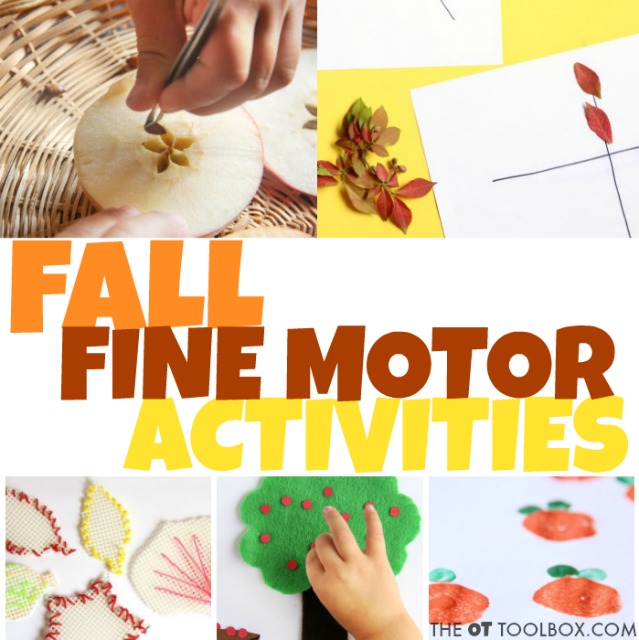
Dexterity relies on the efficient, coordinated use of the fingers for small and precise movements. When manual dexterity breaks down, children often struggle with speed, precision, and the refined control necessary for complex manipulation tasks. Seasonal manipulatives—ranging from craft pom-poms and seeds to paper clips and small craft items—transform routine exercises into dynamic dexterity challenges.
Apple counting cards paired with paper clips offer a portable and effective method for refining fingertip precision. Attaching the correct number of paper clips to a laminated card requires exact finger placement and encourages bilateral hand use, as one hand must stabilize the card while the other manipulates the clip.
Transferring fall-colored pom-poms using tongs or tweezers into partitioned containers provides another adaptable task. By varying the size of the pom-poms or changing the grabbing tools, practitioners can grade the precision required to match the developmental level of the child. Similar fine motor gains are achieved through the manipulation of natural items such as sunflower seeds and pumpkin seeds, which require refined pincer grasps and in-hand manipulation skills.
Fall Scissor Skills and Cut-and-Paste Crafts
Scissor use is a multifaceted task that demands advanced bilateral coordination, as the dominant hand opens and closes the blades while the non-dominant helper hand stabilizes, rotates, and guides the paper. Autumn-themed cutting practice pages and craft projects provide structured pathways for children to develop these critical skills.
Specialists often utilize apple-cutting templates and leaf-snipping activities to assess and build line awareness and control. When children cut along printed paths or snip real fallen leaves into small pieces, therapists observe how effectively the child coordinates both hands, maintains an appropriate grasp, and controls the cutting motion.
Cut-and-paste farm and autumn crafts elevate these physical demands by introducing executive function and spatial planning components. Beyond the physical act of cutting, children must visually determine where individual pieces belong, orient them correctly, follow an assembly sequence, and apply adhesive precisely. This combination of skills supports visual-spatial awareness, sequencing, and direction-following alongside traditional scissor proficiency.
Visual-Motor and Handwriting Integration
A child may possess adequate hand strength and finger dexterity yet still encounter difficulties when a task requires them to copy a design, follow a visual line, or coordinate what they see with hand movement. Autumn-themed visual-motor activities address these precise challenges.
Directed drawing exercises featuring acorns, leaves, and pumpkins require children to analyze a visual model, plan pencil movements, determine spatial endpoints, and reproduce the shapes independently. Pattern block designs further integrate fine motor manipulation with visual discrimination and spatial awareness as children select, orient, and position blocks to match a template.
Seek-and-find activities, commonly known as I Spy pages, engage children in visual scanning, figure-ground perception, and sustained visual attention. Practitioners frequently enhance these cognitive tasks by incorporating a fine motor element, such as requiring the child to circle found items, cover them with small manipulatives, or attach clothespins to corresponding pictures.
When transitioning to written expression, educators and therapists utilize seasonal writing prompts to practice handwriting within a meaningful context rather than relying on isolated letter drills. By tailoring prompts to individual developmental stages—ranging from writing a single autumn word for emerging writers to composing full paragraphs for older students—professionals can address line awareness, spacing, letter formation, and writing endurance across an entire caseload.
As autumn progresses, the integration of seasonal materials into everyday play and structured therapy sessions offers a practical, engaging framework for supporting children’s fine motor development. By harnessing the natural appeal of autumn leaves, pumpkins, and seeds, professionals and families alike continue to find innovative ways to build the foundational physical skills children need for lifelong success.